

On this page 9 sections
A jungle balcony is a small outdoor space packed with layered greenery, so it feels like you’re sitting inside the plants rather than looking at them. The secret is choosing plants for your balcony’s real conditions (sun, shade, wind and winter cold), then layering them at three heights around comfortable seating. This guide covers how to do that on a city balcony, a roof terrace or a covered porch.
Start with an honest look at your balcony
Before buying a single plant, spend a day noticing:
- Sun. How many hours of direct sun does it get, and when? Morning sun is gentle; afternoon sun on a south- or west-facing balcony (north- or west-facing in the southern hemisphere) is hot.
- Wind. Higher floors and corner balconies can be very windy. Wind dries plants out faster than sun does and can tip over tall pots.
- Cover. A roofed balcony or porch stays drier, which protects furniture but means rain won’t water your plants.
- Winter. How cold does it get where you live? This decides whether you can leave plants out all year.
- Rules and weight. Check your lease or building rules about planters, drilling and anything hung over the railing, and ask about weight limits before adding big containers.
Pick plants for the conditions
Real jungle plants are tropical, and most can’t survive a frosty winter outdoors. You have two good options: grow hardy plants with a jungle look that can stay out all year, and bring tropical houseplants out for summer only.
Hardy plants with a jungle look (temperate climates)
| Plant | Conditions | Notes |
|---|---|---|
| Fatsia japonica | Shade to part shade | Huge glossy leaves, very jungle; dislikes hot afternoon sun |
| Clumping bamboo (Fargesia) | Sun or part shade | Good screen; non-running, so suits containers. Needs regular water |
| Chusan / windmill palm (Trachycarpus fortunei) | Sun or part shade | One of the hardiest palms; leaves look tatty in strong wind |
| Ferns (e.g. Dryopteris, Polystichum) | Shade | Lush texture at low level; keep moist |
| Hostas | Shade to part shade | Big leaves; die back in winter. Watch for slugs |
| Japanese forest grass (Hakonechloa) | Part shade | Soft, flowing, good at pot edges |
| Star jasmine (Trachelospermum jasminoides) | Sun or part shade | Evergreen climber for the railing; scented flowers |
| Ivy (Hedera) | Shade or sun | Trails and climbs; very tough |
Plants in containers are more exposed to cold than plants in the ground, because the roots aren’t insulated by soil. If you’re unsure, choose plants rated at least one hardiness zone colder than your area, and wrap pots in hessian or bubble wrap during hard frosts.
Tropical plants for summer
Monstera, philodendrons, pothos, Kentia palms and calatheas can all spend summer outside in bright shade, which is exactly what a covered balcony provides. A few rules:
- Harden them off. Move them out gradually over a week or two, starting in full shade, or their leaves will scorch.
- No harsh midday sun. Most of them grow under a forest canopy.
- Bring them in before it gets cold, roughly when nights fall below 10–12°C (50–55°F).
- Watch the wind. Big, thin leaves tear easily.
Monstera, philodendron and pothos are toxic to cats and dogs if chewed, so keep them out of reach if your pets use the balcony.
Hot, sunny balconies
A full-sun balcony suits a different kind of lushness: olive trees, rosemary, lavender, agave, yucca, bougainvillea (in frost-free areas), and pelargoniums. Pair them with a shade sail or a parasol for you.
Layer the plants at three heights
Jungle styling works because the greenery surrounds you. Aim for:
- Tall: one or two large plants in the corners or by the walls (a palm, bamboo, Fatsia or a big monstera). These frame the space.
- Middle: plants at seat and railing height, such as ferns on stands, grasses, and plants in pots on low stools.
- Overhead and trailing: hanging baskets from the ceiling of a covered balcony, railing planters and climbers.
Group pots in clusters of odd numbers with different heights, rather than one pot in each corner. Clusters also share humidity, which tropical plants love.
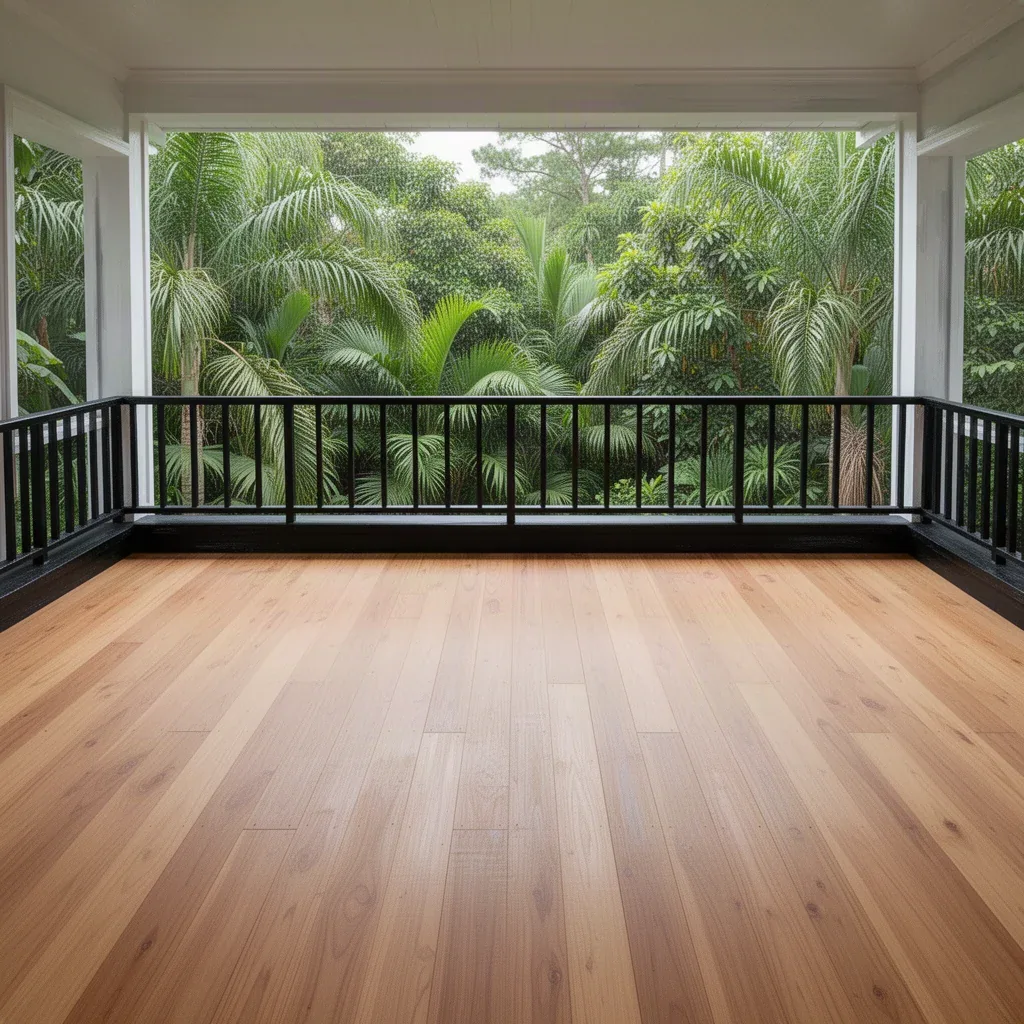
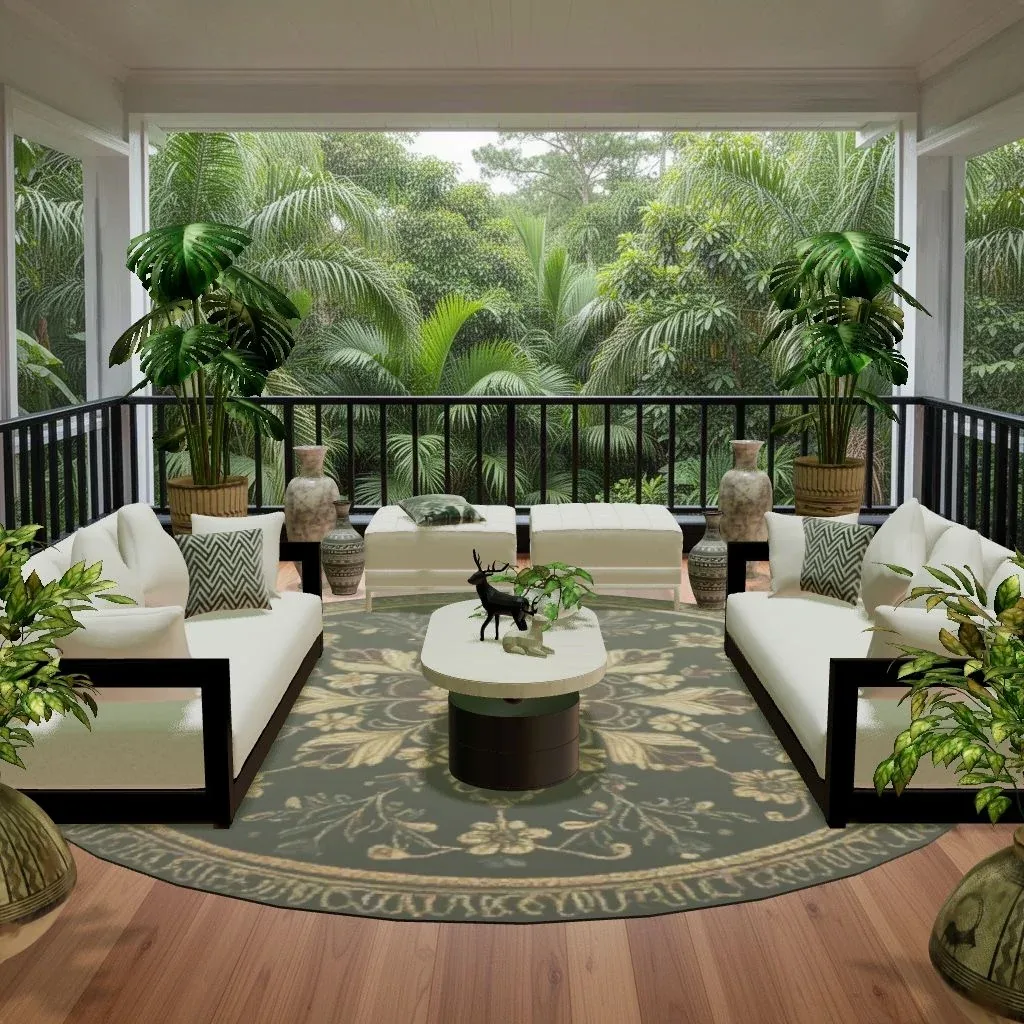
The designed balcony above uses the same idea: two tall plants in woven baskets frame the view at the railing, leafy plants sit in the front corners, and the seating faces inward around a big round rug, so you feel wrapped in green on every side.
Pots, soil and watering
- Lightweight pots: fiberglass, resin and good plastic weigh much less than terracotta or stone. Fake-stone and fiberglass pots look convincing.
- Drainage: every pot needs holes. On upper floors, use saucers so water doesn’t drip onto the balcony below.
- Self-watering pots are a lifesaver on covered or windy balconies.
- Mulch the soil surface with bark or gravel to slow drying.
- Stability: wide-based pots for tall plants, and tie tall specimens to the railing or a hook if you’re exposed.
Furniture, rugs and textiles
Choose furniture for the weather it will actually face.
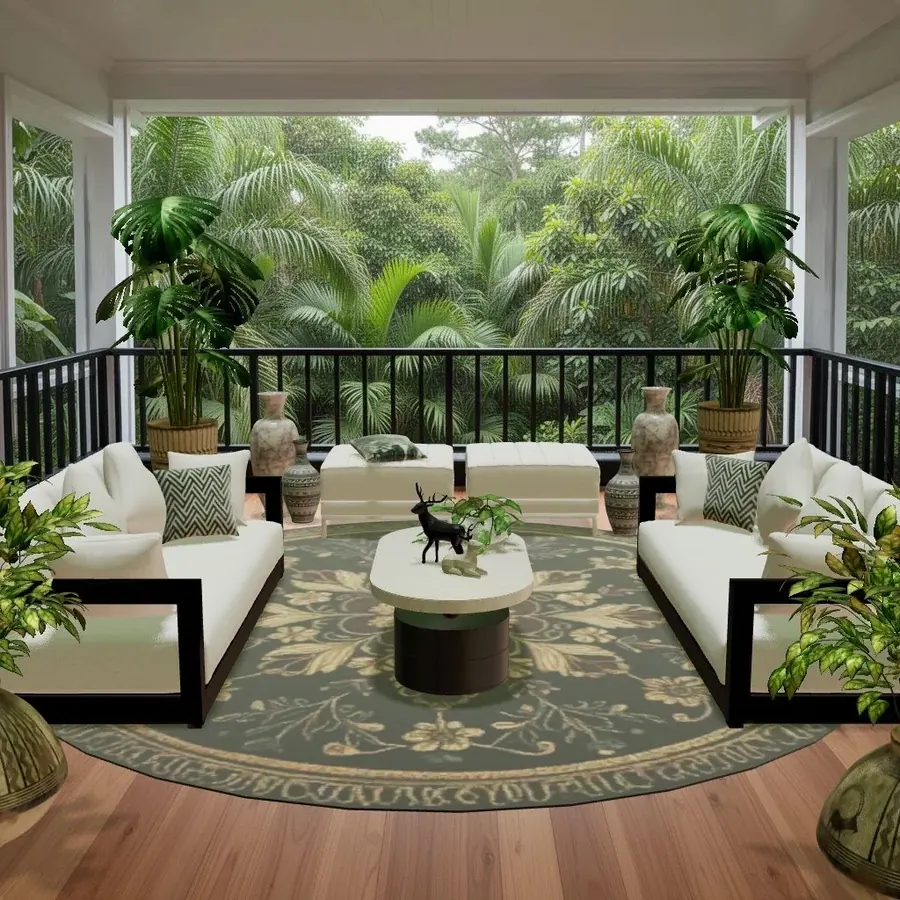
- Covered balcony or porch: you can use upholstered outdoor sofas with removable, quick-dry cushions, like the white sofas in the cover image. Bring cushions in during long wet spells.
- Open balcony: aluminum, powder-coated steel, teak and synthetic (resin) rattan cope well. Natural rattan and untreated pine don’t like rain.
- Small balcony: a bistro set, a narrow bench along the wall, or a folding chair and a railing-mounted table.
- Outdoor rug: polypropylene or recycled-plastic rugs are made for outdoor use, dry fast and resist fading. Lift them occasionally so the floor underneath can dry.
- Fabrics: solution-dyed acrylic and polyester outdoor fabrics hold their color much better in sun than cotton.
Keep the palette simple so the plants stand out: white, cream, natural wood and black frames, with green and maybe one warm accent.
Lighting for evenings
- Solar or battery lanterns grouped on the floor among the plants.
- Outdoor-rated string lights along the ceiling of a covered balcony or wound through the railing.
- A plug-in outdoor wall light if you have a weatherproof socket.
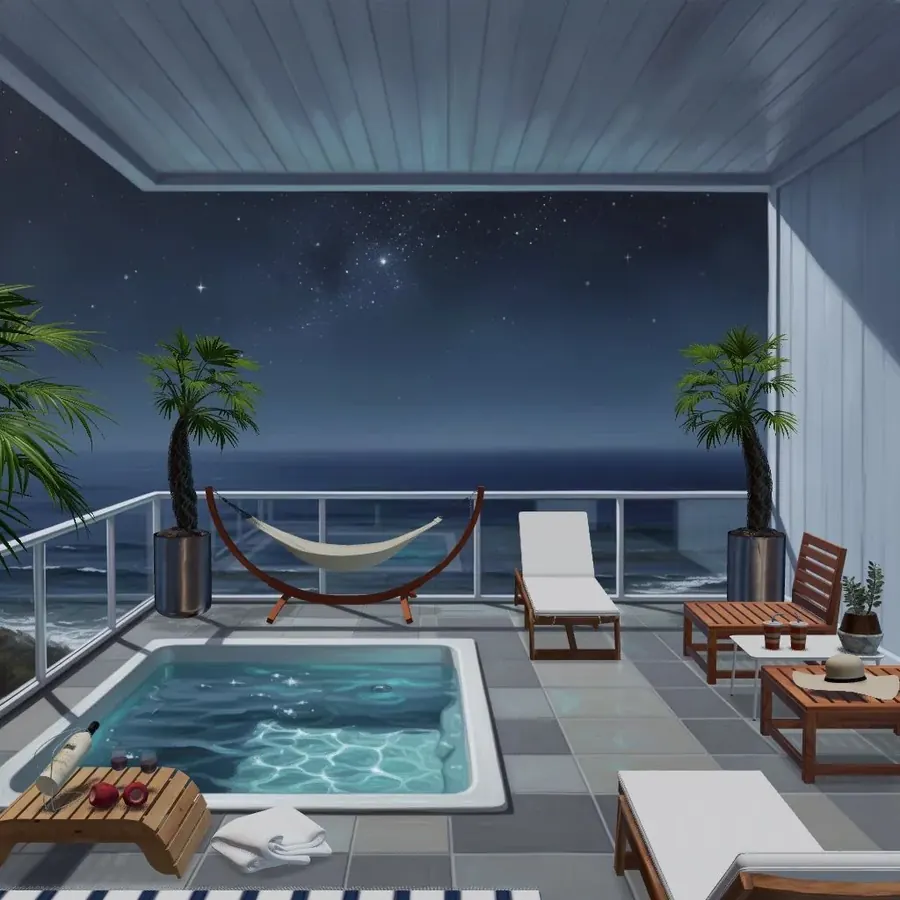
Keep it warm (around 2200–2700K) and low. Uplighting a big plant from below throws beautiful leaf shadows onto the ceiling and walls.
Privacy without walls
Plants are the gentlest privacy screen. A trough of clumping bamboo, a trellis with star jasmine or ivy, or a row of tall grasses screens neighbors while still letting air through. Reed or bamboo screening fixed to the railing is a quick, cheap extra layer (check your building’s rules first).
Common mistakes
- Tropical plants in hot sun. Scorched, bleached leaves usually mean too much direct sun, not too little water.
- Forgetting covered balconies don’t get rain. Water regularly.
- One pot in each corner. Cluster them instead.
- Heavy stone planters on a weak balcony. Ask about weight limits.
- Indoor cushions outside. They’ll go moldy. Use outdoor fabrics and bring them in when it’s wet.
- Leaving tropicals out too late in autumn. One cold night can finish them.
Try it in Cozee
In Cozee, a free design game for iPhone and Android, the rooms you design range from snowy cabins to jungle balconies, and each one starts empty. You add real 3D furniture and decor, including plants, rugs and lamps, then submit your design for other players to rate. It’s a low-stakes way to try a layout (sofas facing each other, a big round rug, tall plants by the railing) before you haul pots up the stairs at home. You can also see how other players styled the same balcony in the community. Find out how the game works, or read about the bohemian style if you love the plant-filled look, and the conservatory guide for greenery under glass.
Questions people ask
What plants are good for a windy balcony?
Choose tough, flexible or small-leaved plants: ornamental grasses, rosemary, lavender, hebes, pittosporum, New Zealand flax (Phormium) and clumping bamboos such as Fargesia. Avoid big soft leaves like bananas, which shred. Use heavy, wide-based pots and keep tall plants low or tied in.
Can I put houseplants like monstera outside on my balcony?
In warm weather, yes, in bright shade with no harsh midday sun. Bring tropical plants back inside before night temperatures drop below roughly 10–12°C (50–55°F), and introduce them to outdoor light gradually over a week or two to avoid scorched leaves.
How much weight can a balcony hold?
It varies a lot by building, so check with your landlord, building manager or a structural engineer before adding large planters. Wet soil is heavy. Lightweight pots, lighter potting mixes and spreading weight near the walls and supports rather than the outer edge all help.
How do I keep balcony plants alive on a covered balcony?
Water more than you’d expect: a roof means rain rarely reaches the pots. Self-watering containers, saucers with gravel and grouping plants together to share humidity all help, especially in summer.
Try it in an empty room first
Cozee is a free interior design game for iPhone and Android. Pick an empty 3D room, fill it with real furniture, and see what the community thinks.
4.7 on the App Store · Free, with optional in‑app purchases