

On this page 9 sections
The right houseplant depends more on light than on anything else. Match the plant to the spot: bright direct light (a sunny south- or west-facing window in the northern hemisphere) suits cacti, succulents and a bird of paradise; bright indirect light suits orchids, pileas, rubber plants and monstera; medium light suits dracaenas, ferns, peace lilies and pothos; and low light suits ZZ plants, snake plants and cast-iron plants. Light drops fast as you move away from the glass, so a plant a few steps back from a window can be in a completely different light zone. Here’s how to read your rooms and which plants go where.
First, read the light in your room
Window direction
Which way a window faces decides how much sun comes in. In the northern hemisphere:
| Window faces | Light | Typical zone near the glass |
|---|---|---|
| South | Strongest, sun for much of the day | Bright direct |
| West | Strong, warm afternoon sun | Bright direct to bright indirect |
| East | Gentle morning sun, then indirect | Bright indirect |
| North | Soft, even light, little or no direct sun | Medium |
In the southern hemisphere, swap north and south: north-facing windows get the most sun. Trees, balconies, neighboring buildings and deep eaves can all cut the light, so treat the table as a starting point, not a rule. Our guide on how to read a room shows how to follow the light through a day.
Distance from the glass
This is the part most people underestimate. Light falls off quickly as you move into a room, even though your eyes adjust and it still looks bright to you. As a rough guide:
- Within about 1 m (3 ft) of a bright window: bright light.
- About 1–2.5 m (3–8 ft) back, or beside the window rather than in front of it: medium light.
- Further back, in corners or hallways: low light.
A simple test: at midday, hold your hand about 30 cm (12 in) above where the plant will sit. A sharp shadow means bright direct light, a soft shadow means bright indirect, a faint one medium, and barely any means low light.
Bright direct light
A few hours of direct sun a day, right by a sunny window.
- Cacti and succulents (aloe, jade, echeveria): the classic sun lovers. Water sparingly.
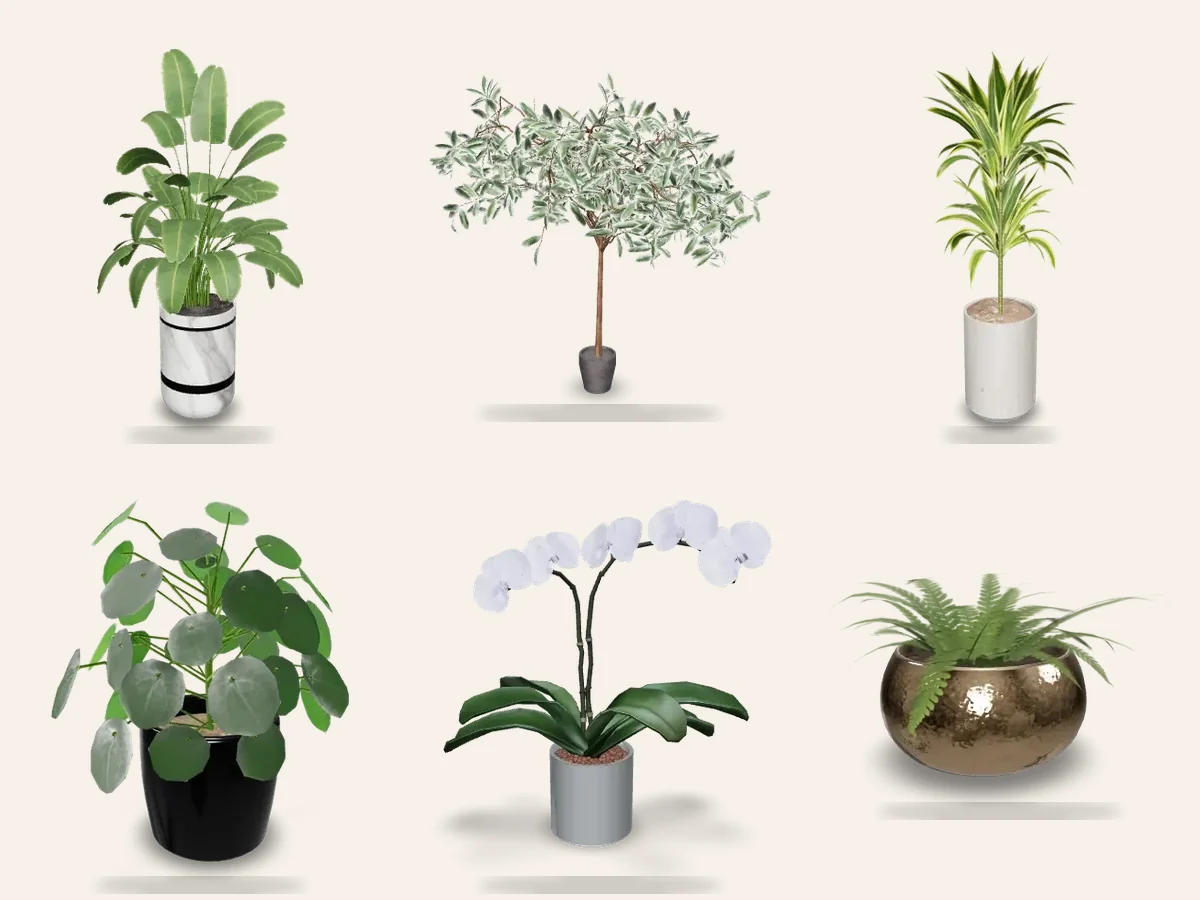
- Bird of paradise (Strelitzia): big, paddle-shaped leaves, like the plant at the top left of the cover image. It wants as much light as you can give it indoors.
- Olive and citrus trees: need real sun, and many do best outdoors in summer.
- Ponytail palm: tolerant, slow and happy in a sunny spot.
Even sun lovers can scorch behind glass in a heatwave, or if moved suddenly from a dim corner into full sun. Move them gradually.
Bright indirect light
Lots of daylight, but not hours of sun on the leaves. This is the sweet spot for many popular houseplants.
- Moth orchid (Phalaenopsis): like the white orchid in the cover image. An east-facing windowsill is often ideal.
- Pilea (Chinese money plant): round leaves on long stems, like the one in the black pot. Turn it regularly or it leans toward the window.
- Rubber plant and fiddle-leaf fig: large, glossy leaves that drop if moved too often or kept too dark.
- Weeping fig and other small-leaved indoor trees: like steady, bright light and dislike being moved around.
- Monstera: grows in medium light, but grows faster and splits its leaves more in bright indirect light.
Medium light
A few steps back from a bright window, or right next to a north-facing one.
- Dracaena: tall, strappy leaves on a cane, like the one in the white pot. Tolerant and slow.
- Ferns (such as Boston fern): like steady moisture and humidity. Bathrooms with a window suit them.
- Peace lily: flowers best toward the brighter end of medium, and droops dramatically when thirsty.
- Pothos and heartleaf philodendron: trailing plants that cope with a wide range of light.
- Parlor palm and calathea: soft, leafy shapes for a shaded shelf. Calatheas are fussy about watering.
Low light
Corners, hallways, rooms with small or shaded windows. Be realistic: these plants tolerate low light. They survive and grow slowly; they don’t thrive. A room with no window isn’t low light, it’s no light.
- ZZ plant: glossy, upright, very forgiving, stores water in its roots.
- Snake plant: stiff, upright leaves; copes with neglect and dry air.
- Cast-iron plant (Aspidistra): its name says it all.
- Pothos and heartleaf philodendron: again; they slow down but keep going.
In low light, plants use much less water. Overwatering kills more low-light plants than darkness does. A small grow light on a timer can turn a dark corner into medium light if you’re set on a particular plant.
Signs a plant is in the wrong light
| Too little light | Too much light |
|---|---|
| Long, stretched stems leaning toward the window | Bleached, pale or yellowing leaves on the sunny side |
| New leaves smaller than the old ones | Brown, crispy patches or edges (sunburn) |
| Variegated leaves turning plain green | Leaves curling or drooping in the afternoon heat |
| Slow or no growth; soil stays wet for days | Soil drying out very fast |
| Lower leaves dropping | Faded color overall |
Move it gradually, a step or two at a time, and give it a few weeks to adjust.
Styling plants by light
Plants look best in groups of different heights, and grouping also helps them share a little humidity.
- By the window: the tall, sun-loving pieces (a bird of paradise, an olive tree) frame the glass without blocking it.
- On shelves: trailing plants like pothos soften hard lines. Check the light level up there, it’s often lower than you think.
- In dim corners: a ZZ or snake plant in a good pot, or a fern on a stand where it catches some light.
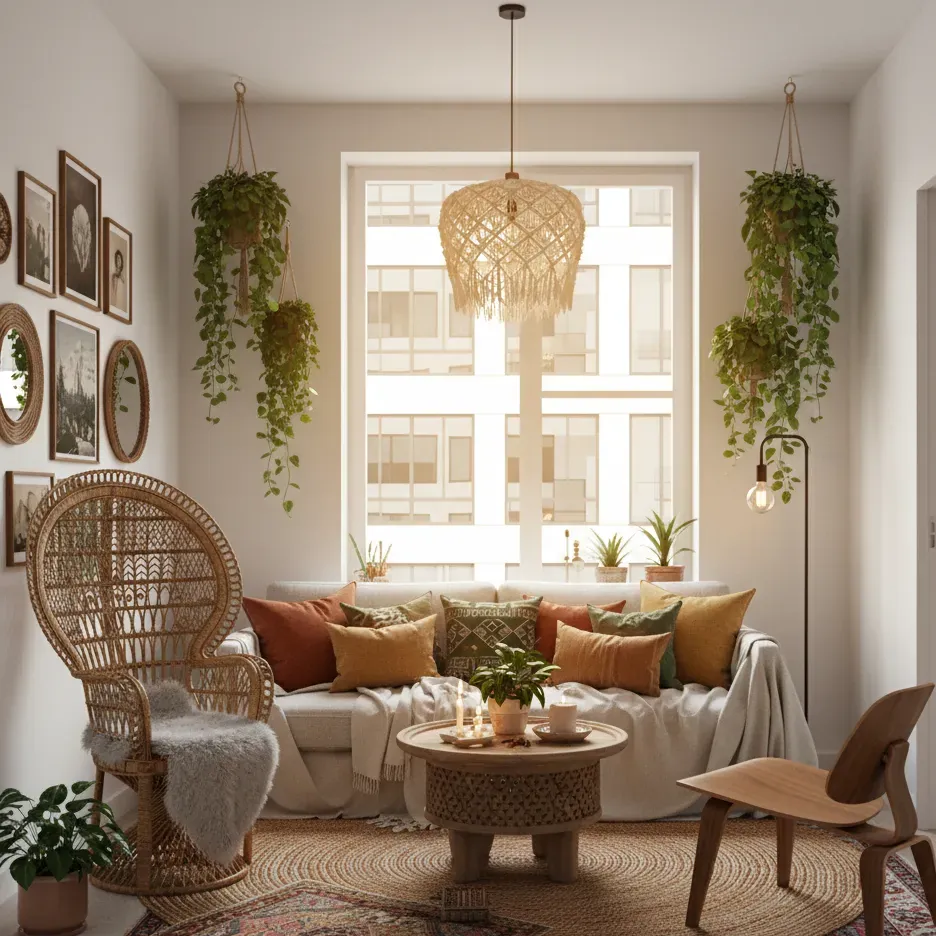
- Pots: match the room’s materials. A brass bowl, like the fern’s in the cover image, warms a neutral room; matte black or white pots suit Scandinavian and modern rooms; baskets and terracotta suit bohemian spaces.
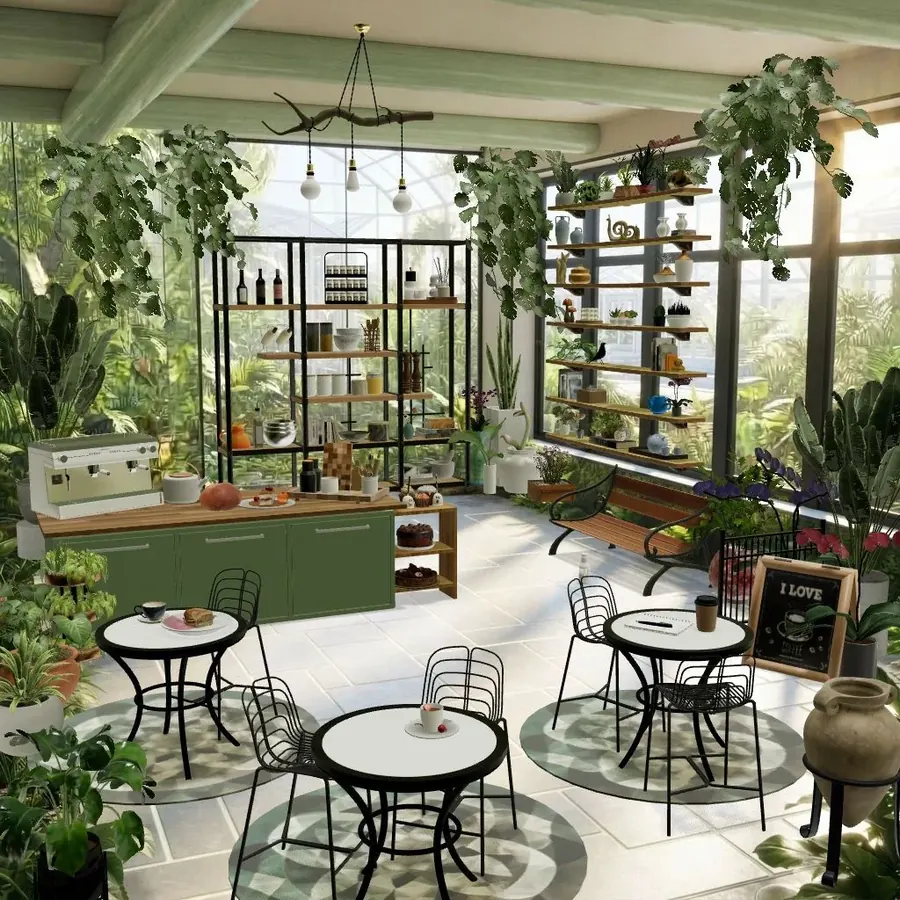
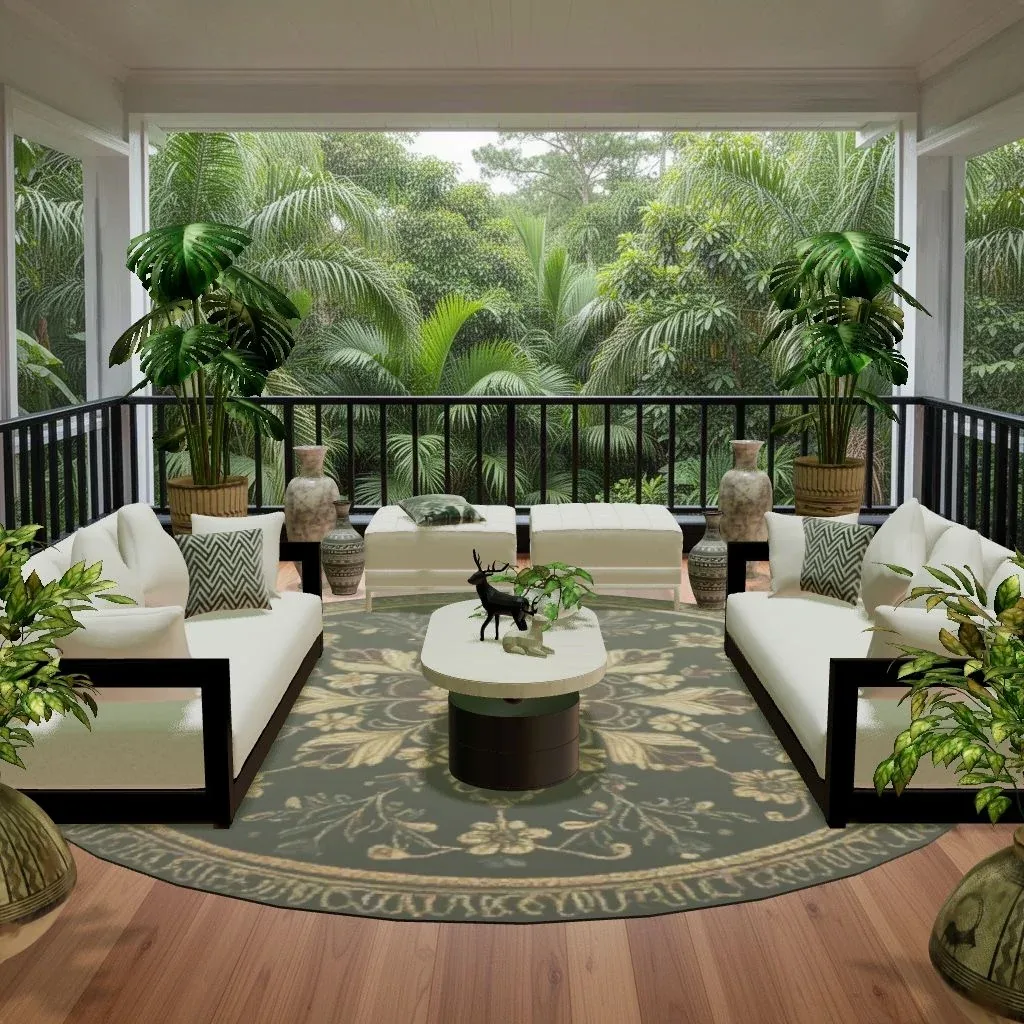
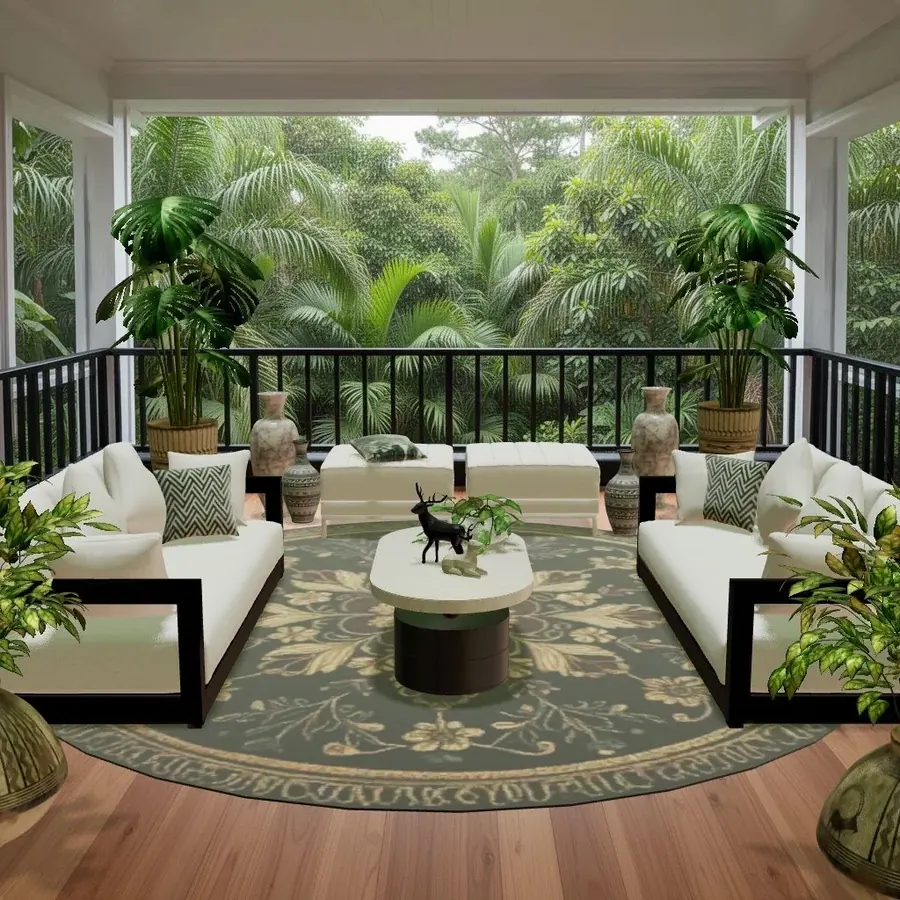
A room full of glass, like the one above, is the easiest place for plants, and the conservatory ideas guide covers heat and shade in summer. For outdoor greenery, see the jungle balcony guide. And if you want a calm, leafy corner to read in, try the cozy reading nook.
A note on pets and children
Some common houseplants are toxic to cats and dogs if chewed, including monstera, pothos, philodendron and snake plant, and true lilies are especially dangerous to cats. Toxicity varies a lot between plants, so check each plant on a reliable pet-safety list before buying (many veterinary organizations publish one), and keep any doubtful plants out of reach of pets and small children.
Try it in Cozee
Plants are one of the quickest ways to bring an empty room to life, and the cutouts in the cover image are the kind of plants you’ll find in the furniture catalog in Cozee, a free design game for iPhone and Android. Try placing tall plants beside the windows, a trailing one on a shelf and a small one on a side table, and see how they change the room. Each catalog purchase gives you five uses, and a use is only spent when you submit a design that includes it, so you can try plants in every corner first.
Questions people ask
What houseplants grow in low light?
ZZ plants, snake plants, cast-iron plants, pothos and heartleaf philodendron are among the most tolerant of low light. They survive and grow slowly rather than thrive, and no plant grows in a room with no daylight at all.
What does bright indirect light mean?
A spot with plenty of daylight where the sun’s rays don’t fall directly on the leaves for long: near an east-facing window, a little back from a south- or west-facing one, or behind a sheer curtain. If the plant casts a soft, blurry shadow, it’s usually indirect light.
How far from a window should a plant be?
It depends on the window and the plant, but light drops quickly as you move back. As a rough guide, within about 1 m (3 ft) of a bright window is bright light, 1–2.5 m (3–8 ft) is medium, and further back or in a corner is low.
Are houseplants safe for cats and dogs?
Not all of them. Several common houseplants, including monstera, pothos, philodendron and snake plant, are toxic to pets if chewed, and lilies are especially dangerous to cats. Check each plant on a reliable pet-safety list before buying, and ask your vet if you’re unsure.
Try it in an empty room first
Cozee is a free interior design game for iPhone and Android. Pick an empty 3D room, fill it with real furniture, and see what the community thinks.
4.7 on the App Store · Free, with optional in‑app purchases