

On this page 10 sections
Scandinavian interior design is a light, simple and cozy style built on pale wood, white or soft grey walls, natural textiles and furniture that is useful before it is decorative. The aim is a calm room that makes the most of daylight and still feels warm on a dark winter evening. Here’s where it comes from and how to get it right, including in a small rented flat.
Where Scandinavian style comes from
The look grew out of Denmark, Sweden, Norway and Finland, where long, dark winters made light and warmth indoors a priority. Pale surfaces bounce what daylight there is around the room, and good lamps take over for the many hours of darkness.
Scandinavian design became known internationally in the 1950s, when a touring exhibition called Design in Scandinavia took furniture, glass and ceramics from the region around North America. Designers such as Alvar Aalto in Finland and Hans Wegner and Arne Jacobsen in Denmark became household names, and their ideas still shape the style: honest materials, careful craft, and everyday objects made well enough to last.
You’ll often hear the Danish word hygge alongside the style. It describes a feeling of coziness and contentment rather than a look, but Scandinavian rooms are designed to make that feeling easy: a soft chair, a blanket, a lamp in the right spot.
The look in five elements
- Light backgrounds. White, warm white or very pale grey walls, with light floors.
- Pale, natural wood. Oak, ash, birch and beech, usually with a matte or oiled finish rather than gloss.
- Simple, functional furniture. Clean shapes, tapered legs, nothing fussy. Every piece has a job.
- Soft, natural textiles. Wool throws, linen curtains, sheepskins, chunky knits.
- Something living. Plants, branches in a vase, botanical prints: the outdoors brought in.
Color palette
The base is neutral and light, but not clinical. Warm whites and greys keep it soft; a muted accent (sage, dusty blue, ochre or a soft blush) stops it from feeling flat.
- Snow
#F7F5F0 - Fog
#E6E2DA - Birch
#D9C3A0 - Sage
#A8B5A2 - Fjord
#7D8C99 - Charcoal
#3B3B3B
Use charcoal or black sparingly, as thin lines (a lamp, a picture frame, chair legs) that give the room some definition.
Furniture and signature pieces
The best Scandinavian rooms have a few good pieces rather than a lot of average ones. Typical choices:
- A low, simple sofa in light grey, oatmeal or cream, often on visible wooden legs.
- A wooden dining or accent chair with curved or spindle details, the kind of shape Danish mid-century designers made famous.
- A round or oval coffee table in white or pale wood. Rounded corners suit the soft feel.
- Open shelving or a slim sideboard for storage that doesn’t dominate.
- A sheepskin draped over a chair or stool.
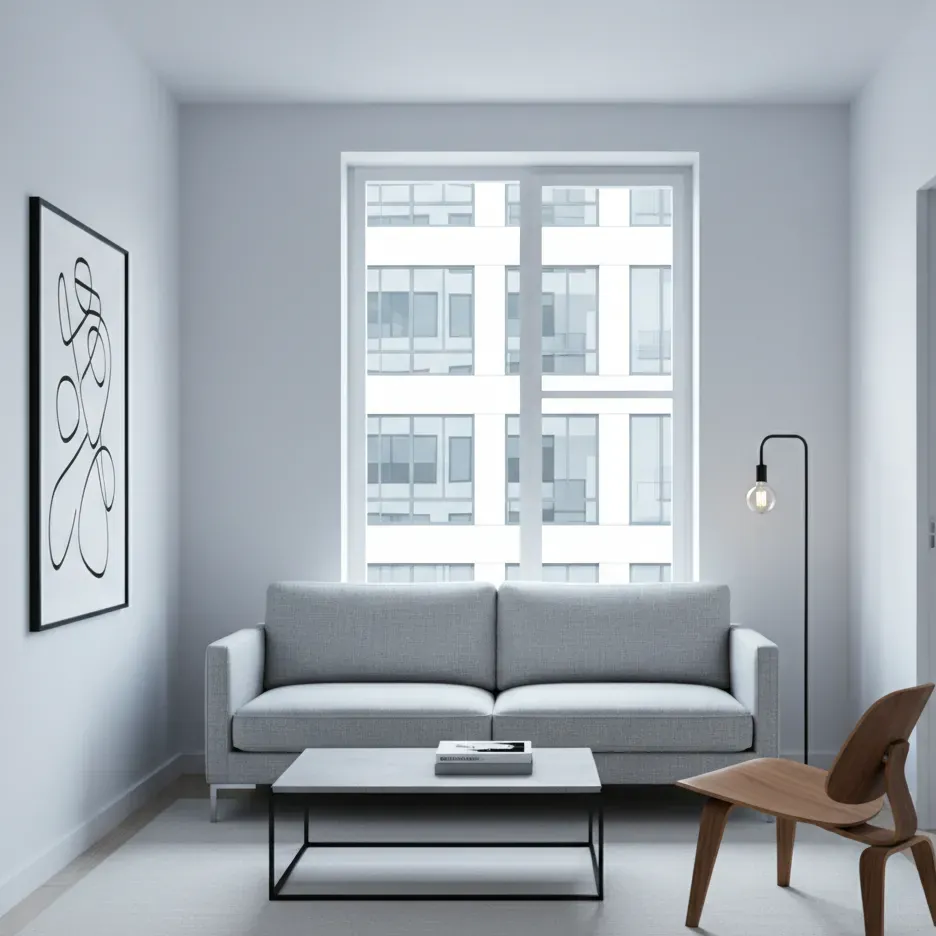
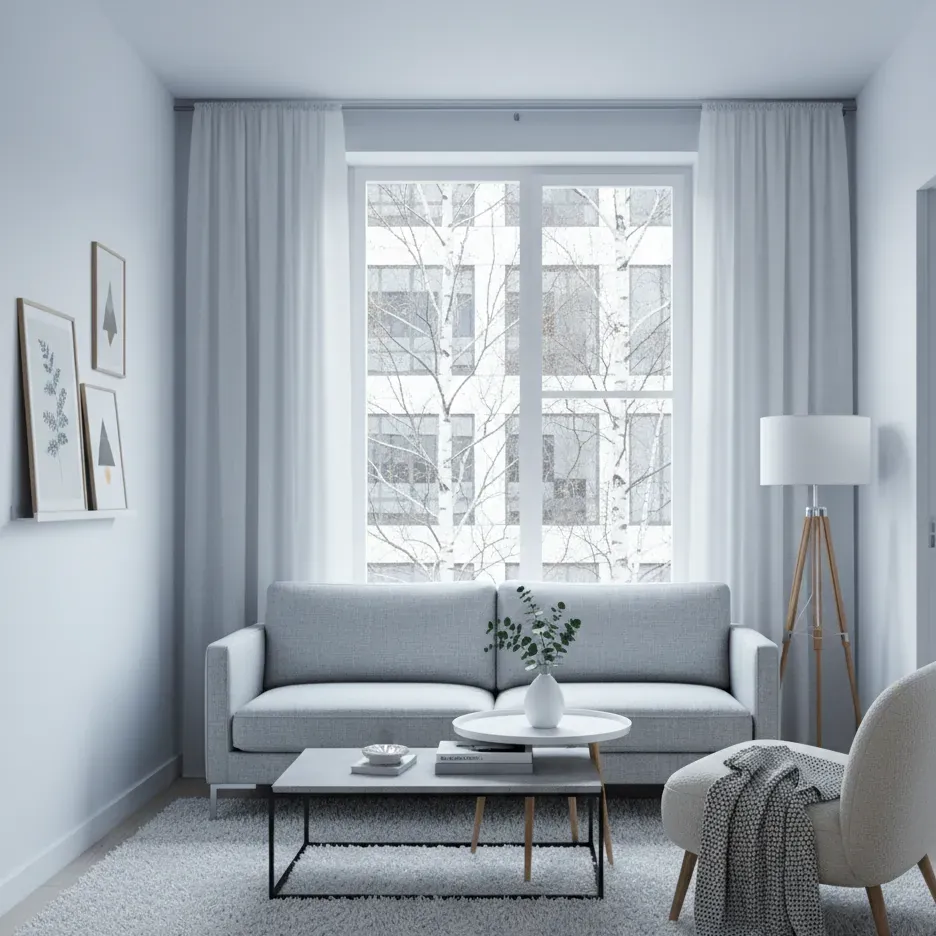
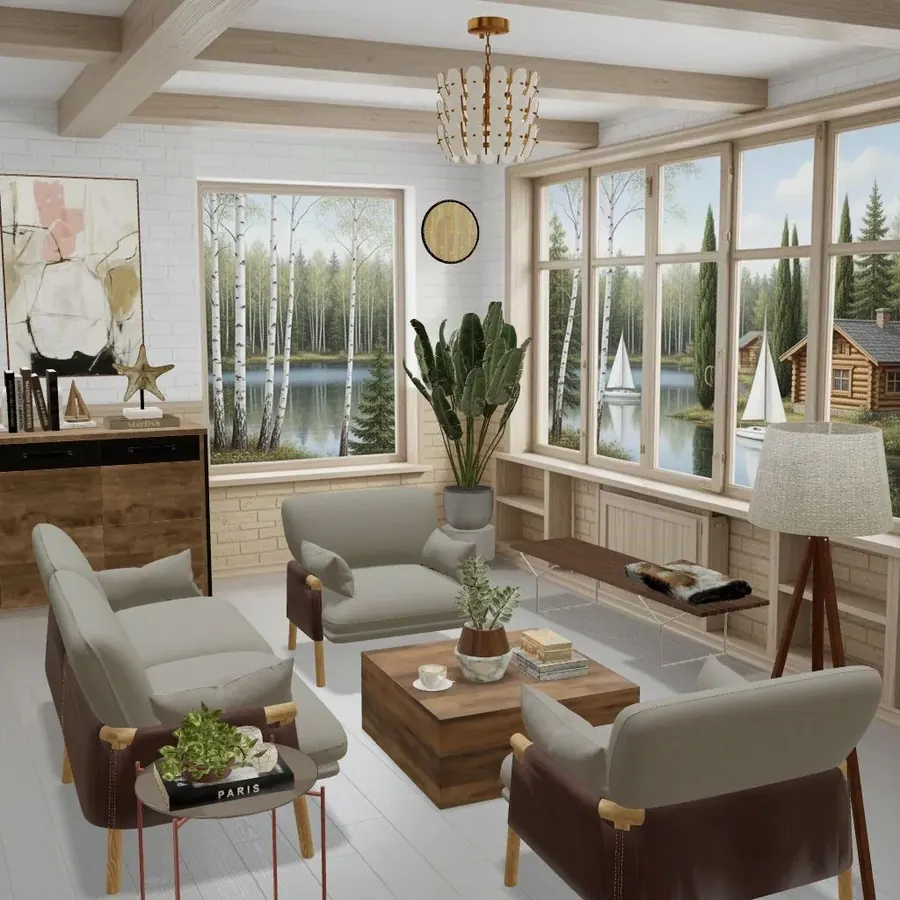
The cover image shows the same living room in Cozee styled this way: a light grey sofa, a round white table, a sheepskin-covered chair, a tripod floor lamp and botanical prints, with a birch tree outside the window.
Lighting: the part people skip
Lighting matters more in this style than almost any other. Scandinavians tend to use several lamps at different heights instead of one bright ceiling light.
- A pendant over the table or seating area, often in paper, wood veneer or opal glass, shaped to soften glare.
- A floor lamp by the sofa (tripod and slim metal designs are classic).
- Table lamps with fabric shades for low, warm pools of light.
- Candles, especially in winter.
Choose warm bulbs (around 2700K). Cool white light makes pale rooms look like an office.
Materials and textures
Because the colors are quiet, texture does the heavy lifting. Mix:
- Matte wood with a little woven rattan or cane
- Smooth cotton bedding with a nubbly wool throw
- Linen curtains that let light through
- A flat-weave or high-pile wool rug
- Stoneware or handmade ceramics
If a room feels dull, it usually needs more texture, not more color.
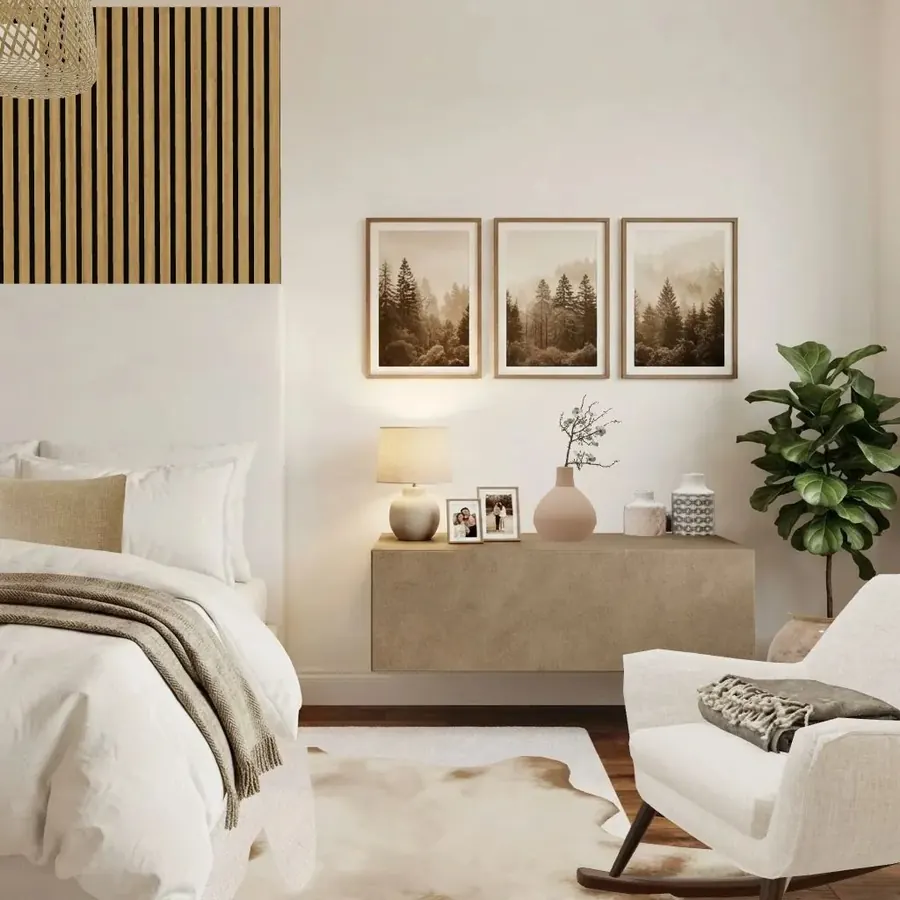
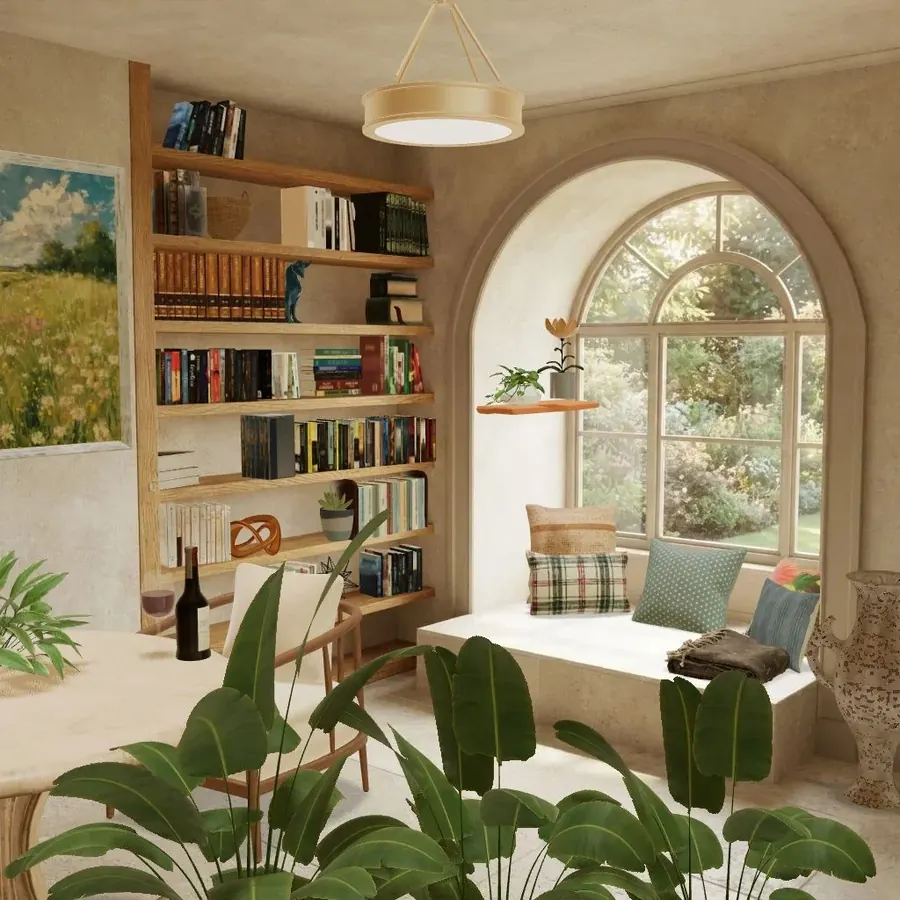
The bedroom above isn’t textbook Scandinavian, but it shows the principles well: a pale base, warm wood on the wall, nature prints, a woven pendant and a big plant to bring life in.
Scandinavian style on a budget, in a rental or small space
The style is forgiving for renters because so much of it comes from movable things.
- Start with textiles. Swap heavy curtains for sheer white linen, add a wool throw and a pale rug. This changes a room more than a new sofa does.
- Cover what you can’t change. A large light rug hides dark or worn floors.
- Paint furniture, not walls, if your lease is strict. A secondhand wooden chair in white or pale grey fits right in.
- Buy one good lamp. A well-designed floor lamp is a better investment than three cheap accessories.
- Use mirrors opposite windows to spread daylight in a small room.
- Edit ruthlessly. Small spaces only look Scandinavian when surfaces are mostly clear. Closed storage helps.
- Go secondhand. Vintage teak and oak pieces from the mid-20th century are widely available on resale sites and suit the style.
Common mistakes
- Too much stark white. Bright white walls, white furniture and cool bulbs make a room feel like a clinic. Use warm whites and vary the shades.
- No contrast at all. A few dark lines (frames, lamp bases, chair legs) give the eye something to rest on.
- Treating it as minimalism. Scandinavian rooms are meant to feel cozy. Leave out the textiles and it turns cold.
- Only one overhead light. See the lighting section: three or four soft sources, always.
- Every wood the same tone. Slight variation (oak floor, birch chair, a walnut tray) looks natural; a perfect match looks flat-packed.
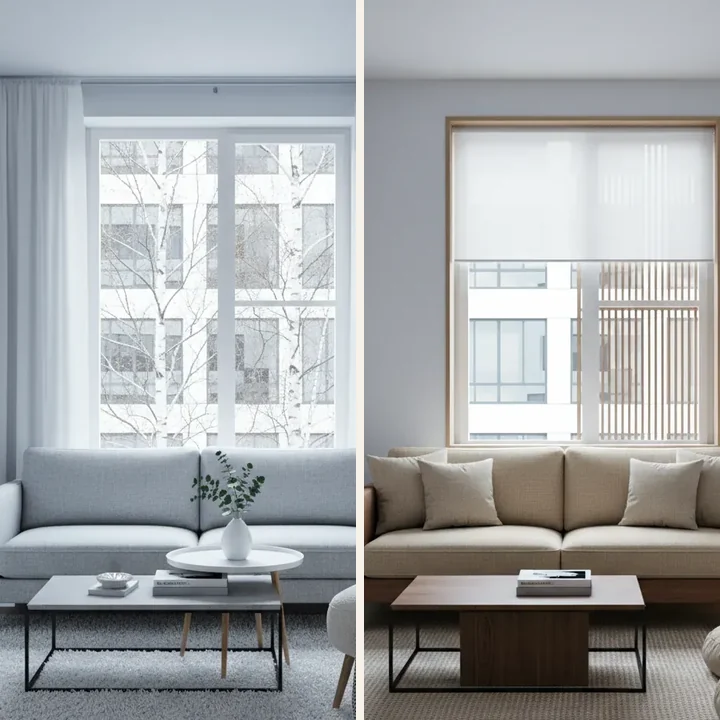
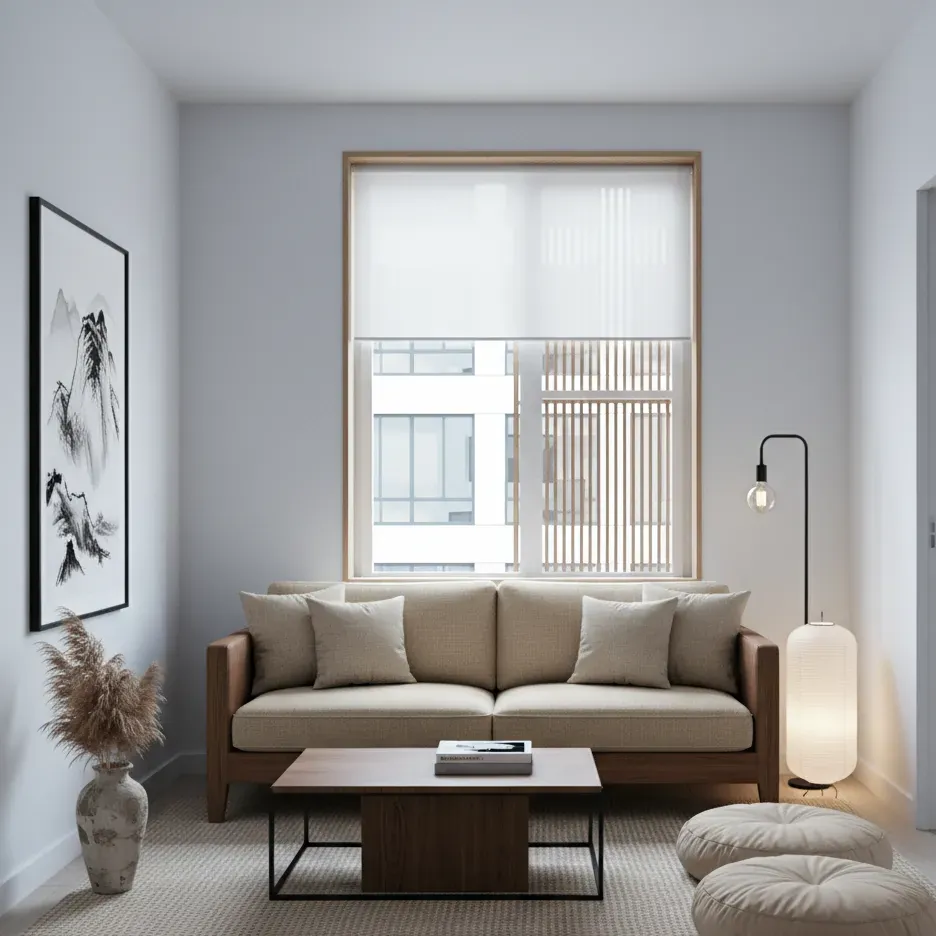
Scandinavian vs Japandi
These two are close neighbors and often confused. Both love wood, calm and craft, but:
| Scandinavian | Japandi | |
|---|---|---|
| Wood | Pale: birch, ash, light oak | Pale and dark together: oak with walnut or black-stained wood |
| Furniture height | Standard | Often low to the ground |
| Feel | Cozy and bright | Quiet and grounded |
| Textiles | Layered, soft, chunky knits | Fewer, flatter: linen, cotton |
| Accents | Sage, dusty blue, blush | Clay, charcoal, muted olive |
If you like Scandinavian but find it too bright or soft, Japandi is the natural next step. If you want even fewer things, look at minimalist style. And for a comparison of all ten looks, see interior design styles explained.
Try it in Cozee
Before you repaint or buy a new sofa, you can practise the look in Cozee, a free interior design game. Every Space starts as an empty 3D room, and you furnish it with real 3D furniture and decor: pick a light sofa, a round table, a rug, a floor lamp and some plants, then move and rotate them until the balance feels right. Once you reach level 5, the pro editor tools let you resize pieces and change the material on many of them, which is handy for testing pale wood against darker finishes.
Other players rate each design you submit, and you can browse how other people styled the same Space, which is a good way to see how different a “light and simple” room can look in other hands. If you’re starting from a bare room in real life too, our guide to furnishing an empty room walks through the order to do things in.
Questions people ask
What are the key features of Scandinavian interior design?
Light walls, pale wood floors and furniture, simple functional shapes, natural textiles like wool and linen, plenty of daylight and warm lamp light in the evening. Rooms are uncluttered but never cold, thanks to layered throws, rugs and plants.
What is the difference between Scandinavian and minimalist design?
Both like clear surfaces and few things, but Scandinavian puts comfort first: soft textiles, warm wood and cozy lighting. Minimalism is stricter and more about restraint, and it can feel sleek or even stark, where Scandinavian rooms aim to feel homely.
Is Scandinavian design the same as hygge?
Not quite. Hygge is a Danish word for a feeling of coziness and contentment, often linked to candles, blankets and time with friends. Scandinavian design is a style of furniture and interiors. A Scandinavian room is usually designed to make hygge easy, which is why the two are often mentioned together.
Can Scandinavian style work in a dark room?
Yes, but don’t rely on pure white, which turns grey in low light. Choose warm whites or soft greige, add more lamps at different heights, and bring in mid-tone wood rather than the palest birch so the room doesn’t look washed out.
Try it in an empty room first
Cozee is a free interior design game for iPhone and Android. Pick an empty 3D room, fill it with real furniture, and see what the community thinks.
4.7 on the App Store · Free, with optional in‑app purchases