

On this page 8 sections
Japandi is a blend of Japanese and Scandinavian design: the quiet restraint and natural materials of a Japanese interior, combined with the comfort and practicality of a Nordic home. Expect low furniture, warm neutral colors, wood in more than one tone, paper lanterns, linen and very little on show. This guide covers where the look comes from, how to build it piece by piece, and how to keep it from feeling bare.
What “Japandi” actually means
The name is a mash-up of “Japanese” and “Scandi”, and it became widely used in the late 2010s. The idea behind it is older. Japanese and Scandinavian design share a lot: respect for natural materials, careful craftsmanship, simple forms and the belief that a room should feel calm. Japandi puts those shared values first and borrows a little from each side to fill the gaps.
From the Japanese side it takes:
- Wabi-sabi, the appreciation of things that are simple, imperfect and aging gracefully. Think hand-thrown pottery, visible wood grain, linen that creases.
- A love of empty space. Japanese interiors often treat the space between objects as part of the design, so nothing feels crowded.
- Low furniture, floor cushions and a closeness to the ground.
- Paper, bamboo and dark-stained wood.
From the Scandinavian side it takes:
- Comfort. A proper sofa, soft rugs, a throw.
- Pale wood and light walls.
- Function first. Every piece is useful.
The result is less sparse than a traditional Japanese room and less bright and soft than a typical Scandinavian one.
The Japandi palette
Japandi colors come from nature: wood, stone, clay, paper, plants. Start with warm off-whites and sand, then ground them with one or two deep tones.
- Rice paper
#F2EDE4 - Sand
#DCCFBD - Oak
#B89C7D - Walnut
#8A6F55 - Olive
#7C8270 - Charcoal
#2F2C2A
The deep tones matter. A room in only beige and pale oak drifts toward Scandinavian; a black-framed table, a charcoal cushion or a walnut sideboard is what gives Japandi its grounded, slightly serious feel.
Building the room, layer by layer
Start low
Low, solid furniture is the most recognizable part of the style. Look for:
- A low-slung sofa with a visible wooden frame, upholstered in linen, cotton or bouclé in beige, oatmeal or stone.
- A low coffee table, often dark wood or black, simple and solid, sometimes with rounded edges.
- Floor cushions or a pouf for extra seating.
- A low platform bed in the bedroom.
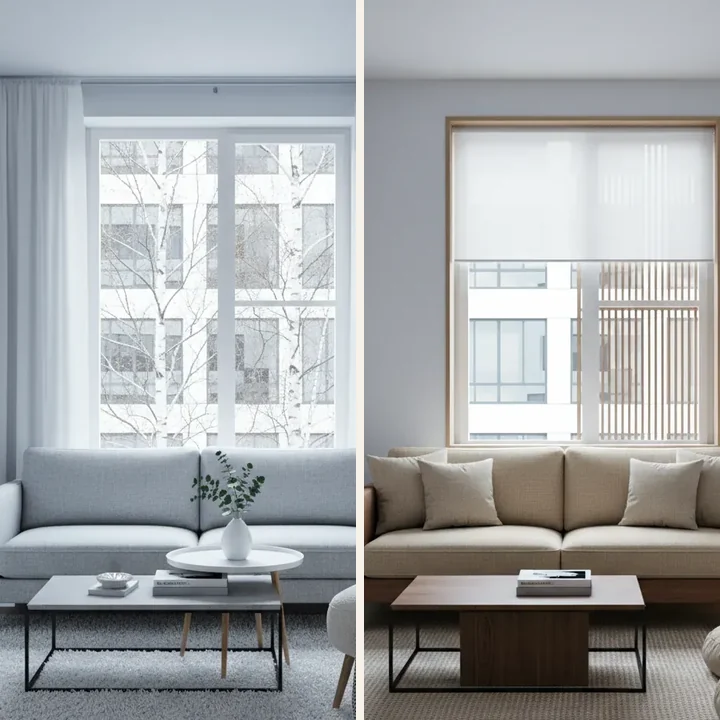
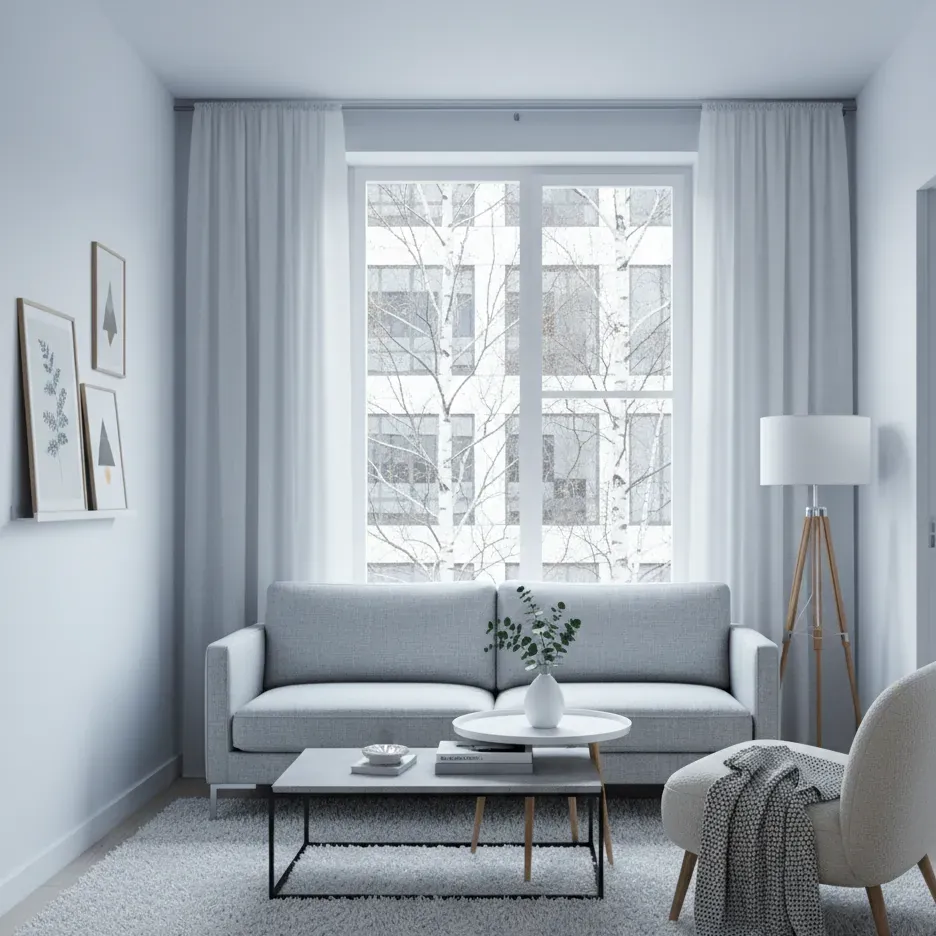
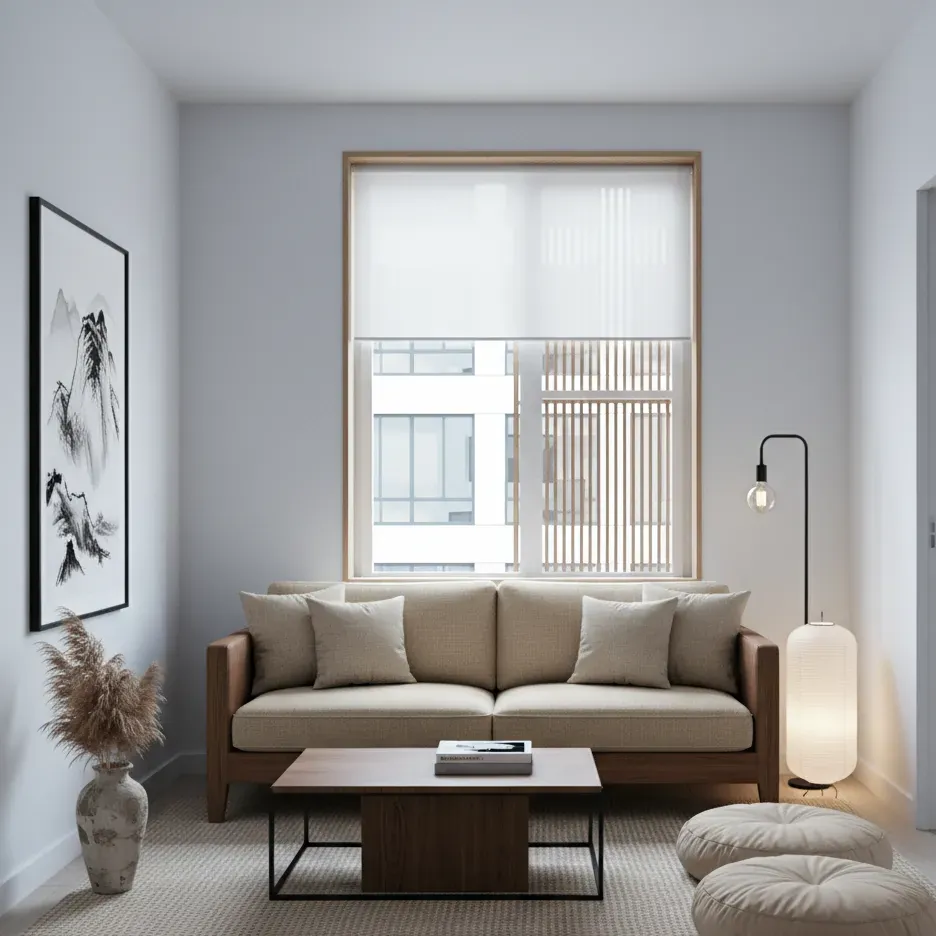
The cover image is the same living room in Cozee styled Japandi: a low wood-framed beige sofa, a dark low coffee table, floor cushions, a paper floor lantern, pampas grass and ink-style art. Notice how much bare wall and floor is left.
Mix your woods on purpose
Japandi is one of the few styles where mixing light and dark wood is the point. Pair pale oak or ash with walnut, smoked oak or black-stained wood. Keep finishes matte and let the grain show. Two or three wood tones is plenty; more starts to look random.
Add natural textures, but keep them quiet
- Linen and cotton in plain weaves
- Paper (lamps, screens, art)
- Rattan, cane and bamboo
- Stone, concrete or ceramic
- Wool or jute rugs with very little pattern
Where Scandinavian rooms layer chunky knits and sheepskins, Japandi keeps textiles flatter and fewer.
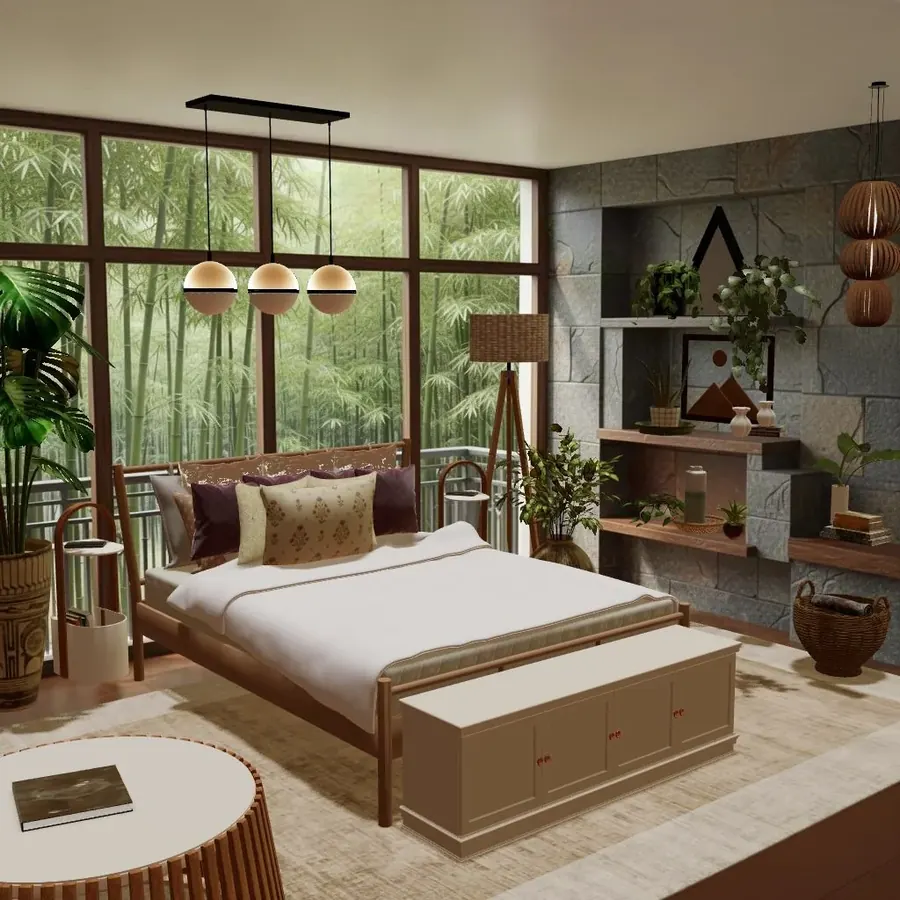
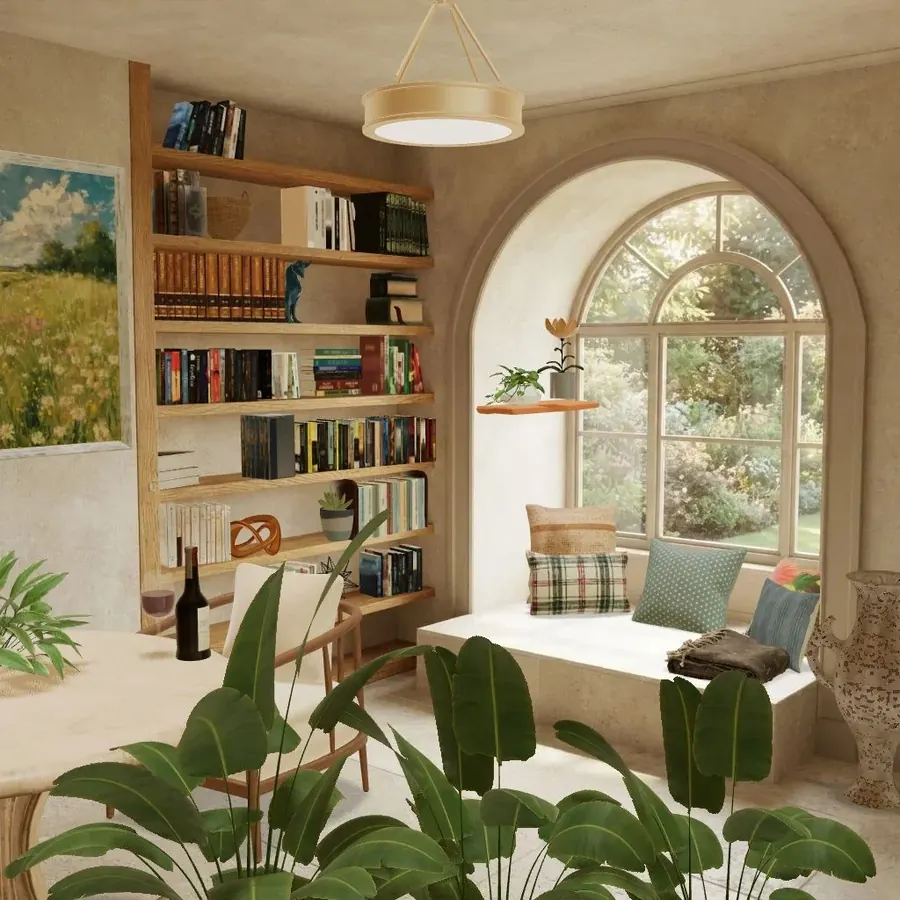
That bedroom is a little more layered than strict Japandi (the plum cushions and pattern push it warmer), but the materials are right: natural stone, wood shelving, white linen and a slatted wooden lantern.
Choose a few meaningful objects
Display surfaces should be mostly empty. A handmade bowl, a stem of dried grass in a stoneware vase, a single branch, one framed piece of calligraphy or ink art. Plants work well, but choose sculptural ones (a fiddle-leaf fig, a bonsai, an olive tree) over trailing jungles.
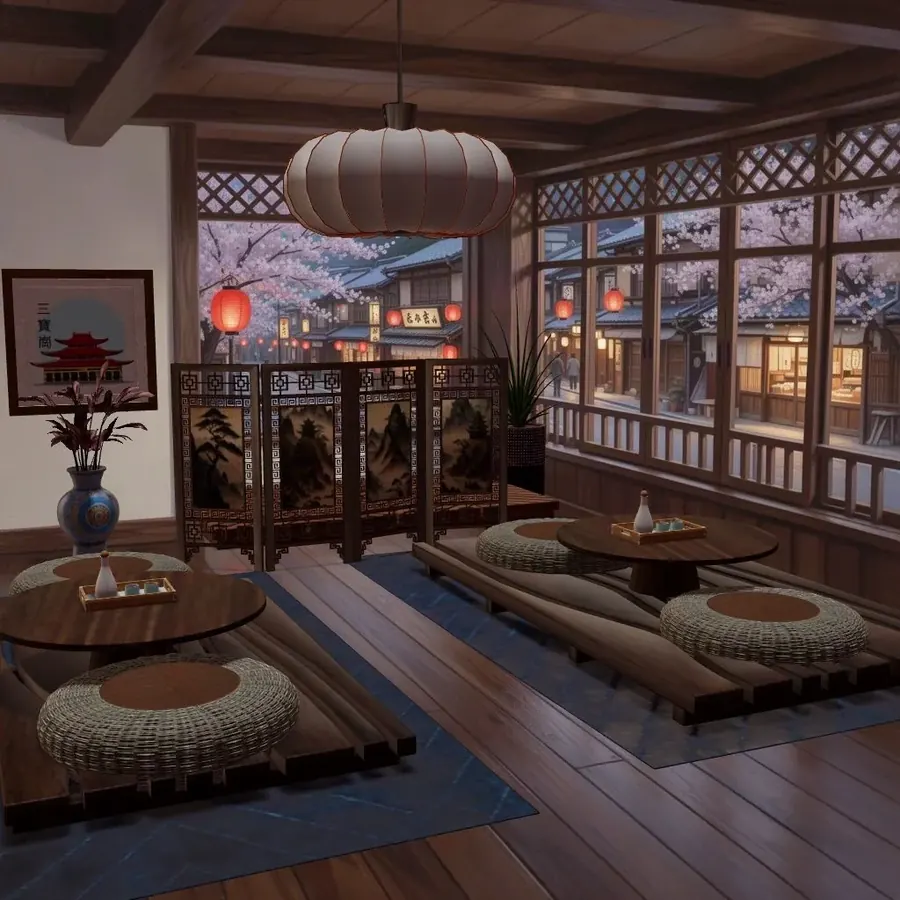
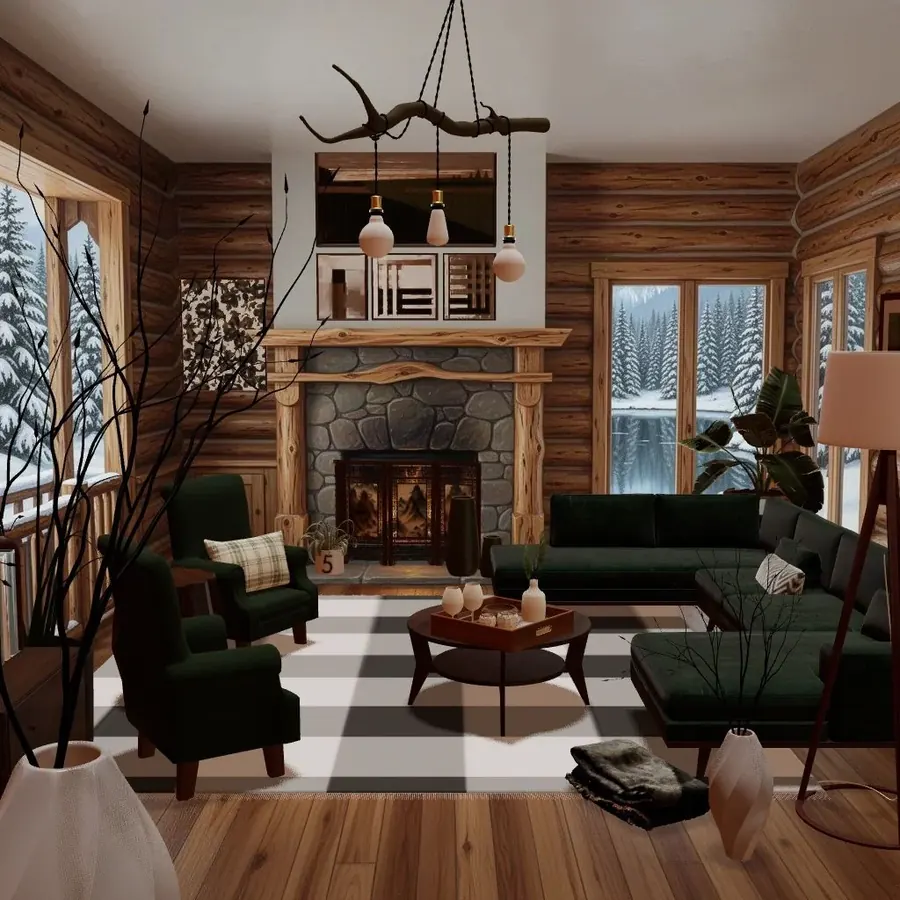
The room above leans more traditional than Japandi (there’s no Scandinavian sofa in sight), but it’s a good reference for the Japanese half of the look: everything close to the floor, dark wood, a big paper lantern and a calm, open layout.
Lighting
Soft, diffused light is essential. Harsh spotlights and bare bulbs fight the mood.
- Paper lanterns, as pendants or floor lamps, are the signature. Isamu Noguchi’s Akari paper lamps, designed from the early 1950s, are the classic reference, and many affordable lanterns follow the same idea.
- Wood or rattan pendants over a dining table.
- Low table lamps with linen shades.
- Warm bulbs (around 2700K) and, ideally, dimmers.
Keep light sources low and indirect where you can. A lantern on the floor in a corner does more for the atmosphere than a bright ceiling light.
Japandi vs Scandinavian (and minimalist)
| Japandi | Scandinavian | Minimalist | |
|---|---|---|---|
| Overall feel | Grounded, quiet | Bright, cozy | Spare, ordered |
| Wood | Light and dark mixed | Mostly pale | Often little visible wood |
| Furniture | Low, solid | Standard height, light legs | Sleek, often hard-edged |
| Textiles | Few, flat, natural | Layered, soft | Minimal |
| Objects | A few handmade pieces | Some cozy accessories | Almost none |
| Accents | Clay, olive, charcoal | Sage, dusty blue, blush | Black or one color |
A quick test: if a room has chunky knit throws and pale birch everywhere, it’s Scandinavian. If it has a walnut table, a paper lantern and a single branch in a vase, it’s Japandi. If it has almost nothing, it’s minimalist.
Japandi in a small space or rental
The style suits small homes well, because it relies on fewer, better things.
- Lower the furniture. Low pieces leave more visible wall above them, which makes a small room feel taller.
- Use closed storage. Clutter kills Japandi instantly. Baskets with lids, a simple wooden cabinet, under-bed boxes.
- Swap the lights. A paper lantern shade over a rental’s ceiling fitting is cheap, easy to remove when you move out, and changes the whole mood.
- Use textiles to cover rental finishes. A large jute or wool rug over a cold floor, linen curtains in sand or stone.
- Shop secondhand ceramics. Handmade bowls and vases are easy to find in charity shops and flea markets, and slight imperfections are a plus here.
- Room dividers. A folding screen or a slatted wooden panel can zone a studio without any drilling.
Common mistakes
- Making it beige soup. Without the dark accents, the room loses definition. Add at least one deep wood or charcoal element.
- Going too empty. Japandi is calm, not bare. A room with no textiles, plants or objects feels like a waiting room.
- Too many “zen” props. Buddha statues, bamboo fountains and stacks of stones tip the room into theme-park territory. Restraint is the Japanese part.
- Glossy finishes. High-gloss lacquer and chrome belong to modern style. Keep surfaces matte and natural.
- Cool white light. It makes warm woods look grey and flat.
Try it in Cozee
Japandi lives or dies on balance, so it’s a good style to practise before you buy. In Cozee, a free design game for iPhone and Android, every Space starts as an empty 3D room. You furnish it with real 3D furniture and decor (sofas, rugs, lamps, plants, art), drag pieces in and rotate them until the spacing feels right. Try it as an exercise: how few pieces can you use and still make the room feel finished?
Other players rate each design you submit, and you can look at how other people designed the same Space, which shows you quickly whether your restraint reads as calm or as unfinished. For a comparison of every style in one place, see interior design styles explained, and if you’re planning a calm bedroom, our cozy bedroom ideas are a good next read.
Questions people ask
What is the difference between Japandi and Scandinavian?
Japandi is calmer and more grounded. It uses darker woods alongside pale ones, lower furniture, fewer and flatter textiles, and earthier accents like clay and charcoal. Scandinavian is brighter and softer, with pale wood, layered knits and cozy clutter kept in check.
What colors are used in Japandi?
Warm neutrals form the base: off-white, beige, sand and greige. They’re grounded with deeper tones such as charcoal, walnut brown and black, plus muted accents like clay, olive or sage. Bright, saturated colors are rare.
Is Japandi the same as minimalism?
It’s minimal, but warmer. Japandi keeps the clear surfaces and restraint of minimalism but adds natural materials, handmade objects and a sense of imperfection, so it feels lived in rather than sleek.
What does wabi-sabi mean in interior design?
Wabi-sabi is a Japanese idea of finding beauty in things that are imperfect, simple and changing with age. In a room it shows up as handmade ceramics, natural wood grain, linen that creases and materials that are allowed to wear.
Try it in an empty room first
Cozee is a free interior design game for iPhone and Android. Pick an empty 3D room, fill it with real furniture, and see what the community thinks.
4.7 on the App Store · Free, with optional in‑app purchases