

On this page 13 sections
A cozy bedroom is one that feels calm the moment you walk in: a well-placed bed with good bedding, soft layered light instead of one ceiling bulb, muted colors, plenty of texture, and surfaces clear enough to rest your eyes on. Here are ten practical ways to get there, with the sizes that matter, whether you have a big main bedroom or a small box room.
1. Put the bed in the right place
The bed is the anchor of the room, so place it first.
- Headboard against a solid wall, not under a window if you can avoid it (drafts, light and nowhere to lean).
- See the door from bed without lying directly in line with it. Many people find this feels more settled.
- Clearance: at least 60 cm (24 in) on each side and at the foot, ideally 75 cm (30 in) or more.
- Small room: pushing one long side against the wall frees up floor, though making the bed is harder. Fine for single beds and guest rooms.
2. Give the bed a headboard
A headboard makes the bed look intentional and gives you something to lean on when reading. Upholstered headboards are softest and absorb sound; wooden or cane ones feel lighter. No room for one? Paint a rectangle or arch on the wall behind the bed, or hang a large textile.
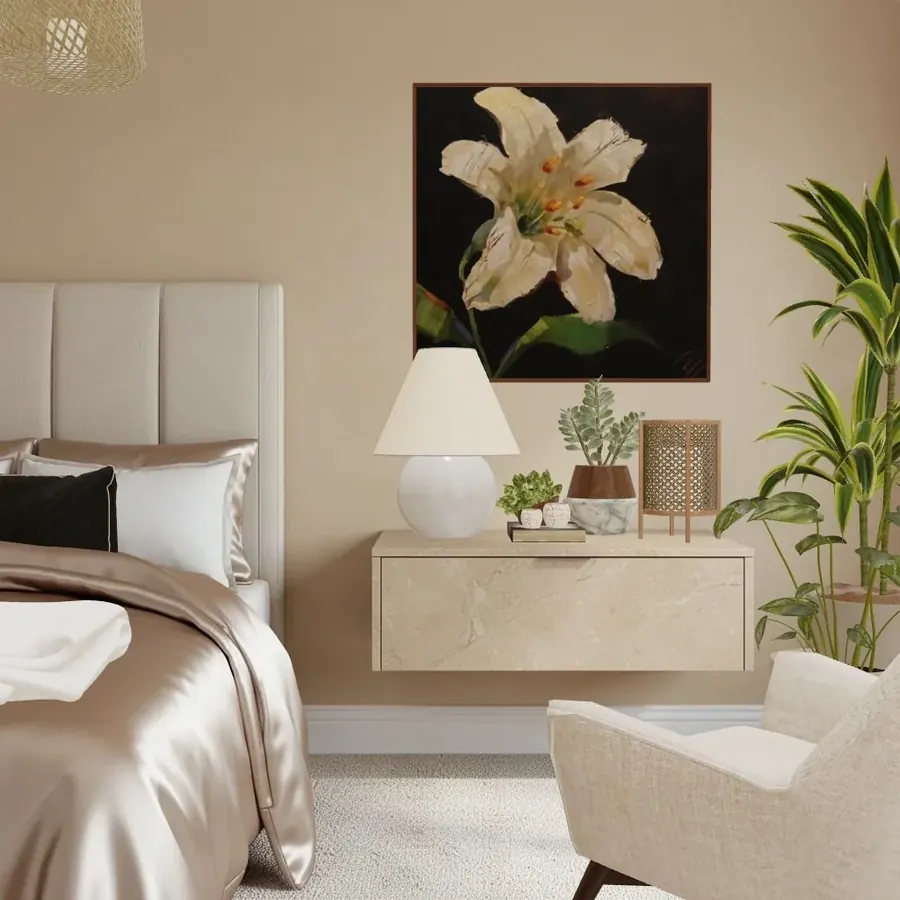
3. Size the nightstands and lamps
- Height: the top of the nightstand should be within about 5 cm (2 in) of the top of the mattress.
- Width: 45–60 cm (18–24 in) is typical; a floating shelf of 30–40 cm (12–16 in) works in tight rooms.
- Lamps: the bottom of the shade should sit roughly at chin height when you’re sitting up in bed, so light falls on a book without shining in your eyes.
- Wall lights or plug-in sconces free up the nightstand completely and suit small bedrooms.
4. Layer the lighting
Bedrooms need the gentlest light in the house.
- Ambient: a pendant or ceiling light on a dimmer, used mostly for cleaning and getting dressed.
- Task: a reading lamp on each side of the bed, and a light near the wardrobe or mirror.
- Accent: a small lamp on a dresser, a candle, or a low light in a corner.
Use warm bulbs, around 2200–2700K, in bedside lamps. A switch you can reach from bed is worth a lot.
5. Choose calm colors
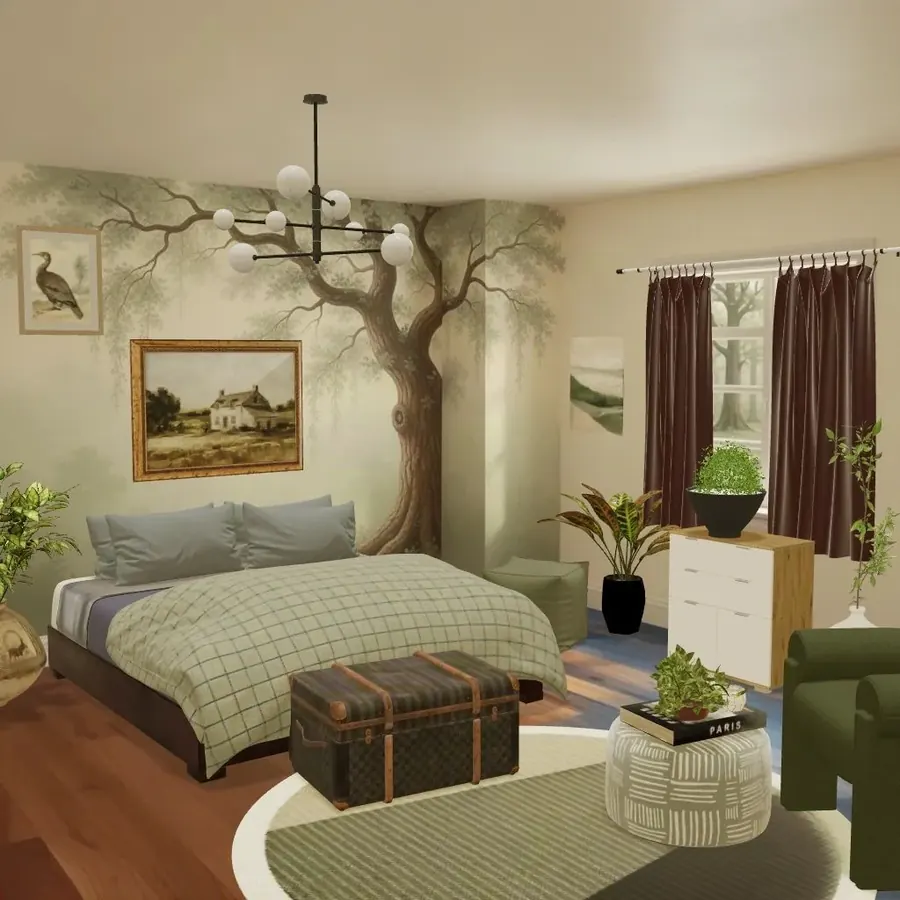
Muted, slightly grey or earthy shades feel restful. The cover image pairs sage green with cream, then adds a painted tree mural and checked bedding in the same family of greens, so the room has pattern without becoming busy.
Good bedroom palettes:
- Warm neutral: cream, beige, oatmeal, oak.
- Sage and cream: sage walls, white bedding, natural wood.
- Dusty blue: blue-grey walls, white and linen, brass.
- Dark and cocooning: navy, forest green or charcoal walls with warm lamps and light bedding.
Dark walls aren’t only for large rooms. In a small bedroom they can blur the corners and make the room feel enveloping.
6. Invest in bedding you love touching
Bedding is the biggest textile in the room.
- Cotton percale: crisp, cool and matte. Good for warm sleepers.
- Cotton sateen: smooth with a soft sheen; warmer than percale.
- Linen: relaxed, textured and very breathable; gets softer with washing. The rumpled look is part of the charm.
- Layers: a fitted sheet, duvet or comforter, then a throw or quilt across the foot and two to four pillows. Layers look inviting and let you adjust warmth through the seasons.
Stick to two or three colors in the bedding and vary the textures instead.
7. Add wood and natural texture
Wood warms a bedroom straight away. A slatted wood wall panel, an oak bench at the foot of the bed, a rattan chair or a wooden trunk all add texture and storage.
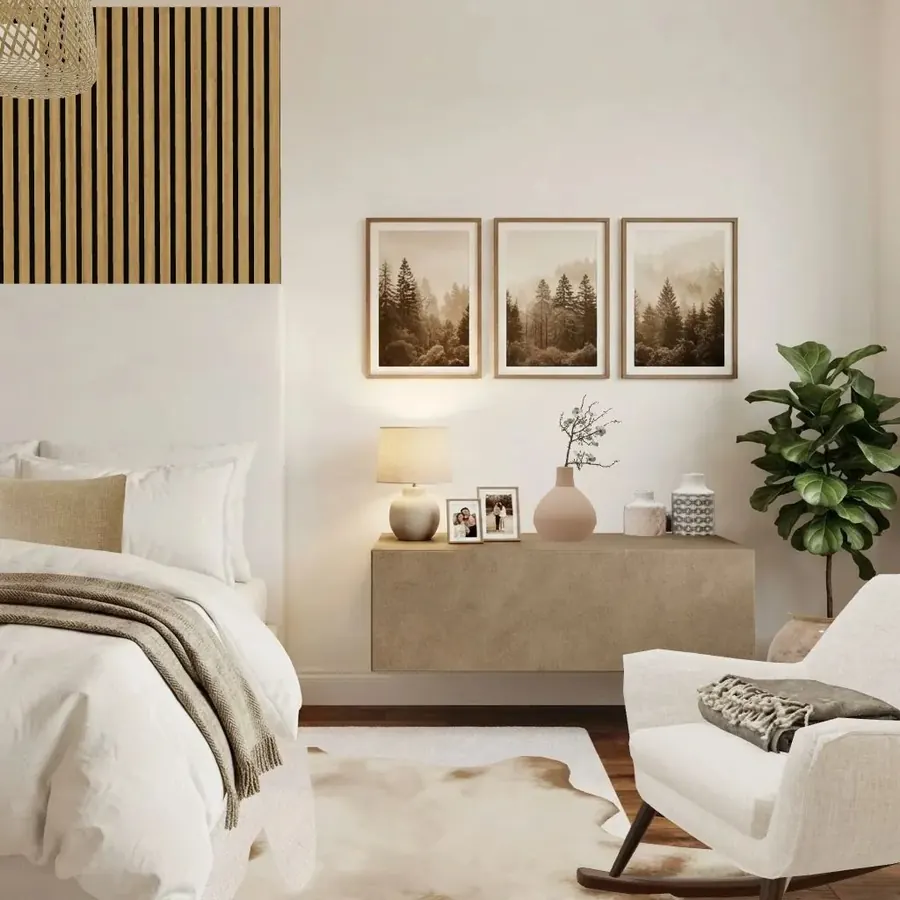
Notice how the three matching forest prints hang as one evenly spaced group above the floating console, roughly matching its width. The same rule works above a bed: aim for art, or a group of frames, at around two-thirds of the bed’s width.
8. Put a rug where your feet land
Getting out of bed onto a soft rug is one of the small pleasures of a cozy bedroom.
- Under the bed: the rug should extend 45–60 cm (18–24 in) beyond the sides and foot. For a double or queen bed that’s usually around 240 × 300 cm (8 × 10 ft); a king needs about 270 × 370 cm (9 × 12 ft).
- Two runners: one on each side of the bed, if a large rug doesn’t fit.
- Sheepskin or small rug: on one side only in a very small room.
Wool, cotton and jute-blend rugs all work; very high-pile shag is soft but harder to keep clean.
9. Get the window right
- Blackout or lined curtains if streetlights or early sunrise wake you. A blackout roller blind behind lighter curtains gives you both.
- Floor-length curtains, hung 10–15 cm (4–6 in) above the frame or higher, make the ceiling feel taller.
- Sheer layers soften daylight and give privacy without darkness.
If you’re lucky enough to have a view, frame it rather than hide it:

10. Bring in a few plants, and edit everything else
Plants soften a bedroom. Choose ones that suit the light:
- Low light: snake plant, ZZ plant, cast-iron plant.
- Medium, indirect light: pothos, heartleaf philodendron, peace lily.
- Bright light: a small olive tree, a rubber plant or a fiddle-leaf fig by the window.
(Snake plant, pothos, philodendron, peace lily and ZZ plant are toxic to cats and dogs.) Then edit: clear the nightstand down to a lamp, a book and a glass of water; give clothes a home in a closed wardrobe or a basket; keep chargers in a drawer. A cozy bedroom has texture everywhere, but not clutter.
Bonus: sleeping alcoves and nurseries
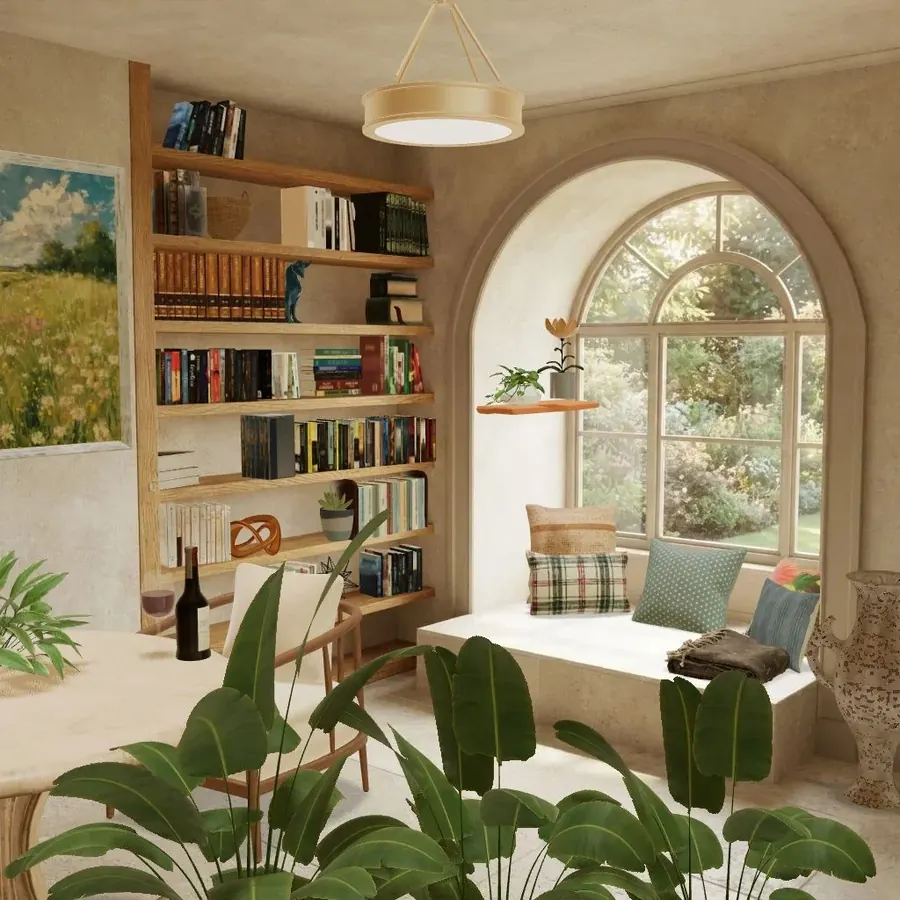
An alcove, a bay or a corner under a sloped ceiling makes a wonderfully snug spot for a bed or a crib.
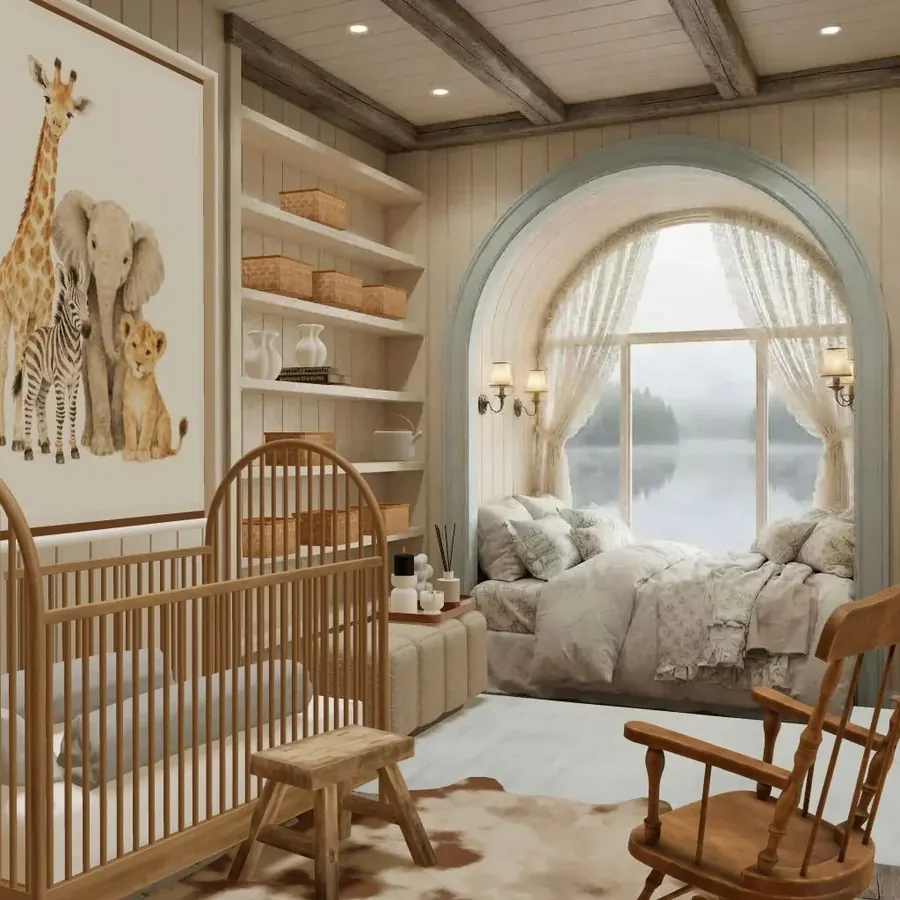
For a baby, follow mainstream safe-sleep advice: a firm, flat mattress, nothing loose in the crib (no pillows, bumpers or soft toys), and keep the crib away from windows, radiators, and blind or curtain cords. Put the decor on the walls and shelves, as in the room above, rather than in the crib.
Common mistakes
- One bright ceiling light. Add bedside lamps before anything else.
- Nightstands at the wrong height. Too low or too high and you’ll knock things over at night.
- A rug that disappears under the bed. Size up or switch to runners.
- Too many cushions. If they end up on the floor every night, keep two or three.
- Using the bedroom as storage. Exercise bikes and laundry piles are the enemy of calm.
- Ignoring sound. Hard floors and bare walls echo. Rugs, curtains and an upholstered headboard quieten a bedroom.
Try it in Cozee
If you’d like to try a look before you buy anything, Cozee is a free design game for iPhone and Android where you furnish empty 3D rooms with real furniture and decor: beds, rugs, lamps, plants and art. Submit your room and other players rate it; afterwards you can see how others styled the same Space in the community. It’s a calm, no-timer way to test, say, a sage-and-cream scheme against an all-beige one. Read how the game works, or find your look first:
For more restful rooms, see our guides to Japandi, Scandinavian style and the cozy reading nook.
Questions people ask
How can I make my bedroom cozy on a budget?
Start with lighting and textiles: warm bulbs, a bedside lamp on each side, a throw and two or three extra cushions. A rug beside the bed and curtains that reach the floor also make a big difference for little money. Clearing clutter off surfaces is free and helps most of all.
What color is best for a cozy bedroom?
Soft, slightly muted shades tend to feel the most restful: warm whites, beige, greige, sage, dusty blue, terracotta and deep greens or navy if you like a darker, cocooning room. Very bright, saturated colors on every wall can feel stimulating.
Where should a bed go in a bedroom?
Usually with the headboard against a solid wall, ideally where you can see the door from the bed but aren’t directly in line with it. Leave at least 60 cm (24 in), and ideally 75 cm (30 in), of walking space around the sides and foot.
How big should a rug be under a bed?
Big enough to stick out at least 45–60 cm (18–24 in) on each side and at the foot, so your feet land on it when you get up. For a double or queen bed that usually means about 240 × 300 cm (8 × 10 ft), or use two runners along the sides instead.
Try it in an empty room first
Cozee is a free interior design game for iPhone and Android. Pick an empty 3D room, fill it with real furniture, and see what the community thinks.
4.7 on the App Store · Free, with optional in‑app purchases