

On this page 10 sections
A calm, gender-neutral nursery comes down to a soft palette of warm whites, sand, sage or clay; natural materials like light wood, rattan, linen and wool; a simple layout built around a safe sleep space, a comfortable feeding chair and a changing spot; light you can dim right down; and fewer, better things. It suits any baby, and it grows with the child, because the room isn’t built around a theme they’ll outgrow in two years. Below is how to plan it, with the safety basics to get right first.
Start with safety, then decorate
A nursery is the one room where looks come second. The details depend on your country and your baby’s age, so follow the official safe-sleep guidance where you live, such as the American Academy of Pediatrics in the US or the NHS and the Lullaby Trust in the UK, and the instructions that come with your crib and mattress. The basics that come up again and again:
- Keep the sleep space bare. A firm, flat mattress that fits the crib, a fitted sheet, and nothing else: no pillows, bumpers, quilts or soft toys in the crib.
- Anchor furniture to the wall. Dressers, bookcases and wardrobes can tip when a child climbs or pulls on a drawer. Use anti-tip kits even on low pieces.
- Choose cordless blinds, or keep cords and chains well out of reach with a cleat or tensioner.
- Place the crib carefully: away from windows, radiators, heaters, lamp cables and anything a standing baby could grab.
- Hang nothing heavy over the crib. Put art and shelves on other walls.
Decorating comes after that, and it’s easier than it sounds, because a calm nursery has fewer things in it anyway.
Build a soft neutral palette
Neutral doesn’t have to mean white everywhere. Pick a base, one or two supporting shades, and a natural material to warm it all up.
- Warm white
#F3EEE6 - Oat
#E4D8C6 - Sand
#C9B79C - Sage
#A9B49A - Clay
#C79A82
- Warm white and oat: the lightest option; good in small or north-facing rooms.
- Sand and sage: a little more color, still very restful.
- Clay and cream: warmer and earthier, lovely with wood.
Slightly muted, slightly warm shades tend to look softer than bright white or cool grey, especially under lamplight at 3 a.m. If you’re painting, test the samples at night as well as by day (see how to choose paint colors), choose a low-VOC paint, and paint well before the baby arrives so the room has time to air.
Let materials do the work
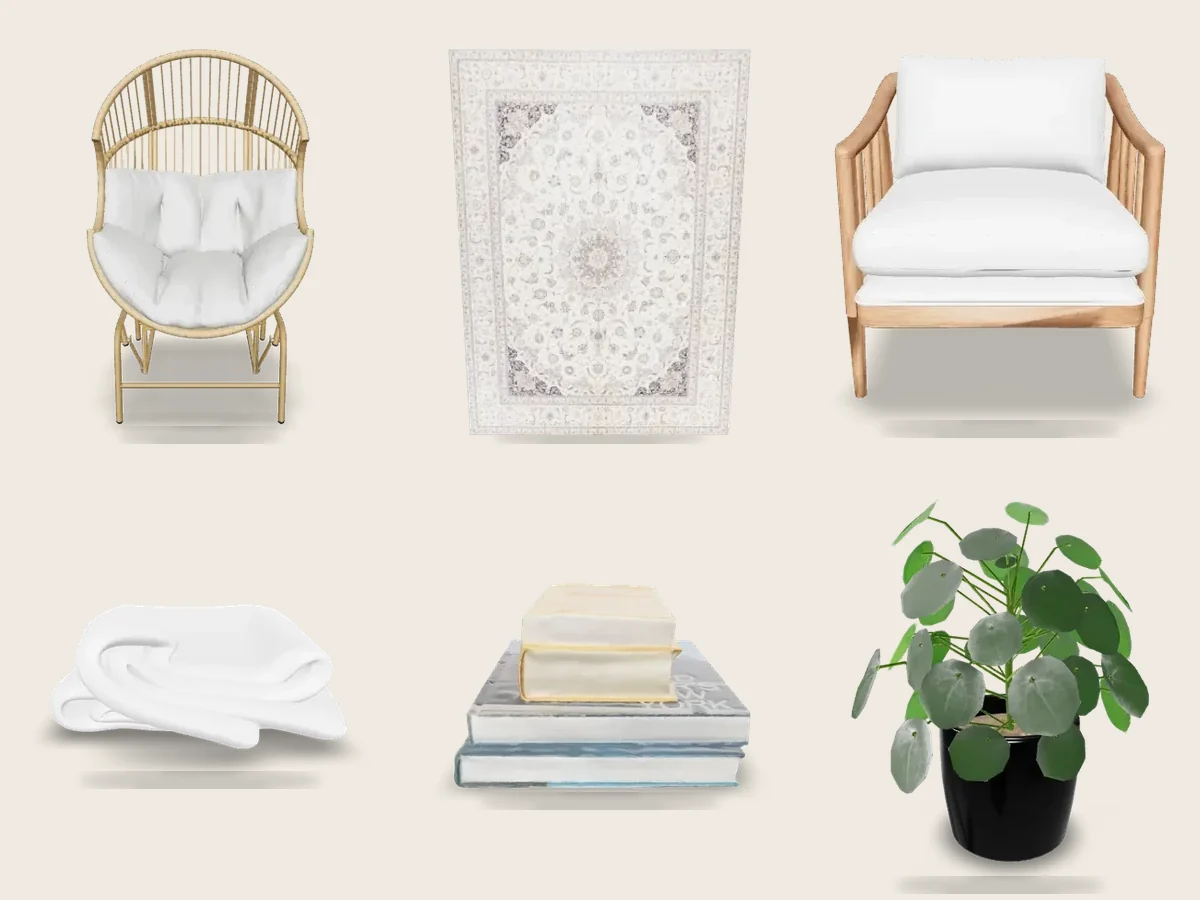
In a neutral room, texture stops things looking flat. The mood board in the cover image is a good shopping list: a rattan egg chair, a pale wood armchair with white cushions, a cream rug with a soft medallion pattern, a folded white blanket, a few books and a plant. Nothing in it is a “baby” color, yet together it feels gentle and warm.
- Wood: a light oak or beech crib, shelves or a stool.
- Rattan and cane: a chair, baskets or a lampshade.
- Linen and cotton: curtains, a changing pad cover, cushions on the feeding chair.
- Wool or cotton rug with a non-slip pad underneath, washable if you can find one.
Our guide to materials and textures explains how to mix them so the room doesn’t look like one beige block.
Plan the layout around three spots
Most nurseries need three zones, close together but not on top of each other:
- Sleep. The crib, placed by the safety rules above, ideally where you can reach it from the door without crossing the room in the dark.
- Feed. A comfortable armchair, glider or rocker, with a small side table for water and a lamp. Your arms and back will thank you for a chair with good support.
- Change. A changing surface at a height that suits the person doing most of it, often around waist height, with everything you need within reach so you never step away from the baby.
Add closed storage for clothes and nappies or diapers, and a basket or two for toys later. Open shelves are lovely for books and a few objects, but keep them out of reach of the crib.
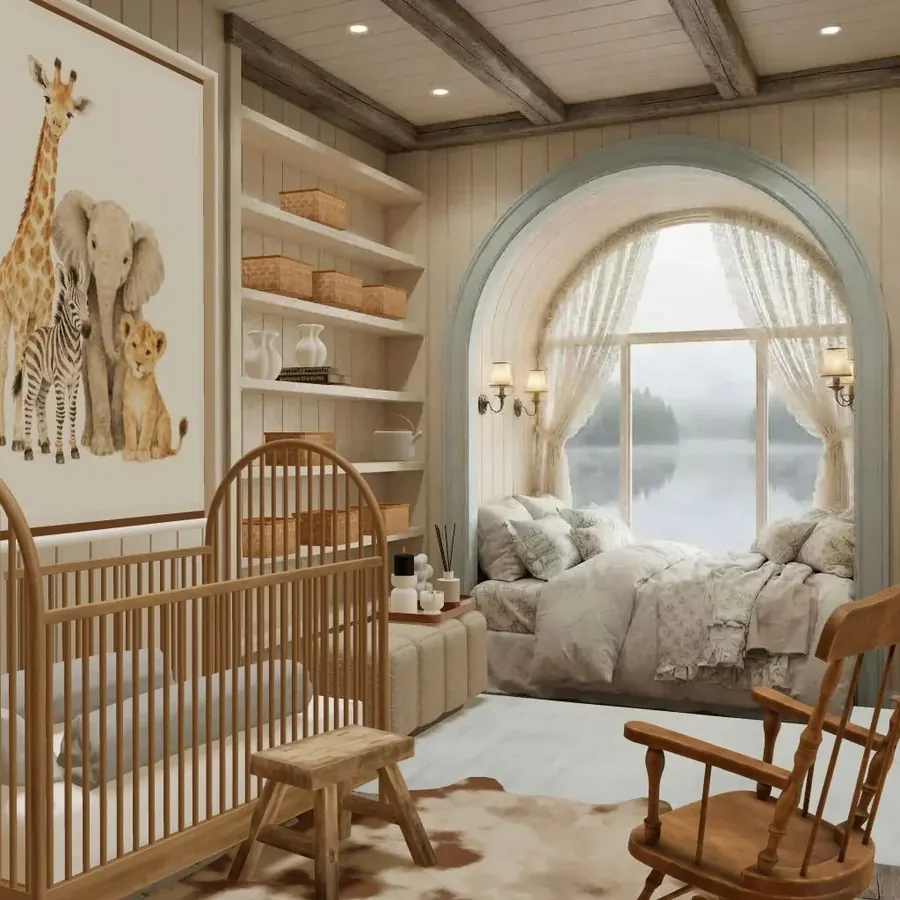
The room above shows how much a single large print can do: the giraffe, elephant and zebra artwork gives the room its character, while everything else stays wood, cream and grey. It’s a game render, styled for looks; in a real nursery you’d keep the crib completely bare and move small objects, candles and diffusers out of reach.
Make the lighting gentle
Nurseries are used at every hour, so the lighting needs to work at all of them.
- A dimmable main light, or skip it and rely on lamps.
- A lamp by the feeding chair with a warm bulb (about 2200–2700K), bright enough to see by but not to wake everyone up.
- A very low night light at floor or plug level for night feeds.
- Blackout blinds or lined curtains for daytime naps, cordless or with cords secured.
Our layered lighting guide explains how ambient, task and accent light work together.
Add a few plants, carefully
Plants soften a neutral room, like the pilea on the mood board. Choose easy ones that suit the light in the room (see houseplants by light), and check each one against a reliable plant-safety or poison list, because some common houseplants are toxic if chewed by children or pets. Keep pots heavy, and once your baby crawls, move them up onto a high shelf or a wall planter.
Decorate the walls, not the crib
- One large print or a small group of soft animal, botanical or landscape prints.
- A painted arch or a band of color behind the dresser to give the room a focal point without wallpaper.
- Frames fixed securely, with acrylic instead of glass if you can.
- Mobiles only where the crib’s instructions allow, and out of reach once the baby can push up.
Make it grow with your child
A neutral nursery is easy to update. Choose a crib that converts to a toddler bed if you like, a dresser that works without the changing top, and a feeding chair you’d keep in a living room or bedroom later. Color can come from things that are cheap to change: bedding, a rug, prints and books. When it’s time for a big-kid bedroom, our cozy bedroom ideas pick up where this guide leaves off.
Common mistakes
- Buying for the theme, not the child. Themed rooms date fast.
- Too much white, with no texture to soften it.
- Forgetting the feeding chair, the place you’ll actually spend hours.
- Bright overhead light as the only option at night.
- Unanchored furniture and loose blind cords.
- Decor in the crib.
Try it in Cozee
Before you buy anything, you can try a palette of furniture and textiles in Cozee, a free design game for iPhone and Android where you furnish empty 3D rooms with real furniture and decor. Try a sand-and-sage scheme against an all-cream one, swap a rattan chair for a wooden rocker, or see how one big print changes a wall. There are no timers, so you can take as long as you like, and other players rate your finished room 1–5 stars. It’s a calm way to settle on a look before buying anything.
Questions people ask
What colors are gender-neutral for a nursery?
Warm whites, cream, oat, sand, soft greige, sage, muted clay and pale grey-blue all work for any baby. Mix two or three of them and add warmth with light wood, rattan and linen, rather than relying on a single color.
What do you actually need in a nursery?
A safe sleep space (a crib or bassinet with a firm, flat mattress), somewhere comfortable to feed, a changing surface at a height that suits your back, closed storage for clothes and nappies or diapers, a dimmable lamp and a way to darken the room. Everything else is optional.
Can I hang art above a crib?
It’s safer not to. Hang art, shelves and mirrors on other walls, where nothing can fall into the crib and a standing toddler can’t reach it. Light, frameless prints fixed flat to the wall are the safest choice anywhere in a nursery.
Are houseplants safe in a nursery?
Some are and some are toxic if chewed. Check every plant against a reliable poison or plant-safety list, keep pots out of reach of a crawling baby, and use heavy pots that can’t be pulled over. A plant on a high shelf or a wall planter is easiest.
Try it in an empty room first
Cozee is a free interior design game for iPhone and Android. Pick an empty 3D room, fill it with real furniture, and see what the community thinks.
4.7 on the App Store · Free, with optional in‑app purchases