

On this page 9 sections
Layered lighting means lighting a room with several sources at different heights instead of one ceiling light: ambient light for the general glow, task light where you read, cook or work, and accent light to pick out art, shelves and texture. Done well, it makes a room look good at any hour, lets you change the mood with a switch, and fixes the flat, harsh look most rooms have after dark. This guide explains each layer, where to put it, what to look for on a bulb box, and how to plan the light room by room.
Why one ceiling light isn’t enough
A single central fixture lights the floor and the top of your head well and almost everything else badly. It casts shadows under your eyes, flattens texture, leaves the corners dim and makes the room feel smaller at night. Light from several lower sources does the opposite: it pools on surfaces, brightens walls and corners, and gives the room depth.
The goal is to have light at roughly three heights:
- High: ceiling fixtures, pendants, recessed lights.
- Middle: wall lights and table lamps, roughly at seated eye level.
- Low: floor lamps aimed up or down, lit shelves, a candle or fire.
Layer 1: ambient light
Ambient light is the base: enough even light to move around safely and see the whole room. Sources include:
- A central pendant or chandelier.
- Recessed downlights, spaced to wash the room evenly rather than in a grid of bright spots.
- Cove or concealed strip lighting that bounces off the ceiling.
- Uplighters (floor lamps that point at the ceiling), especially useful in rentals.
Put ambient lights on a dimmer wherever you can. At full brightness they’re for cleaning and finding keys; at a third, they become the soft background the other layers sit on.
Layer 2: task light
Task lighting is bright, focused light where you do something specific. It needs to be strong enough for the job and placed so your body or head doesn’t cast a shadow on what you’re doing.
| Task | Where to put the light |
|---|---|
| Reading in a chair | Floor or table lamp beside and slightly behind the chair, shade bottom near seated eye level |
| Reading in bed | Bedside lamp or wall light on each side; wall lights often around 120–150 cm (48–60 in) from the floor, adjusted to your bed height |
| Kitchen prep | Under-cabinet lights over the countertop, so you’re not working in your own shadow |
| Dining | Pendant over the table, bottom about 75–90 cm (30–36 in) above the tabletop |
| Bathroom mirror | Lights on both sides of the mirror at about face height, or a wide fixture above it; light from the sides avoids shadows under the eyes |
| Desk | Adjustable lamp on the opposite side to your writing hand |
Layer 3: accent light
Accent lighting draws attention to the things that make your room yours: a painting, a bookcase, a plant, a textured wall. It’s also what makes a room feel finished at night.
- Picture lights or adjustable spots aimed at art.
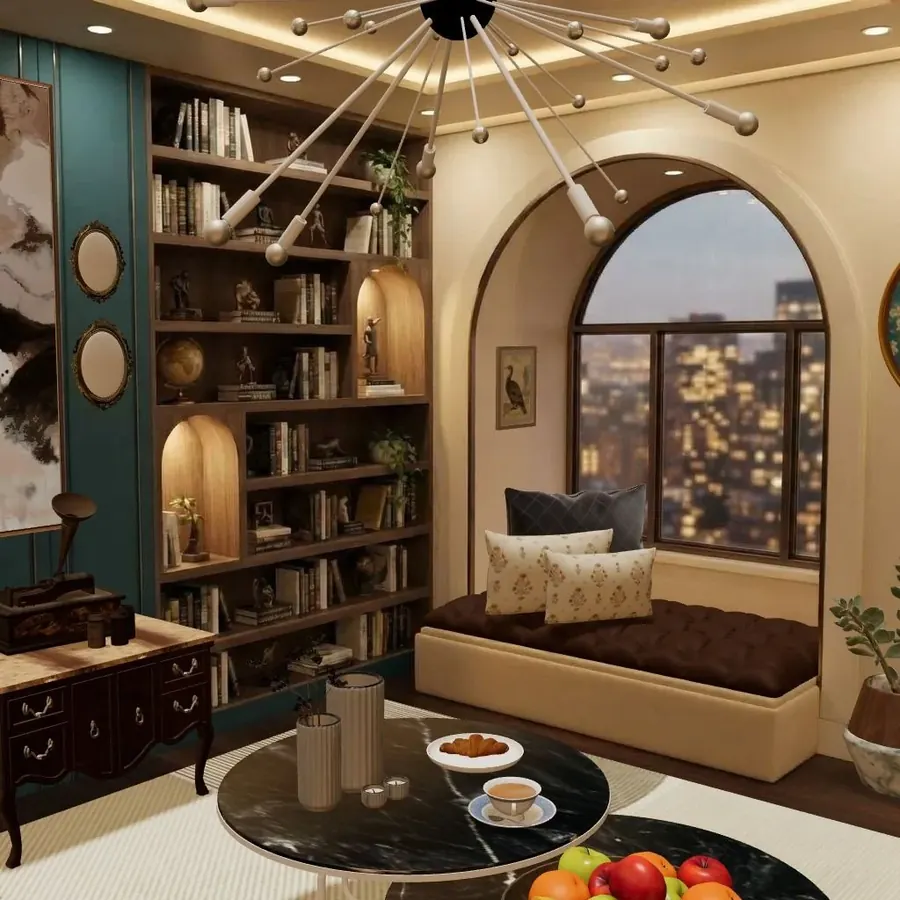
- LED strips or puck lights inside shelves and niches (the arched niches in the cover image are lit this way).
- Uplights on the floor behind a large plant or along a brick or stone wall to show off the texture.
- Wall washers that graze a feature wall.
A common rule of thumb is that accent light should be noticeably brighter than the light around it (often quoted as about three times as bright) for the highlight to read. That’s why accent lights look dramatic when the ambient layer is dimmed.
The decorative layer
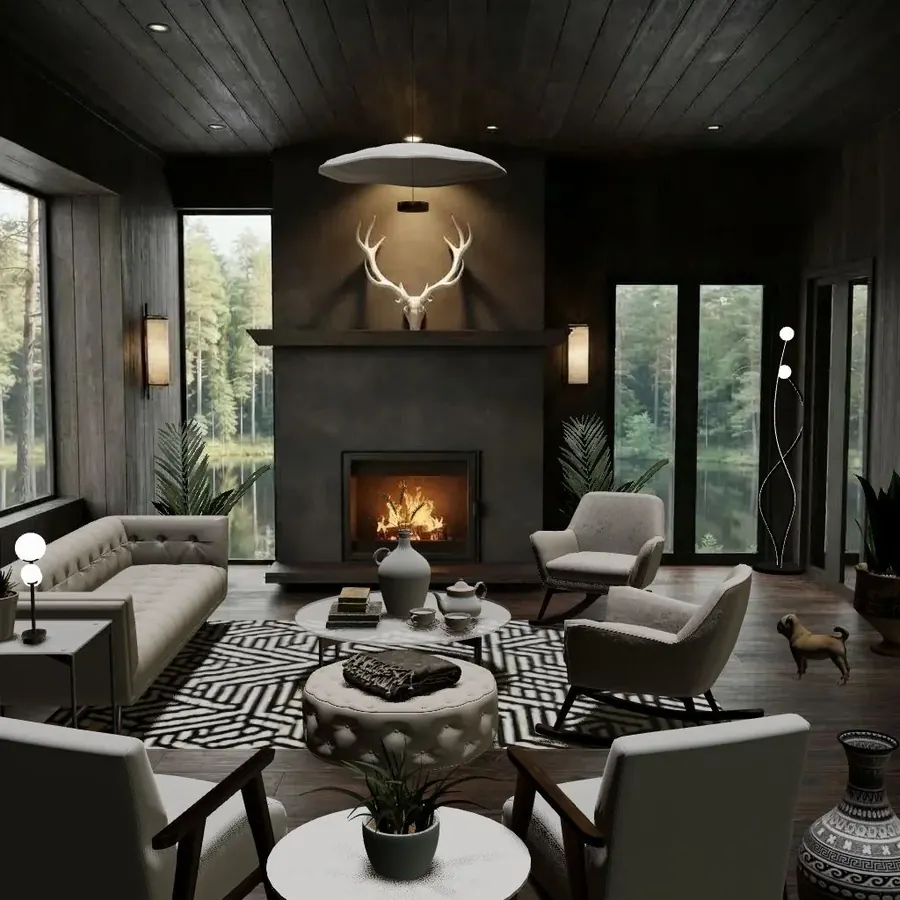
Some fixtures are there mainly to be seen: a sculptural chandelier, a paper lantern, a neon sign, candles, a fire. They often give less useful light than you’d think, so treat them as a bonus on top of the other three layers rather than a replacement.
Choosing bulbs: what the box tells you
Color temperature (kelvin, K)
| Kelvin | Looks like | Good for |
|---|---|---|
| 2200–2500K | Very warm, candle-like | Accent lamps, evening mood |
| 2700K | Warm white, like a classic incandescent bulb | Living rooms, bedrooms |
| 3000K | Soft white, slightly crisper | Kitchens, bathrooms, dining |
| 4000K | Neutral to cool white | Workspaces, garages, task areas |
| 5000K and up | Daylight, bluish | Workshops, studios; usually too cold for living spaces |
Keep one temperature per room. A 2700K lamp next to a 4000K ceiling light looks like two different rooms. If you want warmer evenings, look for “dim-to-warm” bulbs, which get warmer as they dim, the way old filament bulbs did.
Brightness (lumens)
Lumens measure light output; watts measure energy use. With LEDs, compare lumens. As a rough guide, a bulb that replaces an old 40 W incandescent gives about 450 lumens, a 60 W replacement around 800 lumens, and a 100 W replacement around 1,500–1,600 lumens. How much you need depends on the room size, wall color (dark walls absorb light) and the task, so plan more sources rather than one very bright one.
Color rendering (CRI)
Look for a CRI of 90 or higher, especially in kitchens, bathrooms, dressing areas and anywhere with art or wood you care about. Low-CRI light makes colors look dull, which is why a paint color can look wrong at night under cheap bulbs. Our color theory guide explains how light changes color.
Glare
Choose shades that hide the bulb from where people sit or lie down. Frosted or opal bulbs, fabric and paper shades, and fixtures that point light at a wall or ceiling all reduce glare.
Room-by-room lighting plans
Living room
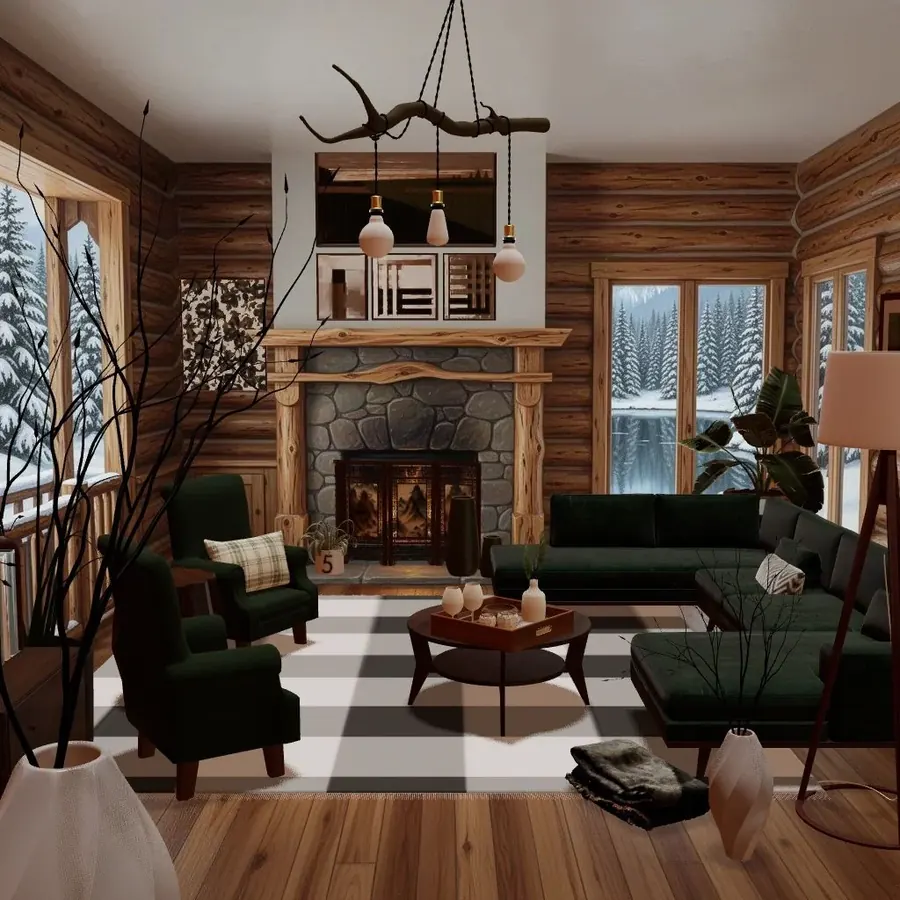
- Ambient: dimmable ceiling light or recessed lights, or uplighters if you can’t wire the ceiling.
- Task: a lamp beside each main seat, especially reading chairs.
- Accent: a picture light, lit shelves or an uplight behind a plant.
- Goal: at least three sources you can switch on without the ceiling light.
Bedroom
- Ambient: a soft central light on a dimmer, or none at all if lamps cover it.
- Task: bedside lamps or wall lights on each side, plus good light at the wardrobe or mirror.
- Accent: a low lamp on a dresser or a warm strip behind the headboard.
- Warm temperatures (around 2700K or lower) for the evening. Our cozy bedroom ideas go further.
Kitchen and dining
- Ambient: recessed or flush ceiling lights.
- Task: under-cabinet lights on every working countertop; pendants over an island.
- Dining: one pendant or a row of pendants scaled to the table, on its own dimmer.
- Accent: lights inside glass cabinets or over open shelves.
Reading nook
A focused lamp that lights the page, plus something softer around it so the contrast isn’t tiring. See our reading nook guide for layouts.
Common lighting mistakes
- Relying on one ceiling light. The single biggest cause of flat, unwelcoming rooms.
- Mixing color temperatures in the same room.
- Lamps too small for the furniture. A tiny lamp on a big console looks lost; see our scale and proportion guide.
- No dimmers. Dimming is the cheapest way to make a room feel cozier.
- Lighting the floor, not the walls. Brighter walls make a room feel bigger and calmer.
- Exposed bulbs at eye level. Filament bulbs look good in a pendant above eye height; at seated height, they glare.
A quick lighting checklist
- Light at three heights: high, middle and low.
- A lamp next to every main seat and both sides of the bed.
- Ambient lights on dimmers.
- One color temperature per room, usually 2700–3000K in living spaces.
- Bulbs with CRI 90+ where color matters.
- At least one accent light on something you love.
- No bare bulbs in anyone’s line of sight when seated.
Try it in Cozee
Lighting is one of the things that turns a furnished room into a finished one, and it helps to plan where the fixtures go before you buy them. In Cozee, a free design game for iPhone and Android, you furnish empty 3D rooms with real furniture and decor, including lamps, and other players rate the result. The game handles the room’s lighting for you, so a lamp won’t brighten the picture, but where you place it still shows where the light would come from. Try placing lamps at three heights instead of relying on one ceiling fixture, then compare your design with how other players placed lamps in the same room.
Questions people ask
What are the three layers of lighting?
Ambient lighting gives the room its general, overall light. Task lighting is focused light for doing something, such as reading, cooking or applying makeup. Accent lighting highlights things you want to show off, like art, shelves or texture on a wall. Some designers add a fourth, decorative layer for fixtures that are mainly there to be looked at.
What color temperature is best for a living room?
Most people find warm white, around 2700K, the most relaxing for living rooms and bedrooms, with 2700–3000K a common range. Kitchens, bathrooms and work areas often use 3000–4000K for a crisper light. Keep the same temperature within one room so lamps don’t clash.
How many light sources should a room have?
There’s no fixed number, but many designers aim for at least three or more sources at different heights in a living room or bedroom, so you never rely on one ceiling light. A typical mix is a ceiling or ambient source, one or two table or floor lamps, and one accent light.
Where should table lamps go?
Next to where people sit or read: beside the sofa, next to an armchair, on nightstands. For reading, the bottom of the shade should sit roughly at eye level when you’re seated, so you see light on the page rather than the bare bulb.
What does CRI mean on a light bulb?
CRI stands for color rendering index, a 0–100 score of how faithfully a light source shows colors compared with a reference light. Bulbs rated 90 or higher make wood, skin and fabrics look natural; lower ratings can make colors look dull or off.
Try it in an empty room first
Cozee is a free interior design game for iPhone and Android. Pick an empty 3D room, fill it with real furniture, and see what the community thinks.
4.7 on the App Store · Free, with optional in‑app purchases