

On this page 10 sections
A conservatory, sunroom or glasshouse room can be the best room in the house, or the one nobody uses because it’s an oven in July and a fridge in January. To make it work all year, deal with four things first: heat, glare, cold and humidity. Then choose furniture and fabrics that survive strong sun, and plants that suit the light you have. Here’s how, with ideas for different ways to use the room.
Decide what the room is for
Glass rooms get used when they have a clear job. Common ones:
- Garden lounge: sofa or a pair of armchairs, coffee table, plants.
- Dining room: a table that seats four to six, good for long weekend lunches.
- Café corner or breakfast room: a small round table, a couple of chairs, a shelf for cups.
- Plant room or potting space: shelving, a work counter, a sink if plumbing allows.
- Reading or hobby room: a comfortable chair, a lamp, a desk out of direct sun.
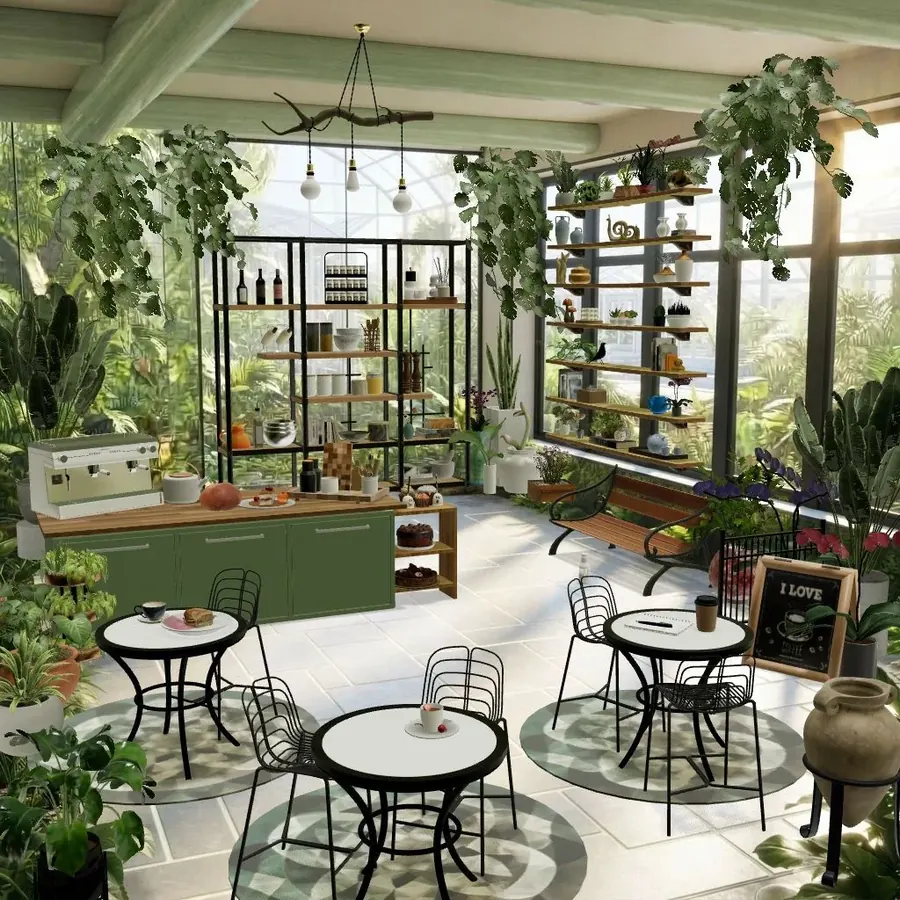
The glasshouse café in the cover image shows a mix of these: bistro tables for sitting, a counter for making coffee, and open metal shelving that doubles as plant staging.
Problem 1: Heat
Glass lets sunlight in easily, and the warmth gets trapped. South- and west-facing glass rooms (north- and west-facing in the southern hemisphere) are the hottest.
What helps, roughly from most to least effective:
- Shading outside the glass, such as external awnings, shade sails over the roof or deciduous climbers on a frame. Stopping sun before it hits the glass is the most effective option.
- Roof blinds, especially pleated or reflective-backed ones. Much of the heat comes through the roof.
- Solar-control film or glass, which reflects a share of the sun’s heat while keeping the view.
- Ventilation: open a high vent (roof vent or top-hung window) and a low opening at the same time. Warm air escapes at the top and pulls cooler air in at the bottom.
- Fans: a ceiling fan or pedestal fan makes you feel cooler, even though it doesn’t lower the temperature.
Pale floors and furnishings also absorb less heat than dark ones.
Problem 2: Glare and fading
Strong light bouncing off a table or screen makes the room tiring to sit in, and UV light fades fabric, wood and paper.
- Sheer or light-filtering blinds on the sunniest side soften glare while keeping the view.
- Place screens and desks side-on to the glass, never facing it or with the window directly behind the screen.
- Move art and books out of direct sun; watercolors, photos and spines fade fast.
- Rotate rugs and cushions every few months so they fade evenly.
Problem 3: Cold
Glass loses heat quickly, so in winter the room cools fast.
- Heated floors under stone or porcelain tiles are comfortable and don’t take up wall space, which glass rooms have little of.
- A low radiator, electric heater or small stove if you don’t have underfloor heating. Check local rules before adding a fixed heating system to a glass extension; in some places this affects building regulations.
- Thermal or cellular blinds trap a layer of air against the glass at night.
- Rugs and throws take the chill off hard floors.
- A door between the house and the glass room that you can close on very cold days keeps the rest of the house warmer.
Problem 4: Humidity and condensation
Plants, cooking, people and cold glass together mean condensation, especially on winter mornings.
- Open vents or a window for a short time every day, even in winter.
- Keep a little background heat on so the glass stays above the dew point for longer.
- Don’t dry laundry in the room.
- Run a dehumidifier in cold months if you see water streaming down the glass.
- Wipe frames and seals so mold doesn’t settle in.
Plants like humidity, so the aim is moving air, not a desert.
Furniture and fabrics that survive the sun
| Material | How it copes in a glass room |
|---|---|
| Synthetic (resin / PE) rattan | Very good. Looks like wicker, resists UV and doesn’t dry out |
| Natural rattan, cane, wicker | Fine out of direct sun; can dry, split and fade in strong light |
| Aluminum, powder-coated steel | Very good. Light, rust-resistant, slim. Can get hot to touch |
| Teak, iroko | Good. Weathers to silver-grey; oil it if you want to keep the warm color |
| Painted or pale woods | Good; fading is less visible on light finishes |
| Dark-stained woods, leather | Poor in direct sun; fade, dry and crack |
| Solution-dyed acrylic fabric | Very good. Color goes all the way through the fiber, so it resists fading |
| Cotton, linen, velvet | Will fade in direct sun; fine behind blinds or in shaded corners |
For floors, porcelain or natural stone tiles cope best with sunlight, temperature swings and spilled plant water. Polypropylene or outdoor-grade rugs are practical; wool rugs are fine in shaded areas.
Plants for a conservatory
Match plants to the light where each one will stand.
Full sun, unshaded glass: - Citrus (lemon, calamondin). Needs bright light, regular feeding and a cool but frost-free winter. - Olive tree. - Bougainvillea, jasmine (Jasminum polyanthum) and passionflower for climbing. - Pelargoniums, succulents, cacti, aloe. - Bird of paradise (Strelitzia reginae).
Bright light with some shade (behind blinds, or on the shaded side): - Fiddle-leaf fig, rubber plant, monstera, Kentia palm. - Hoya, pothos and philodendron trailing from shelves or hanging baskets.
Shade only (under shelving or larger plants): - Ferns (Boston fern, maidenhair), calatheas and peace lilies. They scorch in direct sun but love the humidity.
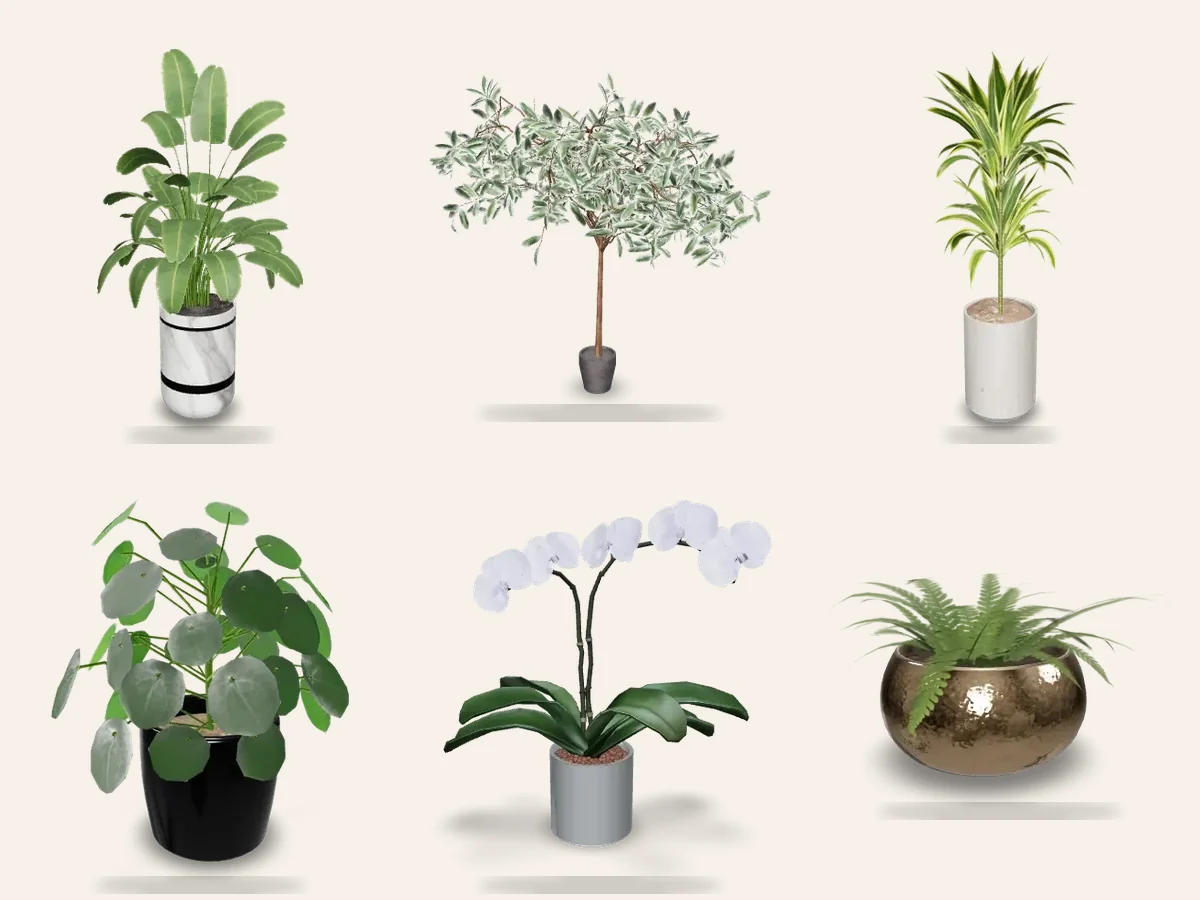
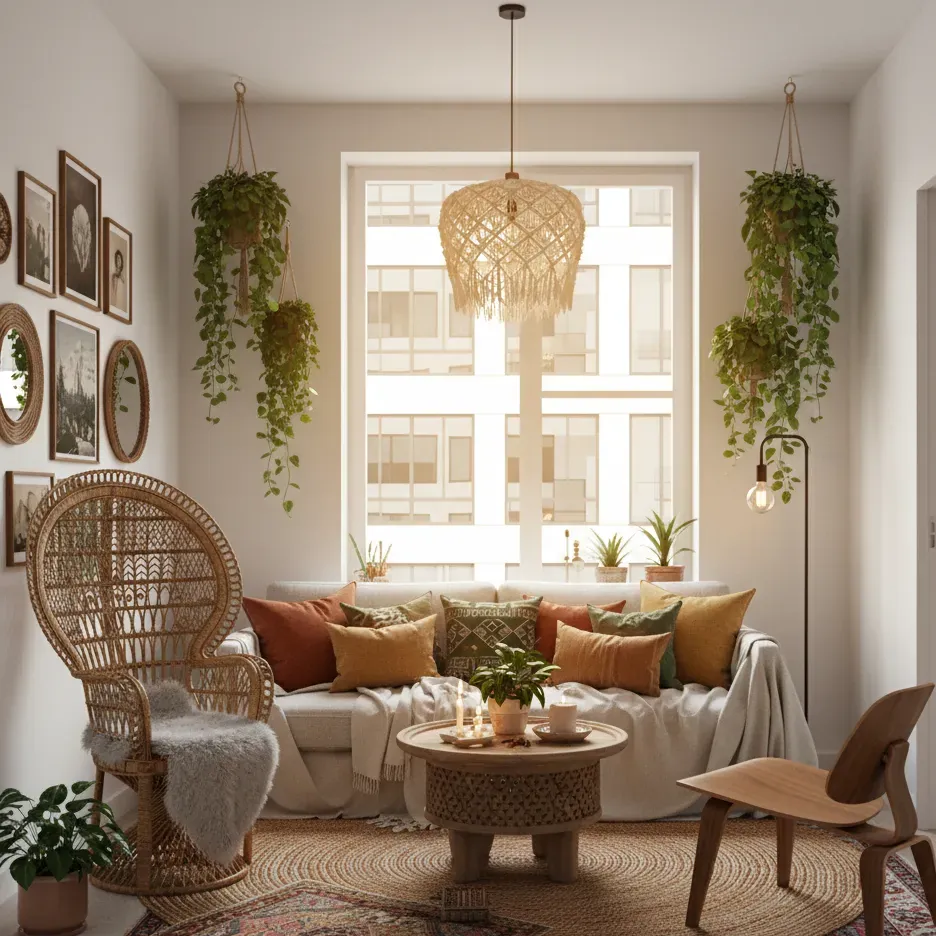
Group plants on shelves at different heights, as in the cover image, and use hanging plants to bring green up toward the roof. Water and spray less in winter when growth slows. Pet owners should note that monstera, philodendron, pothos and peace lilies are toxic to cats and dogs.
Glass walls without a full conservatory
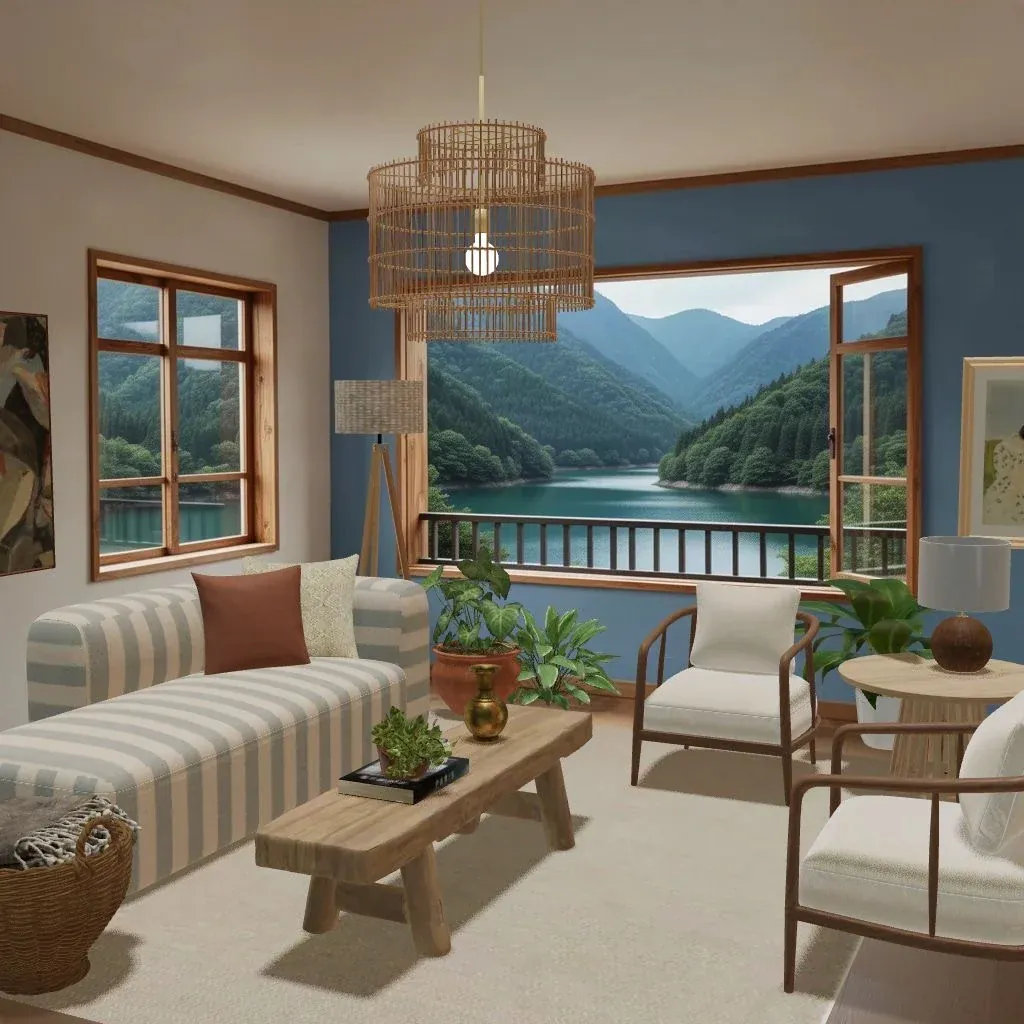
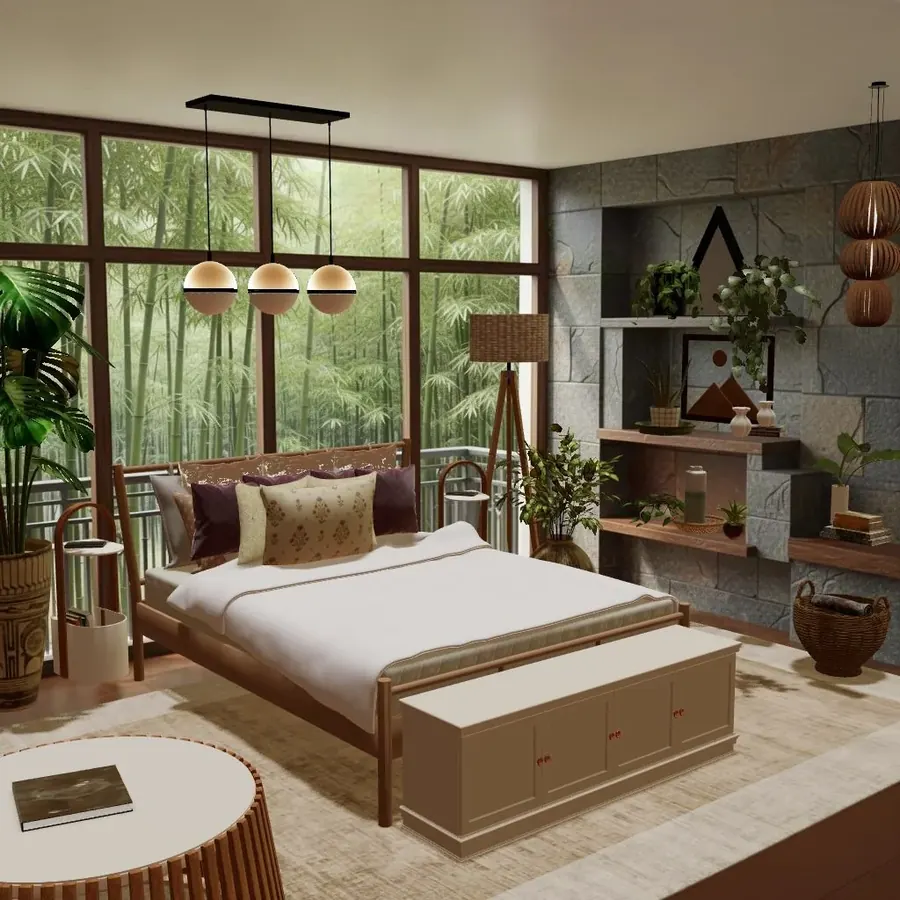
Not every glass room is a conservatory. A room with a wall of windows, a garden room or a bedroom facing woodland can borrow the same ideas: pale materials, sun-safe fabrics, plants that echo the view outside and blinds that soften rather than block.
Common mistakes
- No blinds on the roof. Wall blinds alone won’t stop overheating.
- Indoor fabrics in full sun. Cushions fade within a season.
- Shade-loving plants on the sunny side. Move ferns and calatheas into the shade.
- Furniture against every pane. Leave space to open windows and vents.
- Treating it as a corridor. Give the room a clear job and a focal point, or it becomes storage.
Try it in Cozee
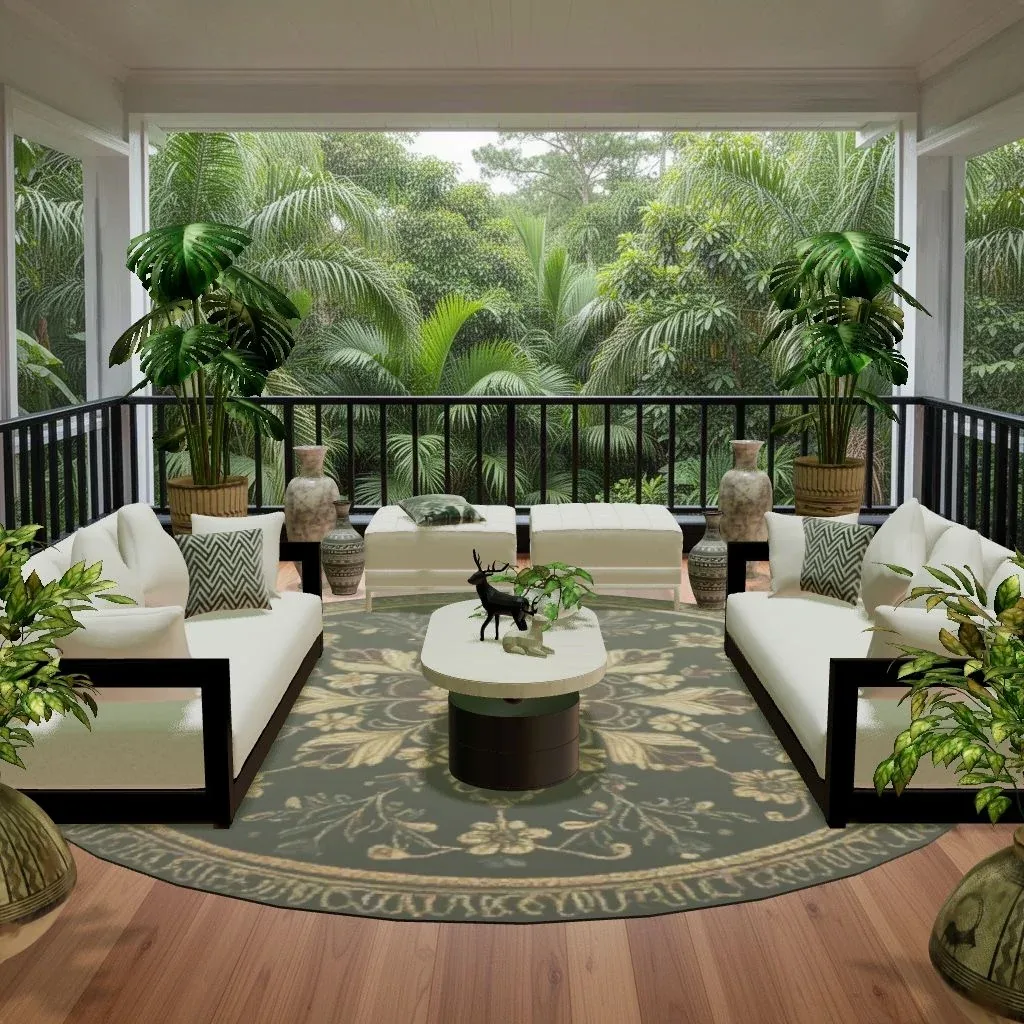
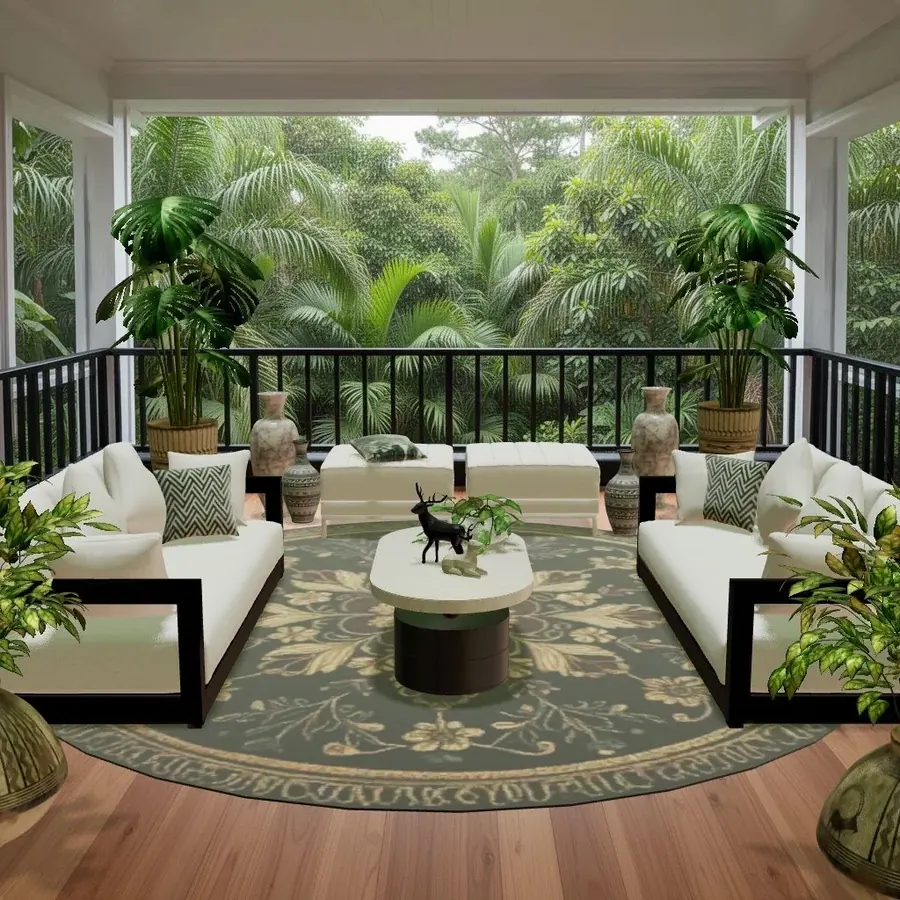
Cozee is a free interior design game for iPhone and Android. Every room starts empty and you furnish it with real 3D pieces such as sofas, rugs, lamps, plants and art, which makes it handy for testing a glass-room layout: bistro tables or a lounge, plants on shelving or in big floor pots. Submit the design and other players rate it, then compare how they handled the same room in the community feed. See how the game works or the beginner’s guide.
More ideas for plant-filled rooms: jungle balcony ideas, the bohemian style guide and the coastal and Mediterranean style.
Questions people ask
How do I stop my conservatory getting too hot in summer?
Shade the glass and let hot air out. Roof blinds or external shading do the most good, solar-control film or glass helps, and opening a high vent plus a low window or door lets warm air rise and escape. A ceiling fan helps you feel cooler but won’t lower the temperature on its own.
What furniture is best for a conservatory?
Materials that tolerate sun and temperature swings: synthetic (resin) rattan, aluminum, powder-coated steel, teak, and upholstery in solution-dyed acrylic or other fade-resistant fabrics. Natural rattan, leather and dark-stained woods tend to fade, dry out or crack in strong sun.
How do I stop condensation in a conservatory?
Keep air moving and the temperature steady. Open trickle vents or a window for a while each day, avoid drying laundry there, run a dehumidifier in cold months if needed, and keep a little background heat on so the glass doesn’t get as cold.
What plants grow well in a conservatory?
Sun-lovers do best in an unshaded glass room: citrus, olive, bougainvillea, jasmine, pelargoniums, bird of paradise, succulents and cacti. Shade-lovers such as ferns and calatheas need a spot out of direct sun, behind blinds or under taller plants.
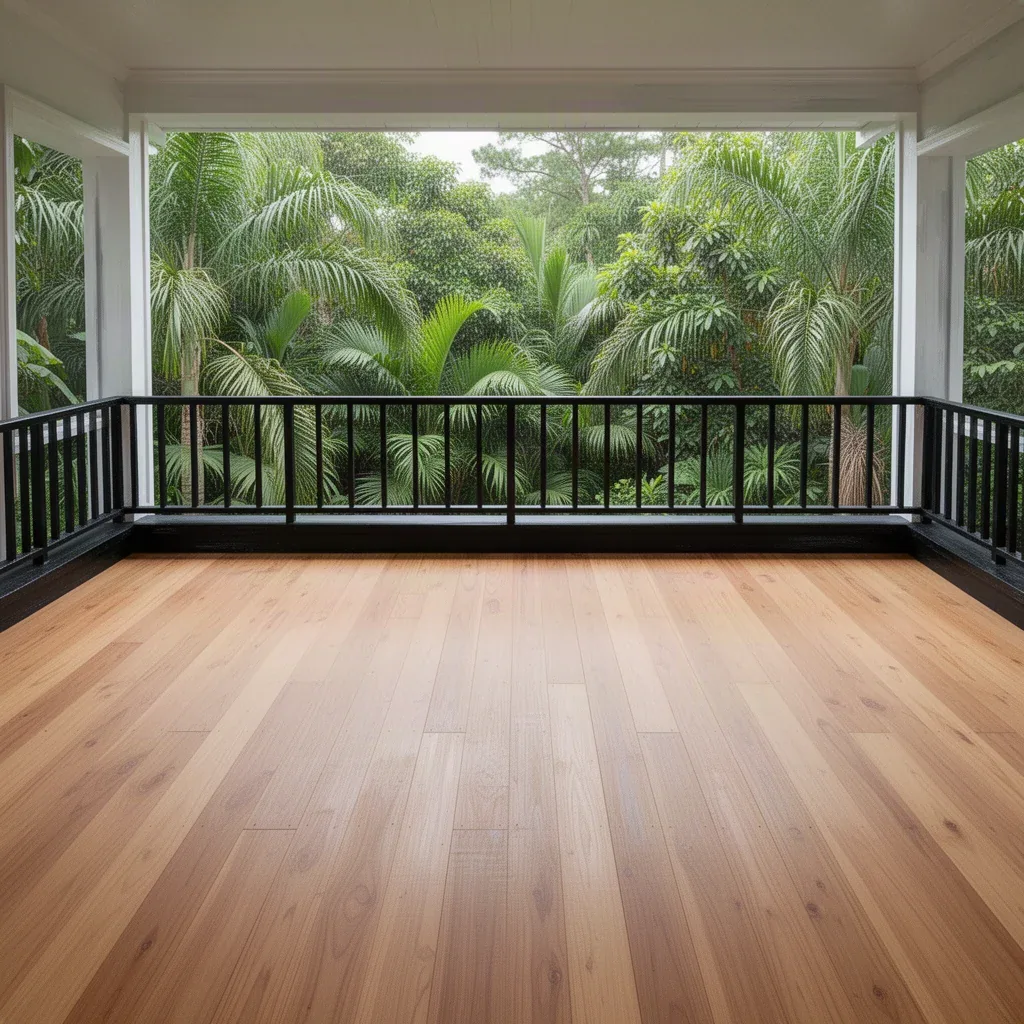
Try it in an empty room first
Cozee is a free interior design game for iPhone and Android. Pick an empty 3D room, fill it with real furniture, and see what the community thinks.
4.7 on the App Store · Free, with optional in‑app purchases