

On this page 10 sections
Coastal and Mediterranean interiors both try to bring the feeling of the sea indoors: light, air, sun-bleached materials and blue. They are not the same style, though. Coastal is a relaxed beach-house look in white, sand and soft blue; Mediterranean is warmer and earthier, with plaster, terracotta and tile; and Hamptons is the polished, navy-and-white cousin. This guide explains each one, then shows how to blend them honestly.
Three seaside styles, side by side
| Coastal | Mediterranean | Hamptons | |
|---|---|---|---|
| Roots | Beach houses, especially in the US and Australia | Greece, Italy, Spain, southern France, North Africa | Long Island beach homes, New York |
| Walls | White, sand, pale blue | Whitewashed or textured plaster, warm white, ochre | Crisp white, white paneling |
| Floors | Pale wood, painted boards | Terracotta, stone, patterned tile | Light or mid wood |
| Blues | Soft, washed, sea-glass | Bright cobalt, Aegean blue | Navy |
| Signature materials | Linen, jute, rattan, whitewashed wood | Plaster, terracotta, wrought iron, ceramic | Rattan, slipcovers, polished wood, stripes |
| Feeling | Barefoot, breezy | Sun-baked, rustic, earthy | Tailored, classic, crisp |
Being honest about the blend
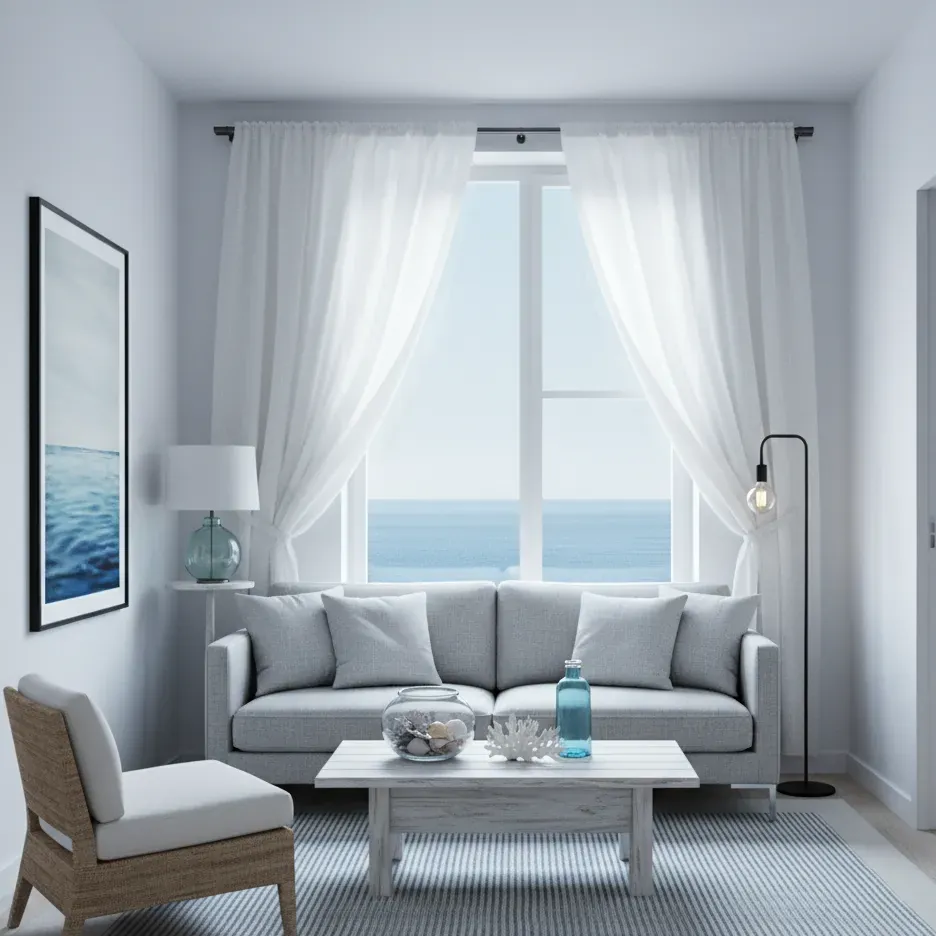
The cover image is labeled “coastal Mediterranean”, and it’s mostly coastal: a light grey sofa, a whitewashed coffee table, a woven chair, a blue striped rug, seashells, coral and a blue glass bottle, with sheer curtains framing the sea. The Mediterranean part is the whitewashed, sun-bleached feel. There’s no terracotta, tile or arch in it.
That’s typical of how the phrase is used online. “Coastal Mediterranean” usually means a coastal room borrowing Mediterranean whitewash and blue. If you want the real Mediterranean feeling, you need the earthy, handmade materials too.
Where these looks come from
Coastal decor developed from actual beach houses: simple wooden homes where sand came in on everyone’s feet, furniture got bleached by the sun and fabrics had to be easy to wash. Painted wood, slipcovers and natural fibers were practical before they were decorative.
Mediterranean style draws on centuries of building around the Mediterranean Sea. The Greek islands gave us whitewashed walls and blue doors and shutters. Thick walls and small windows kept homes cool. Spain, Italy and southern France added terracotta floors and roofs, painted ceramic tiles, wrought iron and rustic timber beams. North African influence shows up in arches, patterned tile and lanterns.
Hamptons style takes its name from the beach towns at the eastern end of Long Island. Its shingle-clad summer houses and their tidy, classic interiors became shorthand for an elegant, slightly preppy kind of coastal living.
The coastal Mediterranean palette
Here’s a palette that sits in the middle of the three, with sea blues from coastal, terracotta and olive from the Mediterranean, and enough white to tie them together.
- Whitewash
#F7F5F0 - Sand
#E6DCC8 - Sea glass
#9CC3D5 - Aegean blue
#2F5D8A - Terracotta
#C46F4B - Olive
#8A8F5E
- For pure coastal, drop the terracotta and olive and add driftwood grey.
- For Mediterranean, push the terracotta, add ochre, and use the blue in small, strong doses such as a door, a tile or a ceramic bowl.
- For Hamptons, swap the blues for navy and keep everything else crisp white and natural wood.
Materials and textures
- Linen and cotton: loose sofa covers, sheer curtains that move in a breeze, washed bedding.
- Natural fibers: jute, sisal and seagrass rugs; rattan, wicker and cane chairs and pendants.
- Wood: pale, limed, whitewashed or driftwood-grey for coastal; darker, rough beams for Mediterranean.
- Plaster: textured lime-wash or Venetian-style plaster walls are the most Mediterranean thing you can do.
- Terracotta and tile: floor tiles, plant pots, and patterned cement or ceramic tiles in kitchens and bathrooms.
- Glass: blue and green glass bottles and vases catch the light like sea glass.
- Iron: simple wrought iron for Mediterranean railings, curtain rods, lanterns and bed frames.
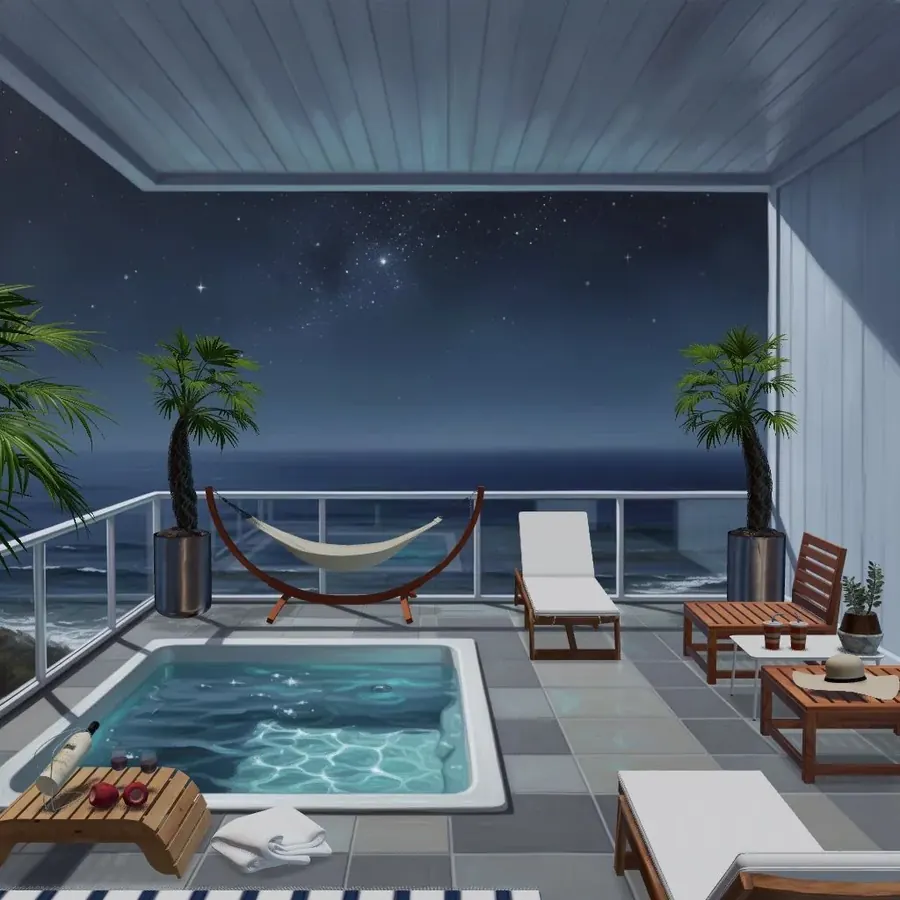
This player-designed terrace shows the coastal instinct for indoor-outdoor living: white loungers, teak side tables, potted palms, a hammock and a blue-and-white striped mat by the pool, all pointing at the ocean. There’s very little decoration, because the view does the work.
Furniture and signature pieces
- A slipcovered sofa in white, cream or light grey linen.
- Rattan or wicker chairs, or a cane-backed bench.
- A whitewashed or weathered wood coffee table, like the one in the cover image.
- Built-in plaster benches and niches for a Mediterranean room, softened with cushions.
- A rustic wooden dining table with mismatched or rush-seat chairs for long, slow meals.
- Striped textiles: a striped rug, ticking-stripe cushions or a classic Breton stripe.
- Ceramics: handmade bowls, olive jars, painted plates on the wall.
- Big plants: olive trees, palms, fig trees and trailing plants in terracotta pots.
Lighting
Daylight is the point of these styles, so start with your windows. Use sheer curtains or light Roman blinds, and keep anything bulky away from the glass.
For evenings:
- Coastal: woven rattan or seagrass pendants, glass-based table lamps (blue or clear), white linen shades.
- Mediterranean: wrought iron chandeliers, pierced metal lanterns, ceramic lamp bases.
- Hamptons: classic lantern pendants and pleated or drum lampshades.
Warm bulbs keep the white rooms from feeling cold after dark.
On a budget, in a small space or a rental
- Change the textiles first. White linen curtains, a jute or blue-and-white striped rug and a few blue cushions get you most of the way for very little money.
- Buy rattan second-hand. Cane and wicker chairs are common at markets and online resellers.
- Use pots instead of tiles. In a rental you can’t lay terracotta floors, but terracotta planters with an olive tree or a lemon tree bring the same color and warmth.
- Paint a piece, not a wall. A whitewashed or chalky blue side table adds the sun-bleached finish without touching the rental walls.
- Keep small rooms light. Pale walls, mirrors that reflect the window, glass and leggy furniture make a small room feel airy.
Common mistakes
- Nautical overload. Anchors, ship wheels, rope knots, lighthouses and “Beach” signs all at once look like a gift shop. Pick one or none.
- Only one blue. Use a few shades, from pale sea glass to deeper blue, so the room has depth.
- Too much cold white. Bright white plus cool grey plus blue can feel chilly, especially in a north-facing room. Add sand, wood and warm bulbs.
- Mixing all three styles at full strength. Pick a lead (coastal, Mediterranean or Hamptons) and borrow from the others in small doses.
- Fake Mediterranean. Faux-Tuscan columns and plastic tile stickers rarely convince. Real terracotta, plaster texture and ceramic do.
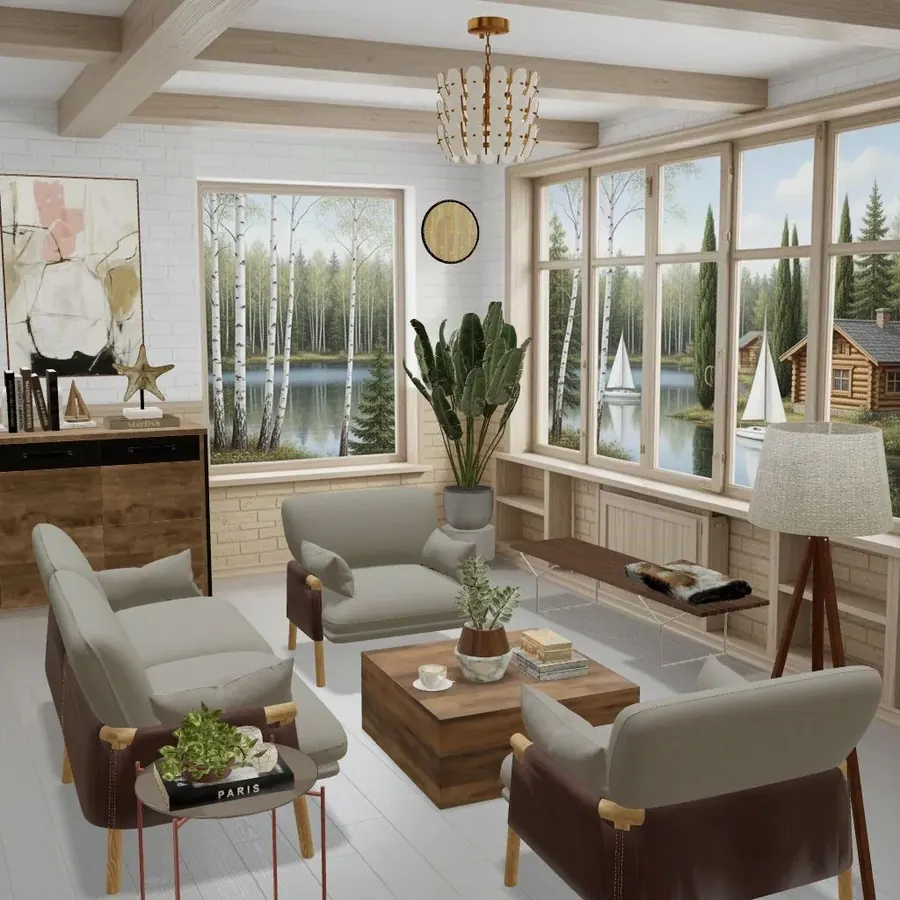
This room is technically on a lake, not the sea, but it shows how a coastal mood can work away from the beach: white-painted beams and floor, soft grey upholstery, a tripod lamp, plants and just one small nod to the sea, a starfish and a model sailboat on the sideboard.
Coastal vs Scandinavian
Coastal is often confused with Scandinavian because both are light, white and wooden. The difference is mood and material. Scandinavian is cozy and northern, with sheepskins, wool, pale birch and grey. Coastal is breezy and southern, with linen, rattan, jute and blue. If you’re torn, the design style quiz can help you see which way you lean.
Try it in Cozee
Seaside styles look simple but depend on getting the balance of white, blue and natural texture right. In Cozee, a free interior design game for iPhone and Android, you design empty 3D Spaces with real 3D furniture: sofas, rugs, lamps, plants and art. Try a pure coastal version and a Mediterranean version of the same room and see which one other players rate higher. If you’d rather start from a view, our living room with a view ideas and the jungle balcony guide are good next reads, or browse all style guides.
Questions people ask
What is the difference between coastal and Mediterranean style?
Coastal is a light, relaxed beach-house look built on white, sand and soft blue, with painted wood, linen and natural fibers. Mediterranean draws on the homes of southern Europe and North Africa, so it’s warmer and earthier: whitewashed plaster, terracotta, patterned tiles, arches, wrought iron and olive green alongside the blue.
What is Hamptons style?
Hamptons style is a polished, classic version of coastal decor named after the beach towns of Long Island, New York. Think crisp white and navy, shingle-style houses, slipcovered sofas, rattan, stripes and a tailored, well-kept feel rather than a barefoot one.
How do I make a room look coastal without nautical decor?
Lean on light, color and texture instead of objects. Use white or sandy walls, sheer curtains, a jute or striped flatweave rug, linen upholstery, pale or whitewashed wood and one or two shades of blue. A single piece of ocean art or a bowl of shells is enough.
Can coastal style work in a city apartment?
Yes, as long as you treat it as a feeling rather than a theme. Airy fabrics, light wood, rattan, plants and soft blue work anywhere. Anchors, life rings and ‘beach’ signs only make sense near an actual beach, and even then sparingly.
Try it in an empty room first
Cozee is a free interior design game for iPhone and Android. Pick an empty 3D room, fill it with real furniture, and see what the community thinks.
4.7 on the App Store · Free, with optional in‑app purchases