

On this page 9 sections
When a room has a big window or a great view, arrange the furniture so the view can be seen from the main seats, keep everything in front of the glass low, put the TV on a side wall, and plan for glare by day and reflections by night. The window then does what no piece of art can, and the room still works for everyday life. Here’s how to make those decisions.
First decision: who faces the view?
There are three good ways to orient seating to a view. Pick the one that fits how you use the room.
Option 1: Sofa facing the window
Best when the view is the star and you sit in the room mostly to look out, read or talk. The sofa floats in the room facing the glass, with a coffee table between and perhaps a pair of chairs to the sides.
Watch out for: low winter sun shining straight into your eyes, and anyone sitting on the window side appearing as a dark silhouette.
Option 2: Seating side-on, in an L or U
Best for most living rooms. The sofa runs at right angles to the window, chairs face it from the other side, and everyone sees the view out of the corner of their eye, while still facing each other. Glare is much less of a problem.
Option 3: Low pieces in front of the window
Best when the window is the longest wall. A low-backed sofa or a bench sits with its back to the glass, facing the room, while a pair of chairs opposite enjoys the view. Keep the back of the sofa below the sill, or as low as possible, and leave a gap of about 10–30 cm (4–12 in) behind it for curtains and any radiator.
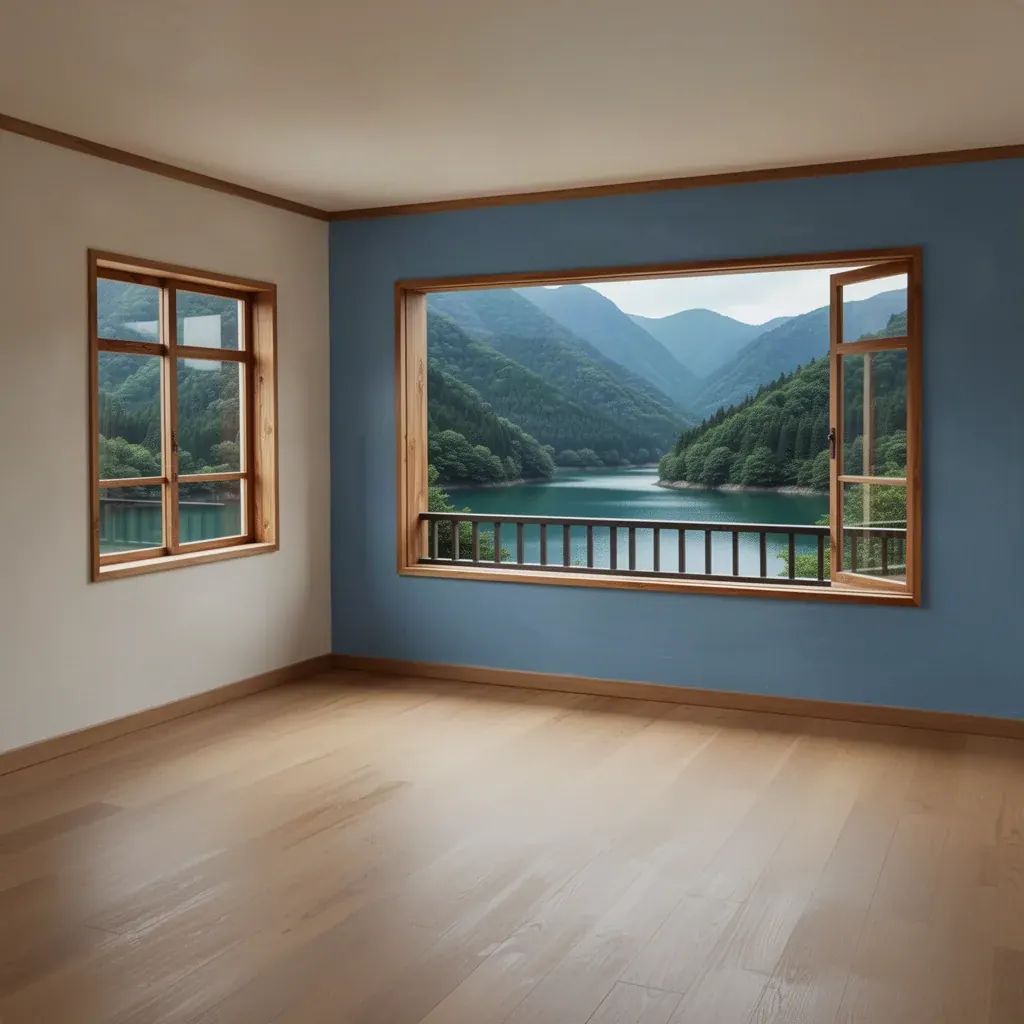
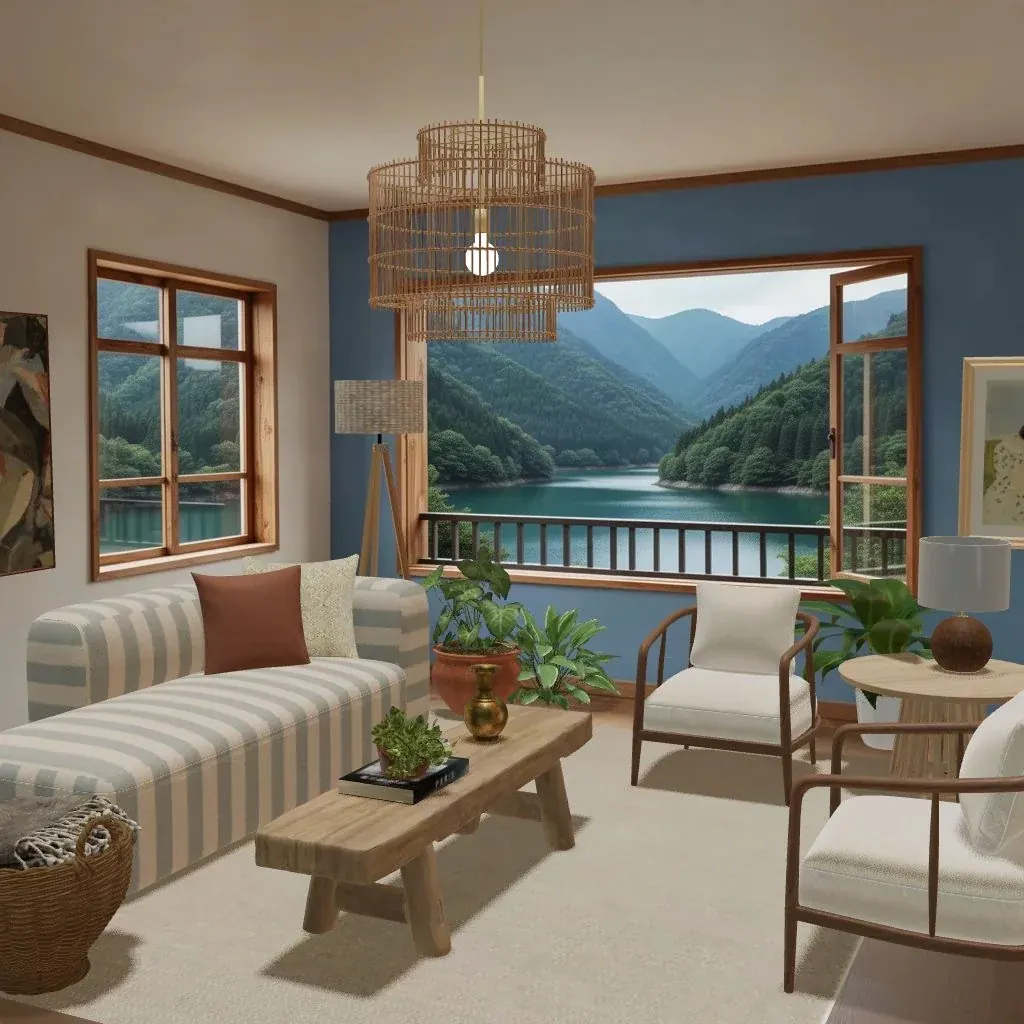
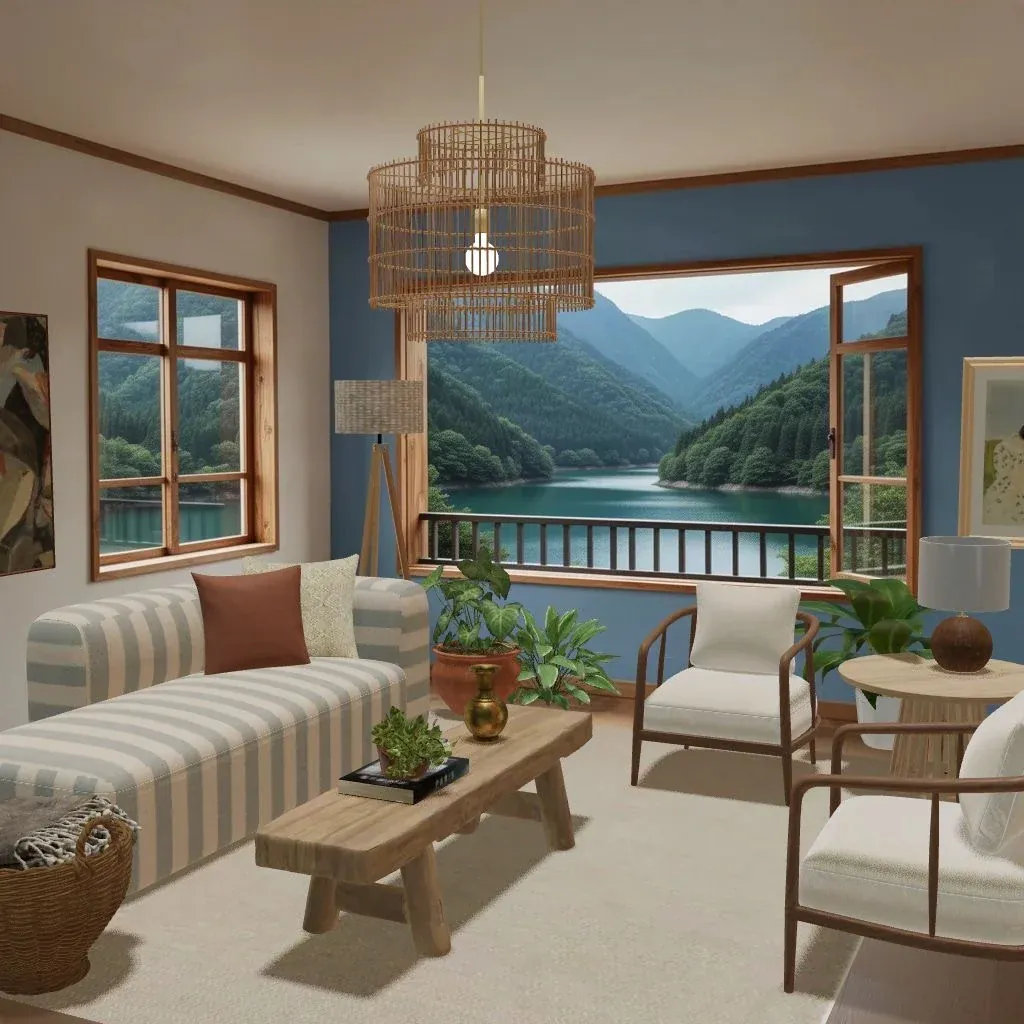
The lakeside room above mixes options 2 and 3: the sofa is side-on to the picture window, two open-armed chairs face it, and nothing taller than a plant sits in front of the glass.
Keep the window zone clear
Draw an imaginary line from the main seat to the view. Nothing tall should cross it.
- Low furniture near the glass: sofas, benches, low chairs and coffee tables. Bookcases, cabinets and tall lamps go on the side walls.
- Plants frame, they don’t fill. Put a tall plant at the edge of the window, not in the middle.
- Clear the sill. A row of objects along a windowsill interrupts the view more than you’d expect.
- Open-frame furniture (thin legs, open arms, glass or slim metal tables) lets the eye pass through to the view.
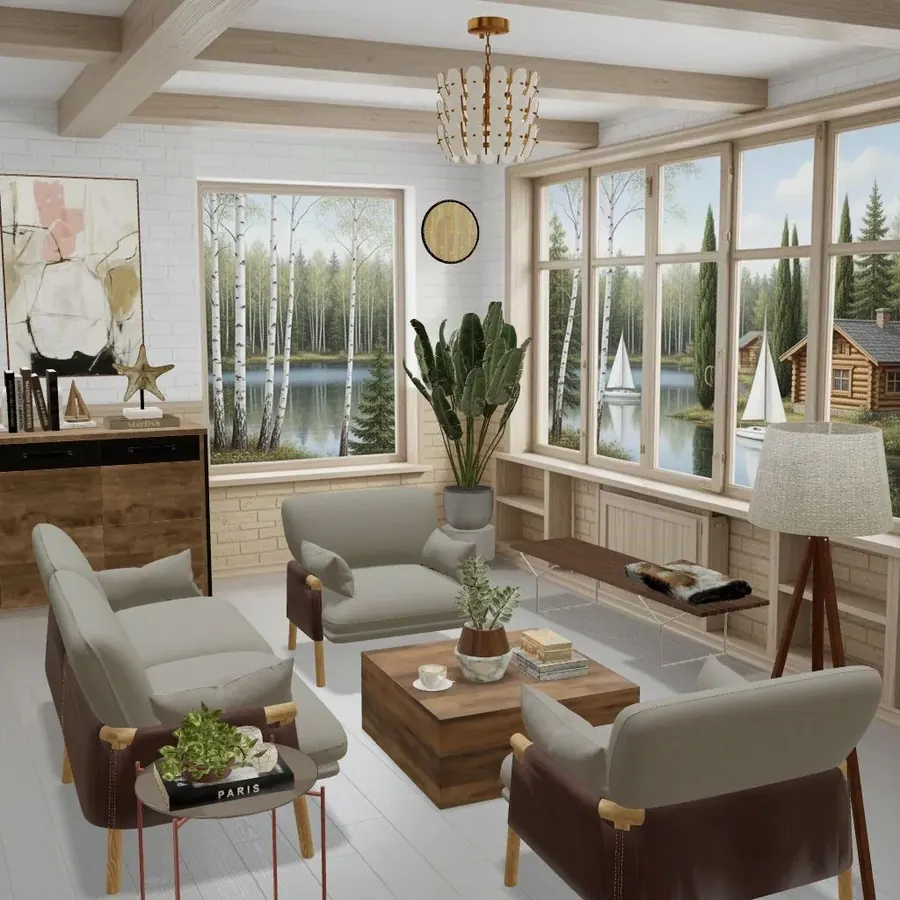
In this salon, a slim bench runs under the long window, the seating is grouped low around a wooden coffee table, and the tall plant stands beside the glass rather than in front of it.
Where the TV goes
- Best: a wall at right angles to the window, so the screen isn’t reflecting the glass and you’re not looking into the light.
- Acceptable: opposite the window, with good blinds you can lower when watching.
- Avoid: directly in front of the window, unless the TV is on a low cabinet you can roll aside.
- Alternatives: a swivel wall bracket or rotating stand, a TV inside a cabinet with doors, or a frame-style TV that shows art when it’s off.
If the room also has a fireplace, the fire and view usually make a better pair than fire and TV. Put the fire on the side wall and let the TV live in another room or a corner.
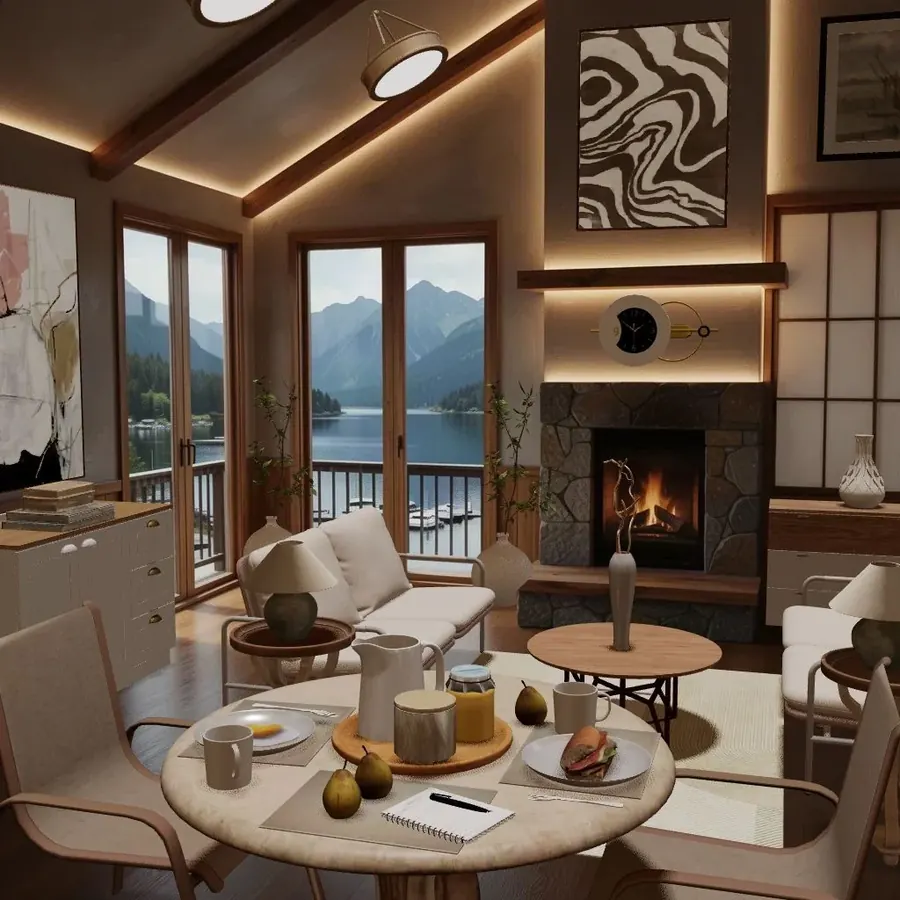
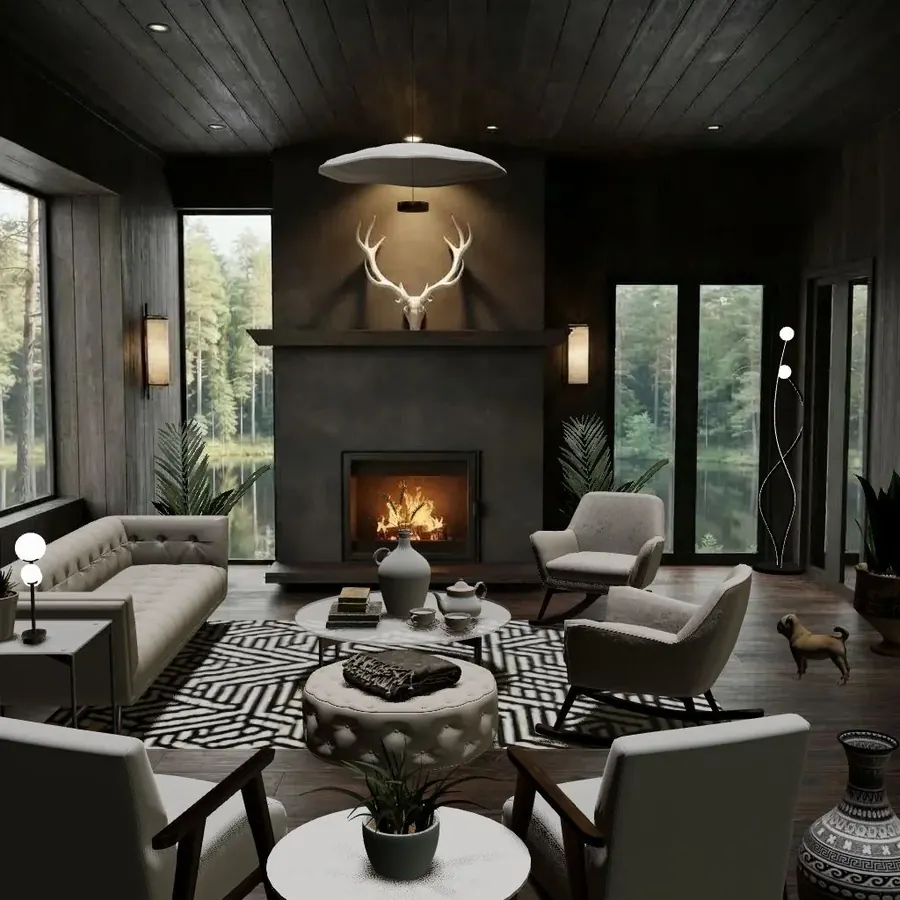
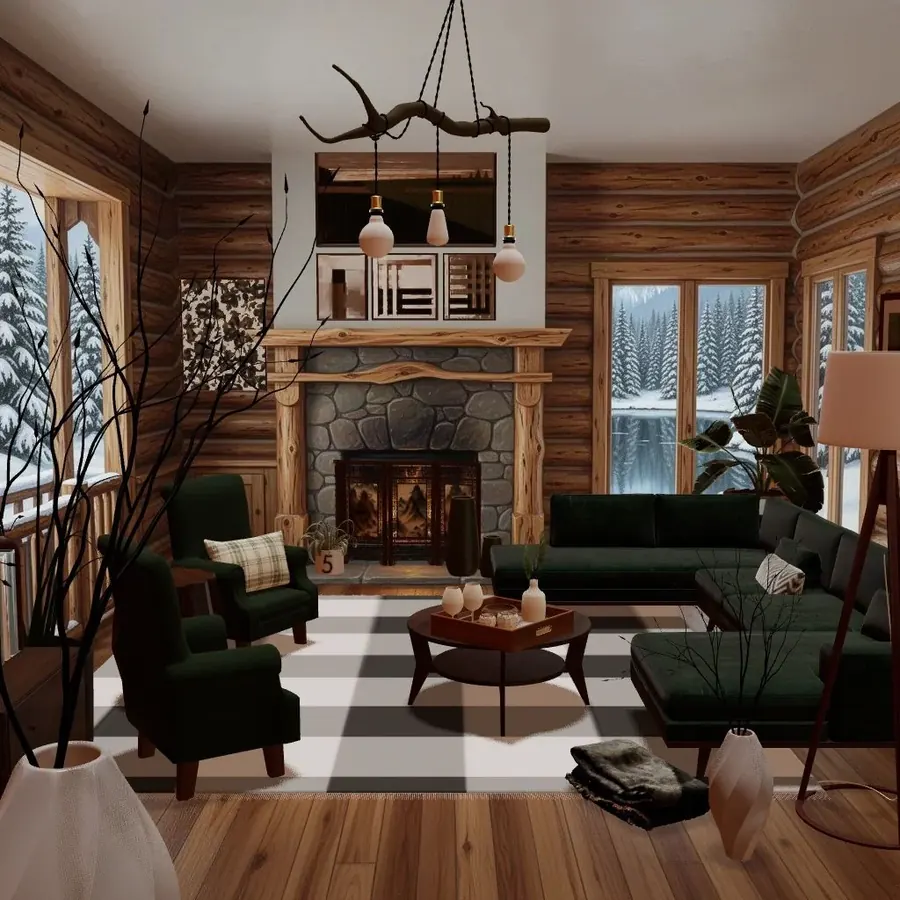
This room shows two more ideas: the fireplace is on the wall beside the glass doors, so you can see both from the seating, and the round table is placed where breakfast comes with the lake view.
Handle glare and sun
Big windows bring wonderful light, but direct sun on screens, faces and fabrics needs managing.
| Window treatment | What it does | Best for |
|---|---|---|
| Sheer curtains | Soften light and glare, keep the view hazy | Living rooms that face the sun for part of the day |
| Solar / screen roller blinds | Cut glare and heat while you still see out; more open weaves show more view | South- and west-facing windows, rooms with screens |
| Top-down, bottom-up shades | Cover the lower part for privacy and leave the top open for sky | Street-level windows |
| Lined or blackout curtains | Block light and keep heat in at night | Evenings, cold climates, home cinemas |
| Motorized shades | Reach very high or wide windows | Double-height rooms like the loft in the cover image |
Hang curtains wide and high. Mount the pole 10–15 cm (4–6 in) above the frame or near the ceiling, and extend it 20–30 cm (8–12 in) or more past each side so the curtains stack off the glass when open. That keeps the full view and makes the window look larger.
Protect against fading. Strong sun fades upholstery, rugs, wood and art. Choose fade-resistant fabrics on sofas in direct sun, rotate rugs and cushions, and hang precious prints on walls that don’t get direct light.
Plan for the evening
After dark, a big window becomes a black mirror reflecting every lamp in the room.
- Use lamps, not just ceiling lights. Low, warm lamps (around 2700K) placed away from the glass reflect far less than a bright overhead light.
- Close something. Curtains or blinds you actually draw each evening make the room feel cozy instead of exposed.
- Light the outside. A lantern on the balcony or a light in the garden reduces reflections and keeps the view alive at night.
- Dimmers everywhere if you can.
Borrow the palette from the view
The easiest way to make a room with a view feel connected is to take colors from outside.
- Lake or sea: blues, grey-greens, white, sand, pale wood.
- Forest: deep greens, bark browns, moss, cream.
- Mountains: slate, stone grey, rust, warm white.
- City: charcoal, black metal, brick, brass.
Keep the walls around the window fairly quiet so the view is the most colorful thing in the room.
Double-height and very large windows
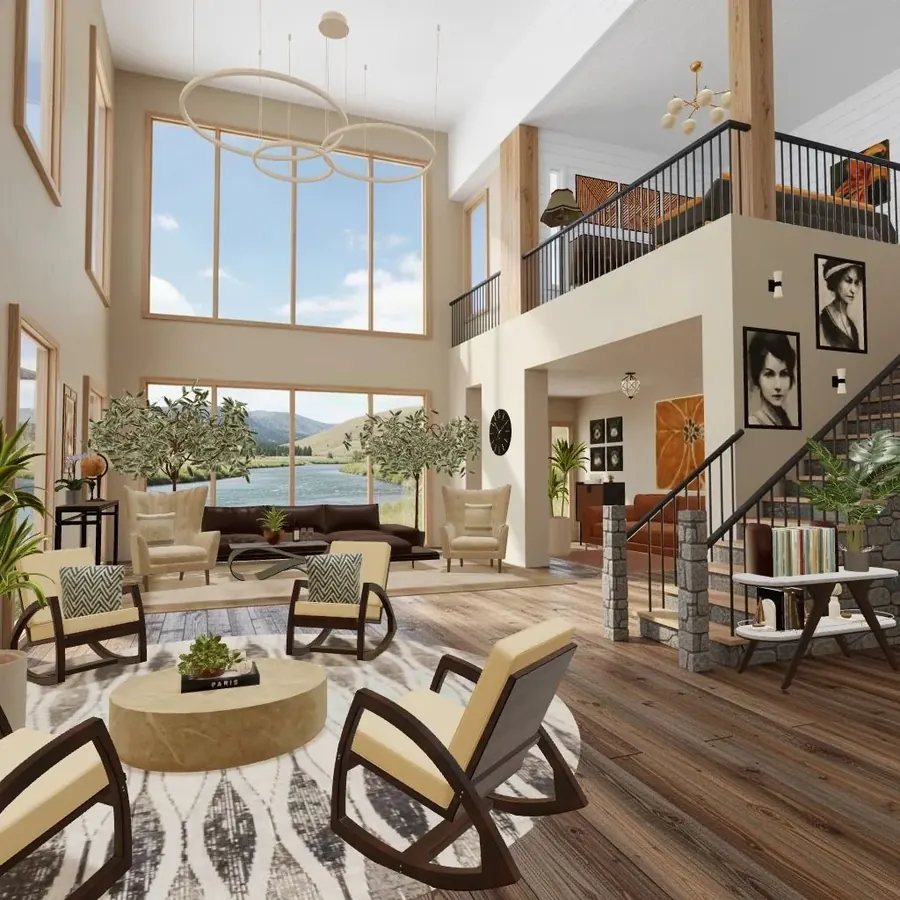
In a tall room like the loft in the cover image:
- Bring the light down. A large pendant or ring chandelier hung lower over the seating group stops the room feeling like a hall.
- Create zones. A main sofa group facing the window, plus a second group (rocking chairs around a round rug, a reading corner) elsewhere.
- Use big pieces. Small furniture looks lost under a high ceiling. Choose a large rug and a substantial coffee table.
- Go tall with plants and art on the solid walls to balance the height of the glass.
Common mistakes
- A tall sofa back blocking the bottom of the view. Choose low backs near windows.
- The TV opposite a bright window with no blinds.
- Curtains hung tight to the frame, covering a third of the glass even when open.
- Furniture pushed against the window, so you can’t open it or reach the handles.
- No plan for night. Bare black glass makes a room feel cold.
- Competing focal points. A huge artwork, a TV and a view on three walls all fight for attention.
Try it in Cozee
Cozee is a free design game for iPhone and Android where every room starts empty, including rooms with big views like a lakeside living room. You drag in real 3D furniture (sofas, rugs, lamps, plants, art), move and rotate pieces to see what blocks the view and what frames it, then submit the design for other players to rate. Afterwards you can see how others arranged the same Space in the community, which is a quick way to compare layouts. Learn how the game works or read the beginner’s guide.
More reading: how to furnish an empty room, coastal and Mediterranean style and Scandinavian style.
Questions people ask
Should a sofa face the window?
If the view is the main reason you sit in the room, yes, or at least put it at an angle so you can see out. If the window is very bright for much of the day, a sofa side-on to the window with chairs facing the view often works better, because nobody has to squint into the light or sit as a silhouette.
Where should the TV go in a living room with a big window?
On a wall at right angles to the window is usually best. A TV directly opposite a window picks up reflections; a TV in front of the window makes you look into the light. If neither works, a swivel TV stand or a TV hidden in a cabinet lets the view win by day.
Can I put a sofa in front of a window?
Yes, as long as the back is low enough not to block the view or the window opening, and there’s a gap of about 10–30 cm (4–12 in) so curtains can move and heat from a radiator underneath can circulate. Low-backed sofas and benches work best.
How do I stop windows looking like black mirrors at night?
Use curtains or blinds you can close in the evening, keep lighting low and warm rather than bright overhead, and place lamps away from the glass. Outdoor lights in the garden or on a balcony also cut reflections, because the glass is no longer dark on the other side.
Try it in an empty room first
Cozee is a free interior design game for iPhone and Android. Pick an empty 3D room, fill it with real furniture, and see what the community thinks.
4.7 on the App Store · Free, with optional in‑app purchases