

On this page 11 sections
A home library can be anything from one well-filled bookcase to a room lined with books, and the same rules work at every size: shelves of the right depth and spacing for your books, a comfortable seat and a reading lamp near them, light aimed at the books as well as the room, and somewhere for the books to grow. Below are ideas for four sizes of library (a shelf, a nook, a wall and a whole room), followed by the practical details that make any of them work.
Size 1: A single bookcase
You don’t need a room to have a library. One tall, full bookcase with a chair and a lamp beside it already feels like one.
- Go to the ceiling if you can. A floor-to-ceiling bookcase looks built-in and holds far more than two low ones.
- Put it where you’ll read, next to a sofa or armchair, not in a hallway you only walk through.
- Anchor it to the wall. Tall, full bookcases are heavy and can tip.
- Mix in a few objects (a plant, a bowl, a small framed picture) so it looks curated rather than stored. Our guide on how to style shelves explains the balance.
Size 2: A library nook
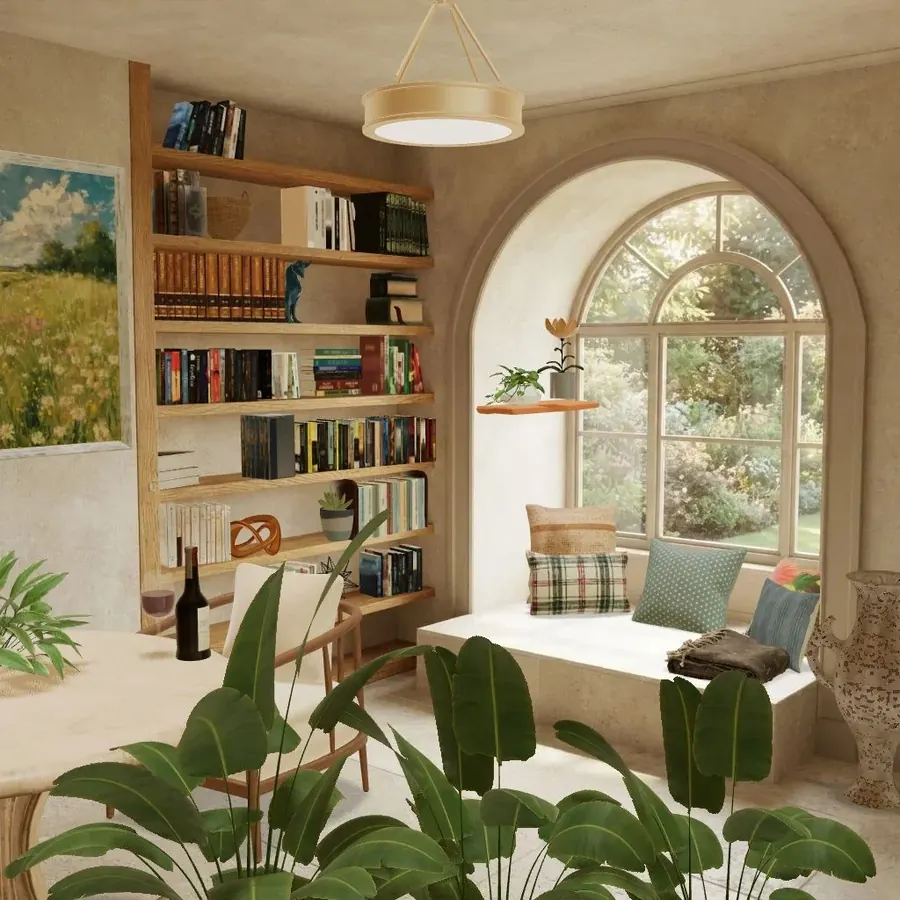
A nook is a bookcase plus a place to sit, tucked into an alcove, a bay window, a landing or the space beside a chimney.
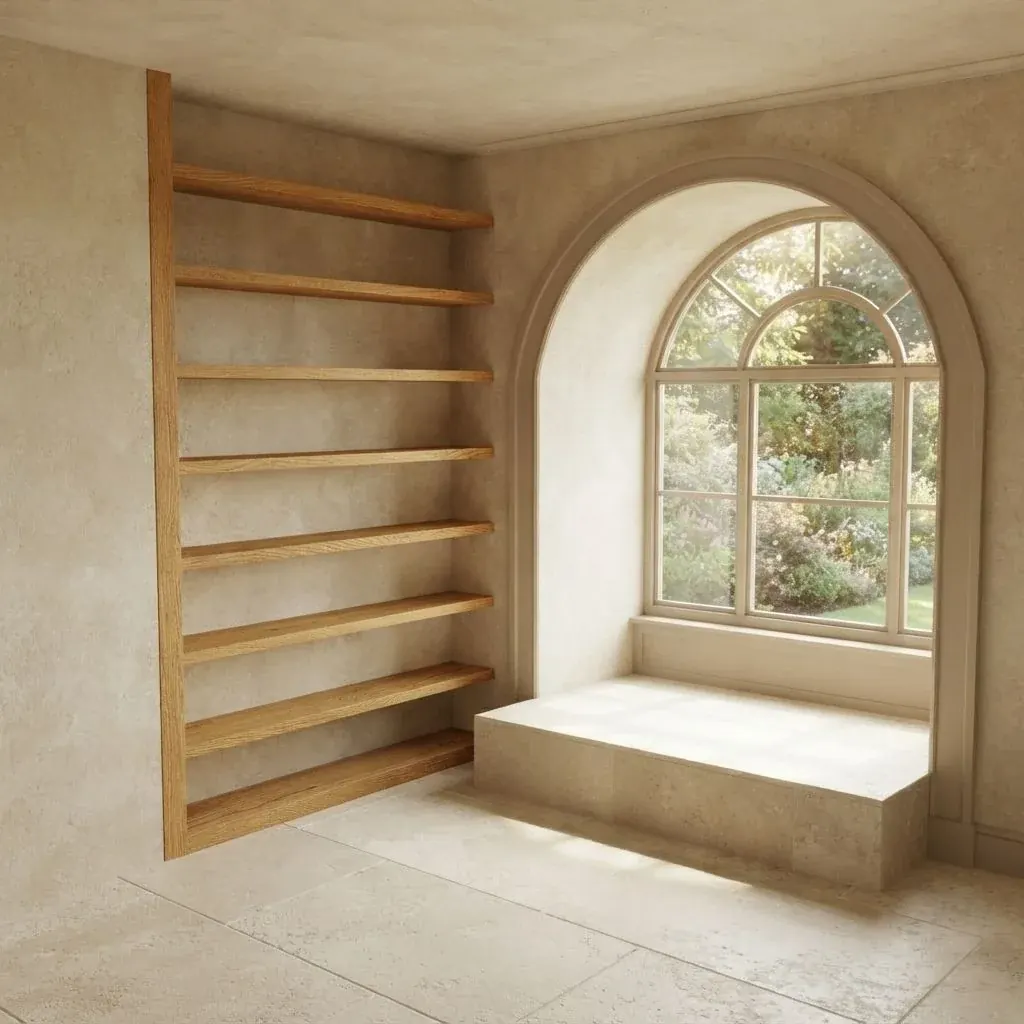
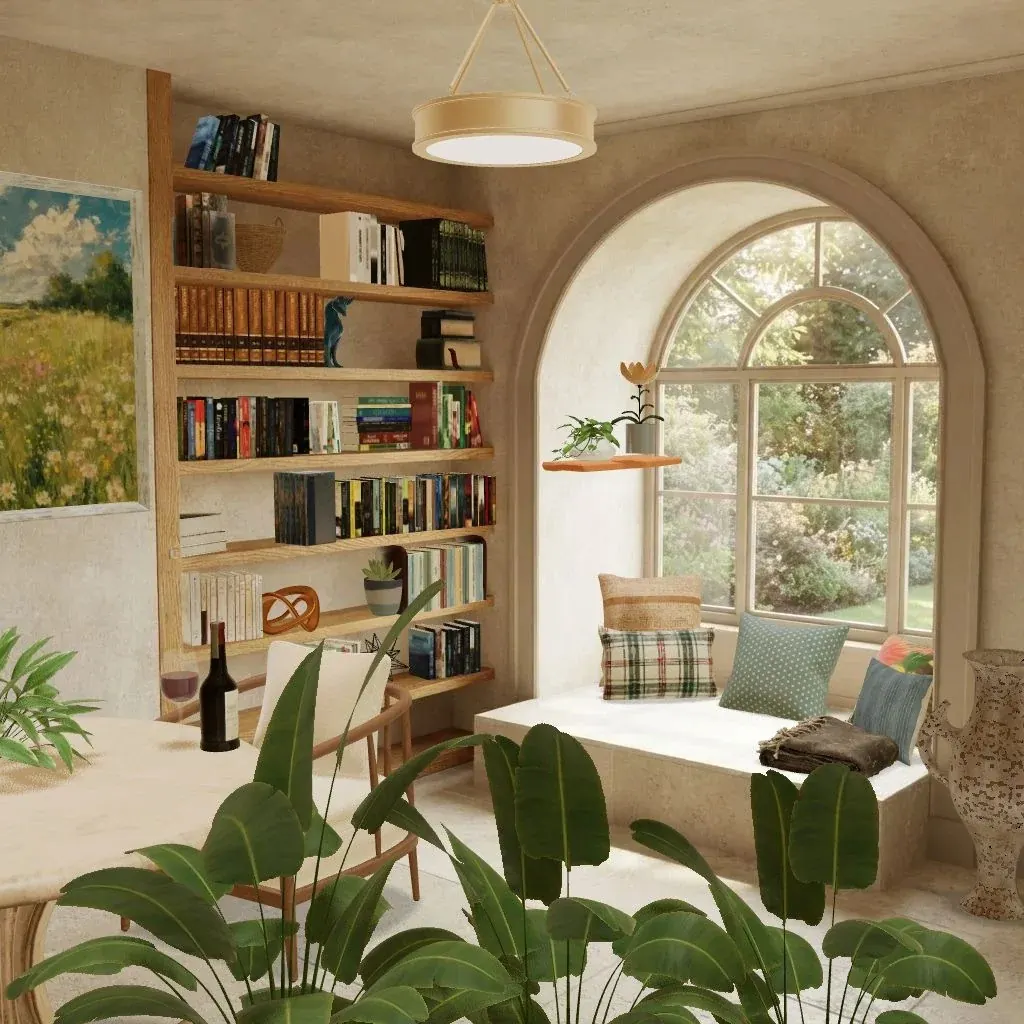
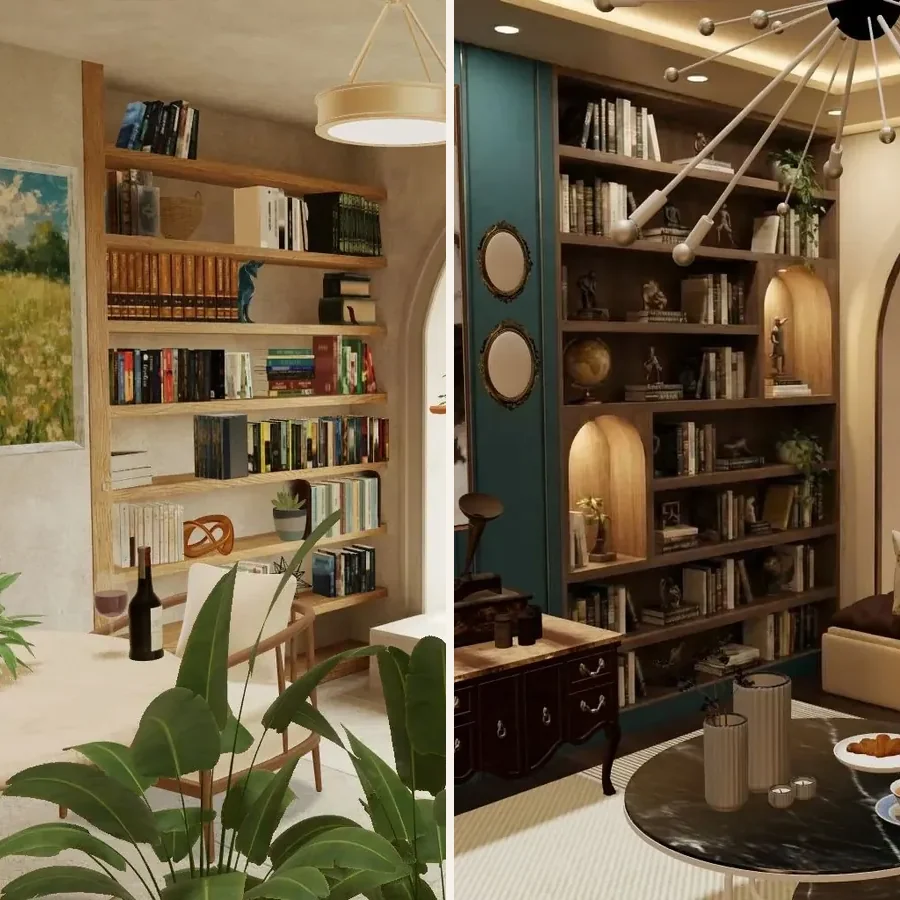
The before-and-after above shows how little a nook needs. The empty version already has the bones: built-in oak shelves on one wall and a deep stone seat in the arched window. Fill the shelves with books (with a few gaps and objects), add cushions and a throw to the seat, hang a pendant and bring in plants, and the empty corner becomes a library. For seat sizes and reading light, see our guide to the cozy reading nook.
Size 3: A library wall
A whole wall of books turns a living room, dining room or bedroom into a library without giving up the room.
- Built-ins or a run of matching bookcases across the full width, ideally floor to ceiling.
- Shelves around a door or window frame it and use space that’s otherwise wasted.
- Closed cupboards along the bottom, 40–60 cm (16–24 in) deep, hide clutter and give the wall a solid base.
- A sliding library ladder if the top shelves are out of reach. It needs a rail and enough floor in front of the wall.
Dining rooms make especially good library walls. Books absorb sound, look wonderful by candlelight and give guests something to talk about.
Size 4: A whole room
If you have a spare room, a library can be its main job, with a desk, a guest daybed or a music corner as a side job.
- Line two or three walls with shelves and keep one wall, or the window wall, calmer.
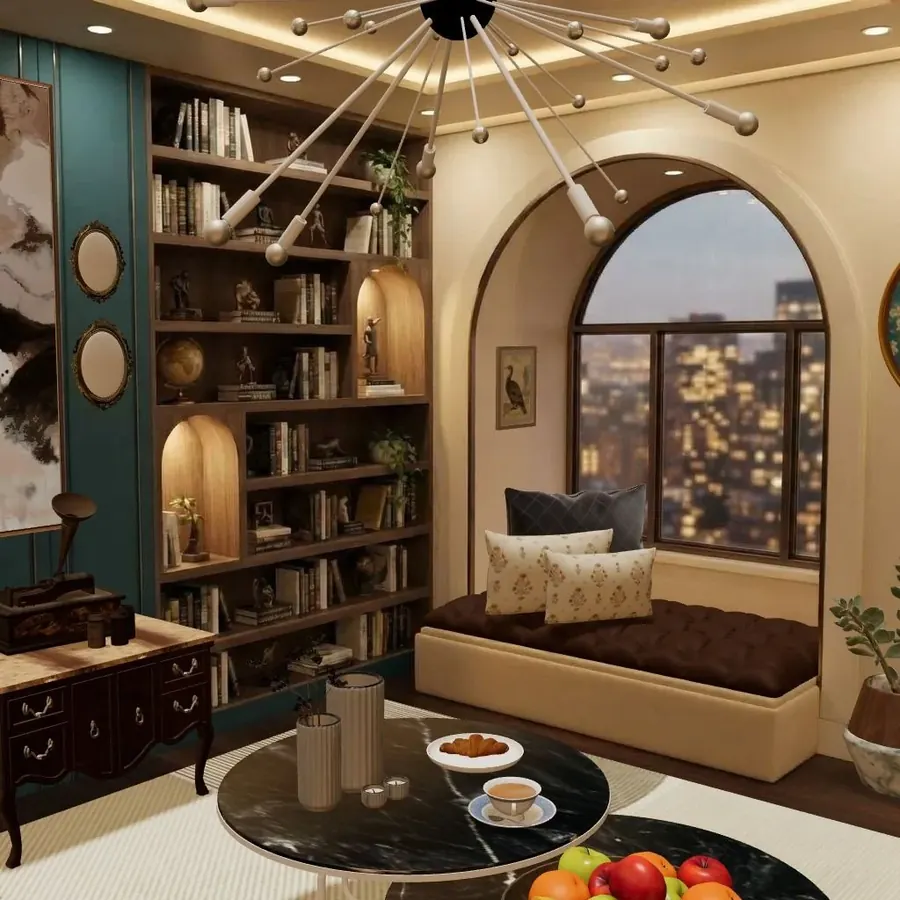
- Paint the walls a deep color, like the teal on the right of the cover image. Dark walls make books and lit shelves glow. Our dark academia guide is full of ideas in this mood.
- Add arched or lit niches to break up long runs of books, as the dark bookcases in the cover do.
- Plan more than one seat: a reading chair, a window seat or a daybed, and a table for laying out big books.
- Use a rug to soften sound and footsteps.
Shelves that fit your books
Getting the shelf dimensions right is what makes a library look full and tidy rather than gappy or overstuffed.
| Books | Shelf height (gap) | Shelf depth |
|---|---|---|
| Paperbacks | about 22–25 cm (9–10 in) | 20–25 cm (8–10 in) |
| Hardback novels | about 28–30 cm (11–12 in) | 25–30 cm (10–12 in) |
| Art and coffee-table books | 35–40 cm (14–16 in) | 35–40 cm (14–16 in) |
| Records, file boxes, atlases | 35–40 cm (14–16 in) or more | 35–40 cm (14–16 in) |
A few more rules of thumb:
- Watch the span. Long shelves sag under books. Shelves of about 2 cm (¾ in) solid wood are usually happiest at spans of about 75–80 cm (30–32 in) or less; thinner or particleboard shelves need shorter spans or extra support.
- Make some shelves adjustable, so the library can change as your books do.
- Put the tallest books low, where the shelves are deepest and the weight is safest.
- Leave about a fifth of the space free for new books and a few objects.
Light the books, not just the room
A library lit by one ceiling light looks flat. Layer it:
- Ambient: a pendant or chandelier for general light. The sputnik chandelier in the cover is a fun, sculptural choice.
- Shelf lighting: LED strips under shelves or in the uprights, or a picture light over a bookcase.
- Reading light: a lamp just behind your shoulder by every seat.
- Warm bulbs of about 2700–3000K, on a dimmer if possible.
The layered lighting guide explains how to combine these.
Organize it so you can find things
There’s no right way, only the way you’ll keep up.
- By subject, then author: the classic library system, easiest for big collections.
- By color: beautiful in photos, harder to find things. It works best for a small collection you know well.
- By size or mood: tall books together, favorite books at eye level, cookbooks near the kitchen.
- Mixed with objects: books standing and stacked, with a few things between them, look relaxed and personal.
Look after the books
- Keep them out of strong direct sun, which fades spines quickly.
- Avoid damp walls and leave a small gap behind books on outside walls so air can move.
- Dust from the top down a few times a year.
- Don’t pack shelves too tightly, or covers get scuffed pulling books out.
Renting? Build a library without built-ins
Freestanding bookcases in a matching run look almost built-in, especially if they reach close to the ceiling and you paint the wall behind them the same color. Ask your landlord before fixing anything to the wall, though anti-tip fixings are usually worth the conversation. Our rental decorating ideas cover more no-drill options.
Common mistakes
- Shelves too deep, so books get lost in the back row.
- Long shelves that sag under the weight of books.
- No seat, so the library becomes storage.
- Only overhead light, with dark shelves and glare on the page.
- Every shelf crammed full, with no room to grow.
Try it in Cozee
Want to see a library wall before you build one? In Cozee, a free design game for iPhone and Android, you furnish empty 3D rooms with real furniture and decor, including bookcases, books, lamps and reading chairs. Some Spaces already have built-in shelves, like the stone nook above. Try filling the shelves two ways, one tight and orderly and one loose with objects between the books, and see which one other players rate higher.
Questions people ask
How deep should bookshelves be?
About 25–30 cm (10–12 in) deep for most novels and hardbacks. Large art books and atlases need 35–40 cm (14–16 in). Shelves deeper than that tempt you to stack books two rows deep, and the back row disappears.
How many books fit on a meter of shelf?
Roughly 30–40 typical books per meter (about 9–12 per foot), depending on how many are paperbacks and how many are thick hardbacks. Measure a few of your own shelves of books to plan more exactly, and leave about a fifth of the space free for new books and objects.
How do I make a home library in a small apartment?
Use height and the spaces nobody else uses: one tall bookcase to the ceiling, a run of shelves above a door or around a window, a hallway wall with shallow shelves, or the alcoves beside a chimney breast. Add one comfortable chair and a lamp and you have a library corner.
How do you light bookshelves?
Light the books from the front or above, not just the room. Picture lights or small spotlights angled at the shelves, LED strips tucked under each shelf or inside the uprights, and a warm reading lamp by the chair all work. Keep the light warm, around 2700–3000K.
Try it in an empty room first
Cozee is a free interior design game for iPhone and Android. Pick an empty 3D room, fill it with real furniture, and see what the community thinks.
4.7 on the App Store · Free, with optional in‑app purchases