

On this page 8 sections
To style shelves that look curated rather than cluttered, place things in a set order: books first, then a few larger objects, then small pieces, and stop while there is still empty space on every shelf. Group items in odd numbers, vary their heights, repeat colors across the whole unit and hide everyday clutter in baskets. This guide walks through each step, with spacing measurements, layouts that work and a checklist you can follow on your own bookcase.
Before you start: empty it and edit
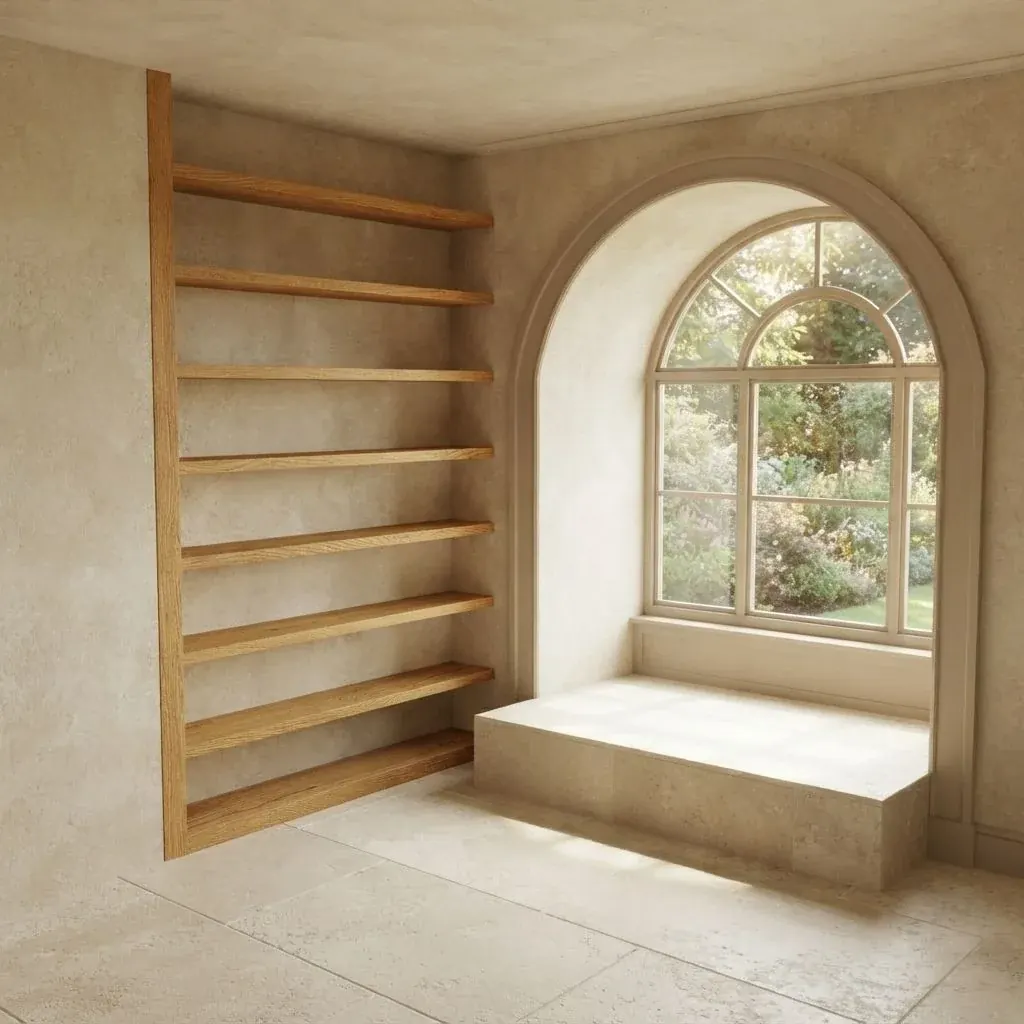
Take everything off. Styling around what’s already there almost never works, because you can’t see the structure of the shelves.
Then sort what you have into four piles:
- Books you want to keep on show.
- Display objects: vases, bowls, ceramics, small sculptures, framed photos, plants, candles, a clock.
- Storage things that need a home but don’t need to be seen: chargers, paperwork, toys, remotes.
- Things that should live elsewhere. Be ruthless here.
Storage things go into closed boxes, baskets or bins, ideally all in one material so they read as a single calm block.
The order that works
1. Books first
Books are the backbone of most shelving and usually the biggest visual mass, so place them before anything else.
- Mix vertical and horizontal. Line up a run of upright books, then lay a short stack of three to five horizontally. Horizontal stacks double as a little plinth for a small object.
- Line up the spines with the front edge of the shelf rather than pushing books to the back. It looks neater and keeps the faces of the shelves even.
- Use bookends or a heavy object to hold the end of an upright row.
- Leave books out of a few shelves if the unit is purely decorative. In a real library, ignore that and fill it.
2. Large objects next
Add the biggest decorative pieces: a large vase, a framed print leaning at the back, a tall plant, a sculptural lamp. These set the scale. Space them out so no two big pieces sit right next to each other, either side to side or directly above and below.
3. Small pieces last
Now fill gaps with smaller things: a bowl, a candle, a little sculpture, a small plant. Group them with something bigger so they don’t look stranded.
4. Step back and edit
Stand across the room and squint. Anything that disappears or looks like a speck can probably go. Anything that pulls your eye too hard may need a partner elsewhere to balance it.
Composition rules designers use
Group in odd numbers
Groups of three (or one or five) tend to feel more natural than pairs, which read as formal and symmetrical. A classic trio is tall, medium and low: a vase, a stack of books and a small bowl.
Think in triangles
Within a group, place the tallest piece at the back or to one side and step down from it so the tops of the objects form a rough triangle. That shape is easy on the eye and stops a row of things looking like a queue.
Zigzag across the unit
Don’t put all your books on the left and all your objects on the right. Alternate: books on the left of shelf one, on the right of shelf two, on the left of shelf three. The same goes for color and big pieces. Your eye then travels across the whole unit in a zigzag, which feels balanced.
Repeat color and material
Pick two or three accent colors or materials (say, white ceramics, brass and green plants) and repeat each at least three times across the unit. Repetition makes a mixed collection look intentional.
Leave breathing room
A common guideline is to leave roughly a third of the visible shelf space empty. It’s a loose rule, not a measurement, but the idea is right: negative space is what lets each object be seen.
Weight the bottom
Put heavier-looking things low (big books, baskets, boxes) and lighter things higher up. The unit looks stable and is safer too.
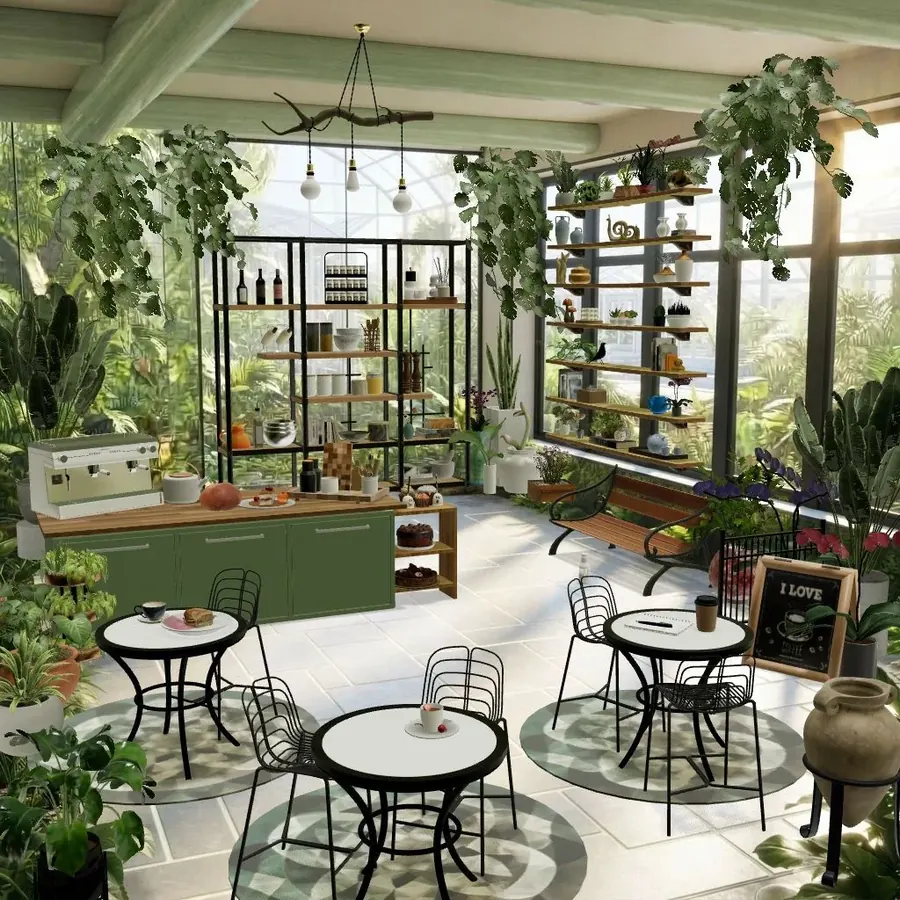
In the café above, the open metal unit holds lots of small things but stays readable, because the containers repeat (white jars and bottles in rows) and there’s a little space between each cluster.
Measurements worth knowing
Exact sizes vary by furniture maker, so treat these as typical ranges.
| What | Typical range | Note |
|---|---|---|
| Shelf depth for books | 25–30 cm (10–12 in) | Fits most paperbacks and hardbacks |
| Shelf depth for large art books | 30–40 cm (12–16 in) | Oversized books need the extra depth |
| Gap between shelves for books | 25–35 cm (10–14 in) | Paperbacks need less, tall hardbacks more |
| Gap above objects | at least 5 cm (2 in) | Leaves room to lift things out and lets them breathe |
| Floating shelves above a desk or console | 30–45 cm (12–18 in) apart | Depends on what you’ll put on them |
Safety first: tall bookcases should be anchored to the wall with an anti-tip strap or bracket, especially in homes with children. Load heavy books low.
Styling different types of shelves
Built-in bookcases
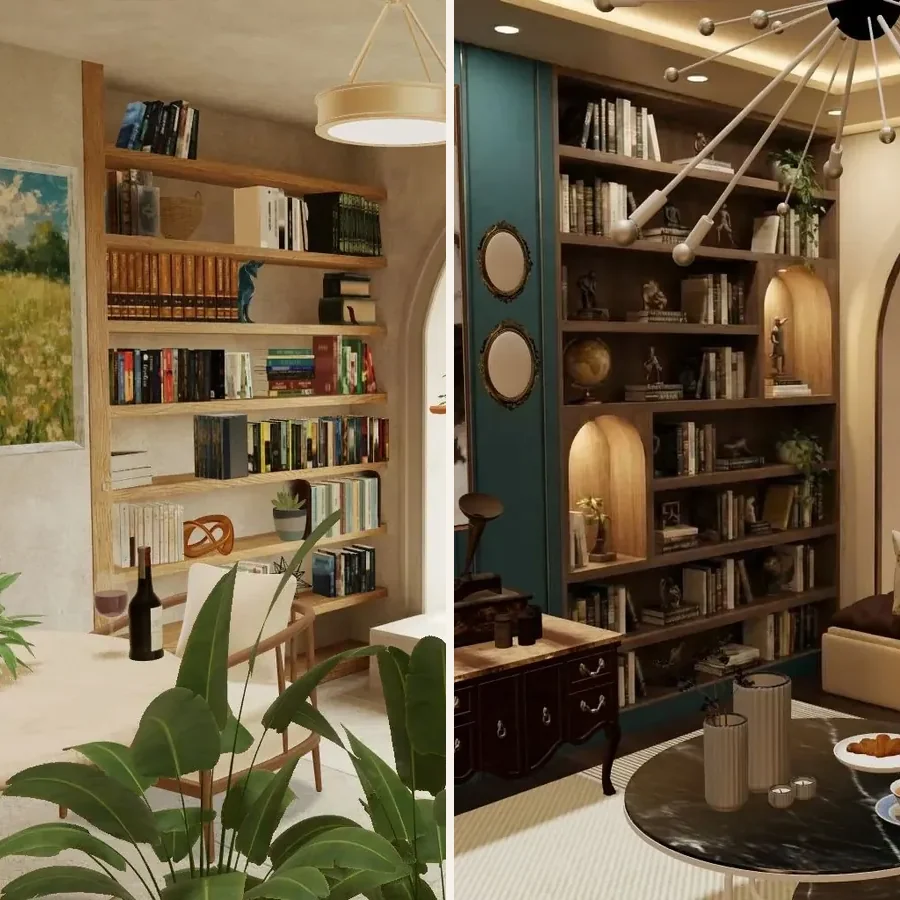
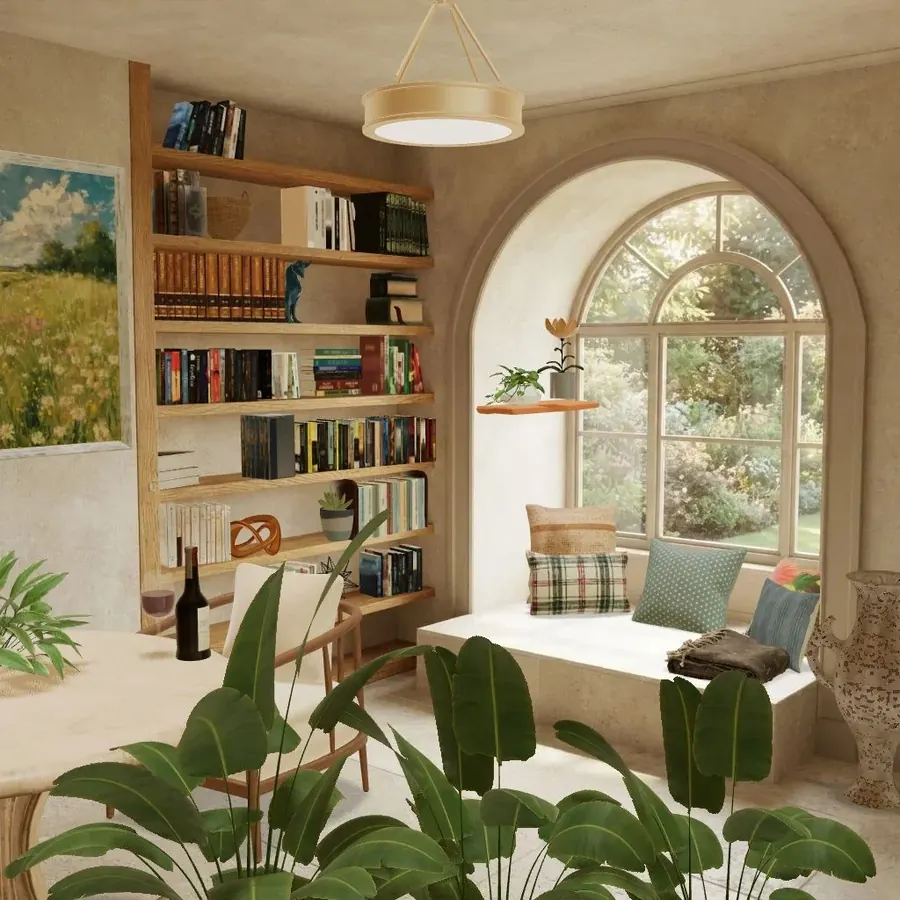
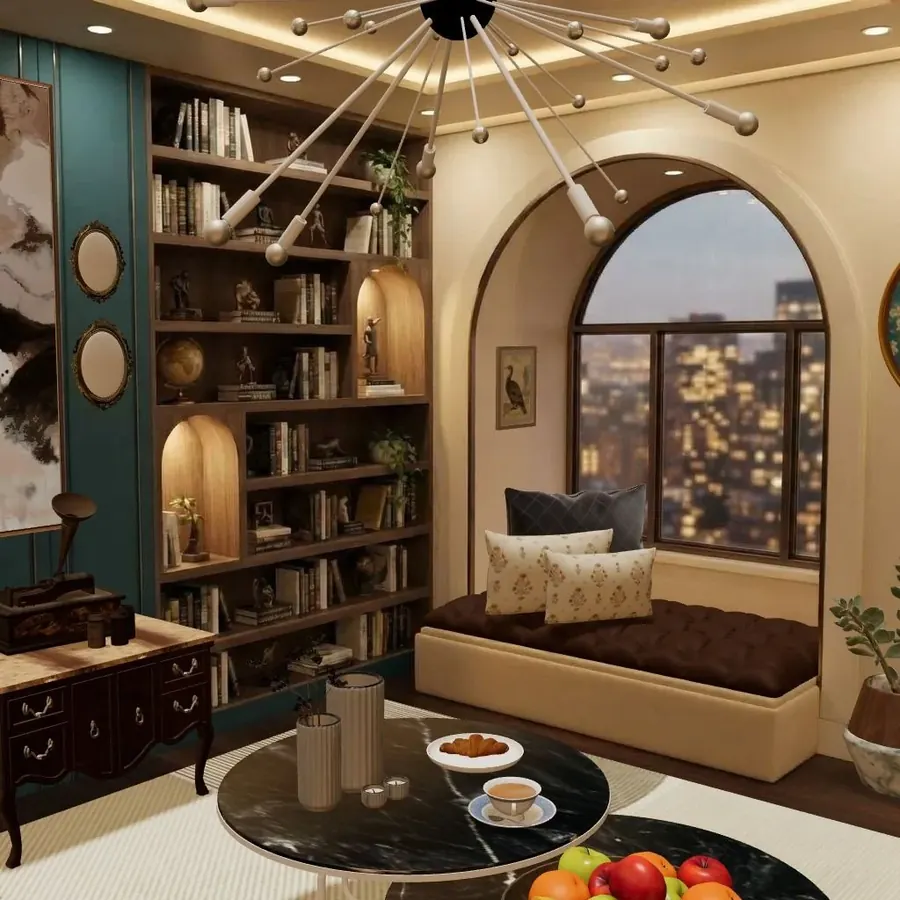
They’re often the architectural feature of a room, so treat the whole wall as one composition. Painting the back panel a darker or contrasting color makes objects stand out. Adding a picture light or LED strip at the top of each bay gives depth in the evening.
Floating shelves
Usually short and shallow, so less is more: one or two small groupings per shelf. Stagger the groups between shelves so they don’t stack in a column. Check the weight rating of the bracket and use the right wall fixings.
Open shelving in a kitchen
Keep it mostly functional and matching: stacks of plates, glasses, a few jars with the same lids, a cookbook or two. One plant or a wooden board adds warmth. Anything used daily will collect grease or dust, so only open-store what you use often.
Alcove and nursery shelving
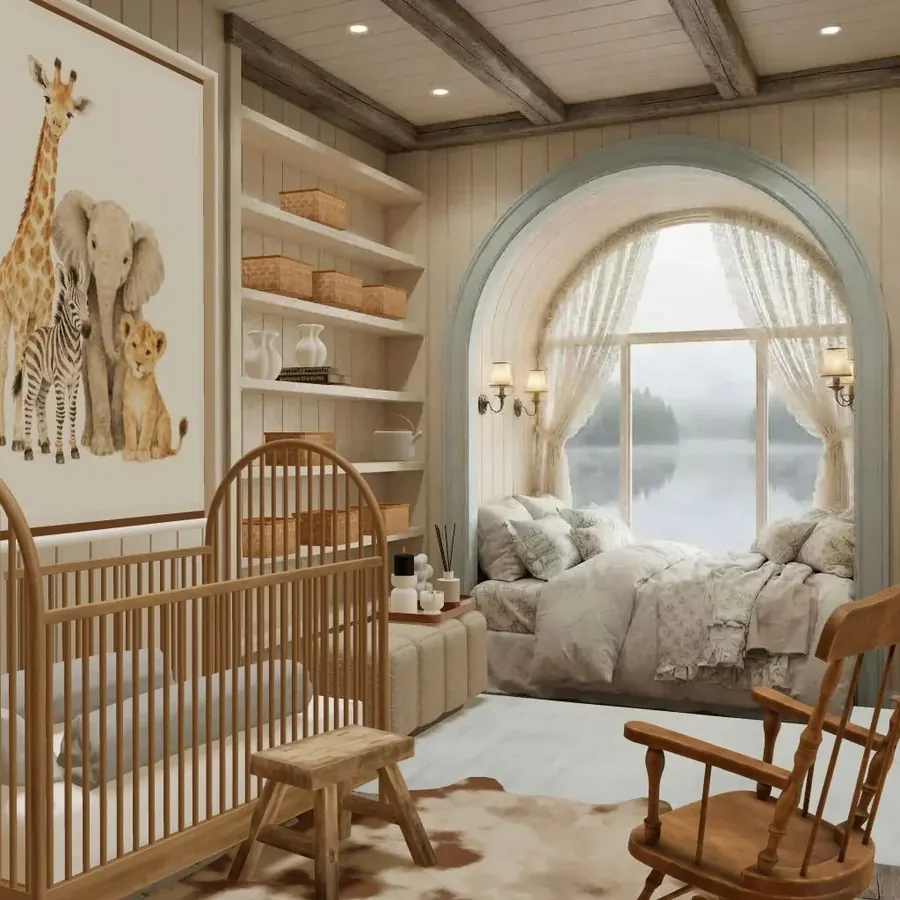
Baskets are your best friend. The cover image shows built-in shelves where woven baskets fill the lower and upper levels and a few white vases and books sit in between, so the unit looks calm while still holding a lot.
Shelves near a bed or sofa
Keep the lowest shelf practical (a lamp, a book, a glass) and do the styling higher up, out of the reach of elbows.
Common mistakes
- Spreading small things evenly. Ten tiny items in a line read as clutter. Group them.
- Everything the same height. Vary tall, medium and low.
- Filling every gap. If you can’t see the back of the shelf, take something off.
- No repetition. A collection of one-offs in different colors looks random.
- Ignoring the edges. The top shelf and the ends of the unit frame the whole thing; keep them simple and balanced.
- Styling once and forgetting. Shelves collect stray mail and keys. A five-minute reset each week keeps them looking styled.
Step-by-step checklist
- Empty the shelves and dust them.
- Hide practical clutter in matching baskets or boxes, placed low.
- Place books, mixing upright rows and horizontal stacks, in a zigzag across the unit.
- Add the largest objects, spaced apart.
- Add smaller objects in odd-numbered groups, stepping down in height.
- Repeat each accent color or material at least three times.
- Add something living or natural: a plant, branches, a wooden bowl.
- Step back, squint and remove two things.
Shelf styling relies on the same ideas as the rest of a room: balance, rhythm and emphasis. If you want the theory behind them, read the 7 principles of interior design, and for book-filled corners see our cozy reading nook ideas.
Try it in Cozee
Shelves are a great small exercise because you can see the effect of every object you add or remove. In Cozee, a free design game for iPhone and Android, rooms start empty and you drag in real 3D furniture and decor, then move and rotate pieces until a vignette feels right. Some Spaces come with built-in shelves: pick one, style them with as few objects as you can, and look at how other players handled the same shelves.
Questions people ask
How do you style shelves without them looking cluttered?
Group objects instead of spreading them out, leave real empty space on every shelf, and limit the palette to a few colors and materials. Hide everyday clutter in baskets or boxes so the open items are only the ones you want on show.
How many items should go on a shelf?
There’s no fixed number, but most styled shelves hold one to three groupings each, often a stack of books plus one or two objects. If you can’t see the back of the shelf anywhere, it’s probably too full.
Should books be arranged by color?
It’s a matter of taste. Color-sorting looks striking and calm from a distance but makes books harder to find. Many people compromise by grouping loosely by tone, or by turning a few spines inward only on purely decorative shelves. Arrange by subject or author if you actually use the books.
How deep should a bookshelf be?
For most paperbacks and hardbacks, 25–30 cm (10–12 in) is typical. Large art and coffee-table books need around 30–40 cm (12–16 in). Deeper shelves are useful for baskets and display, but books get lost at the back.
How do you style floating shelves?
Treat them like a small vignette: one taller piece, one medium, one low, with a gap between groups. Keep weight within what the brackets and wall can hold, and don’t overload the ends of a long shelf.
Try it in an empty room first
Cozee is a free interior design game for iPhone and Android. Pick an empty 3D room, fill it with real furniture, and see what the community thinks.
4.7 on the App Store · Free, with optional in‑app purchases