

On this page 12 sections
To mix patterns, vary the scale (one large, one medium, one small), tie them together with at least one shared color, and leave solid surfaces between them so the eye has somewhere to rest. Start with three patterns in a room, let the biggest one sit on the biggest surface (often the rug or a wallpaper), and mix types too: a floral with a stripe and a small check is safer than three florals. Here are the rules designers use, with examples, and how to know when to stop.
Why some pattern mixes work and others don’t
Two patterns clash when they compete for attention at the same size. A busy floral cushion on a busy floral sofa in a different palette looks like a mistake. The same cushion on a plain sofa, next to a narrow stripe in one of its colors, looks chosen.
So the rules below are really about three things: contrast in scale, agreement in color, and breathing room.
Rule 1: Mix three scales
Think of patterns by how big their repeat is, seen from across the room:
- Large: big florals, wide medallions, bold geometrics, a mural or large-scale wallpaper. These set the tone.
- Medium: stripes, chevrons, mid-sized geometrics, ikat. They support the large pattern.
- Small: ticking stripes, small checks, tiny prints, textured weaves that read almost as solid up close. They add detail.
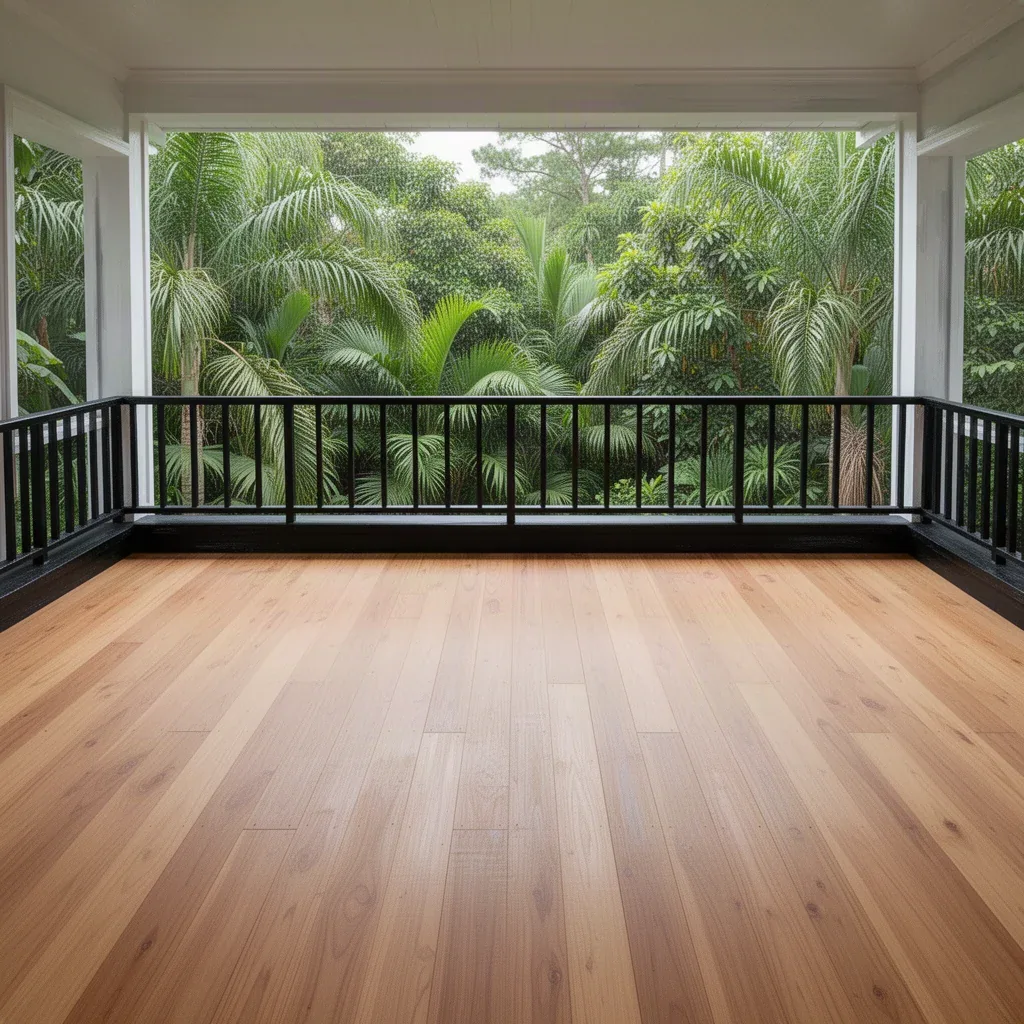
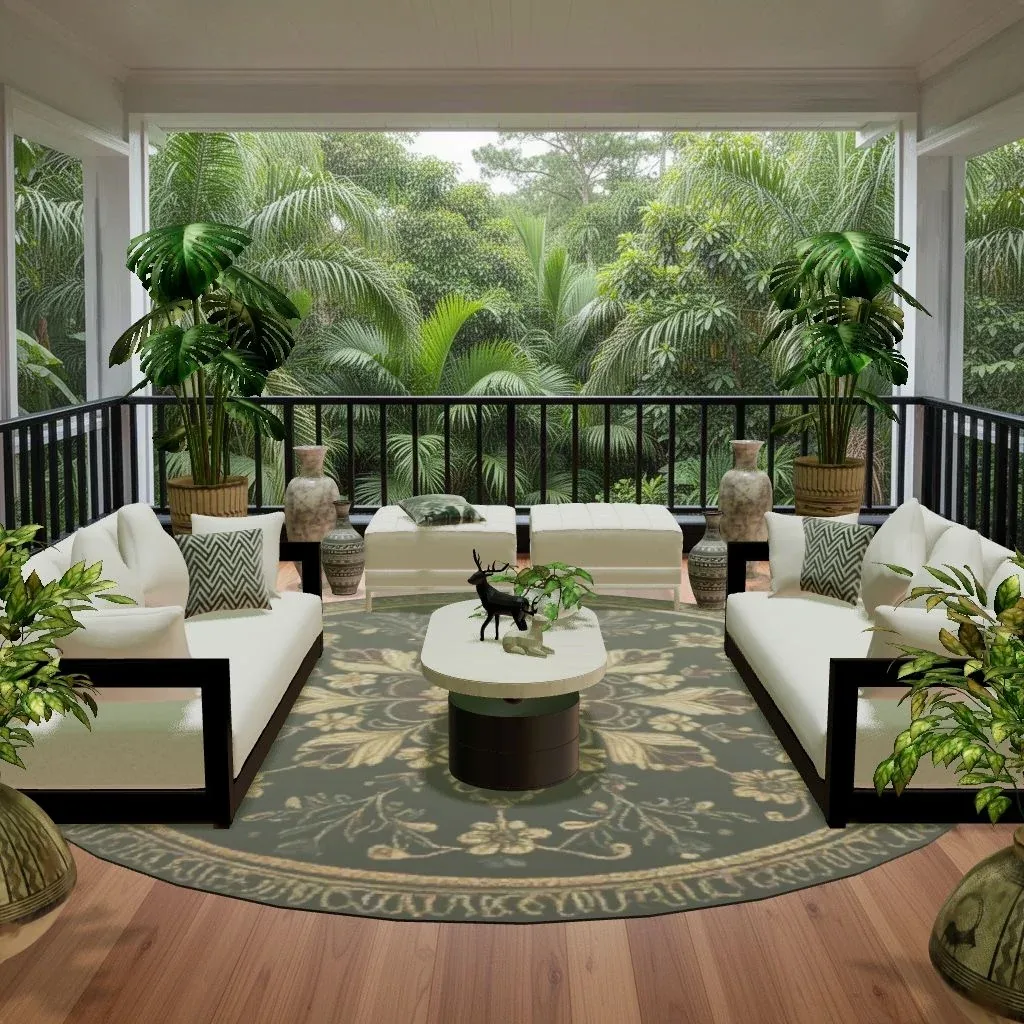
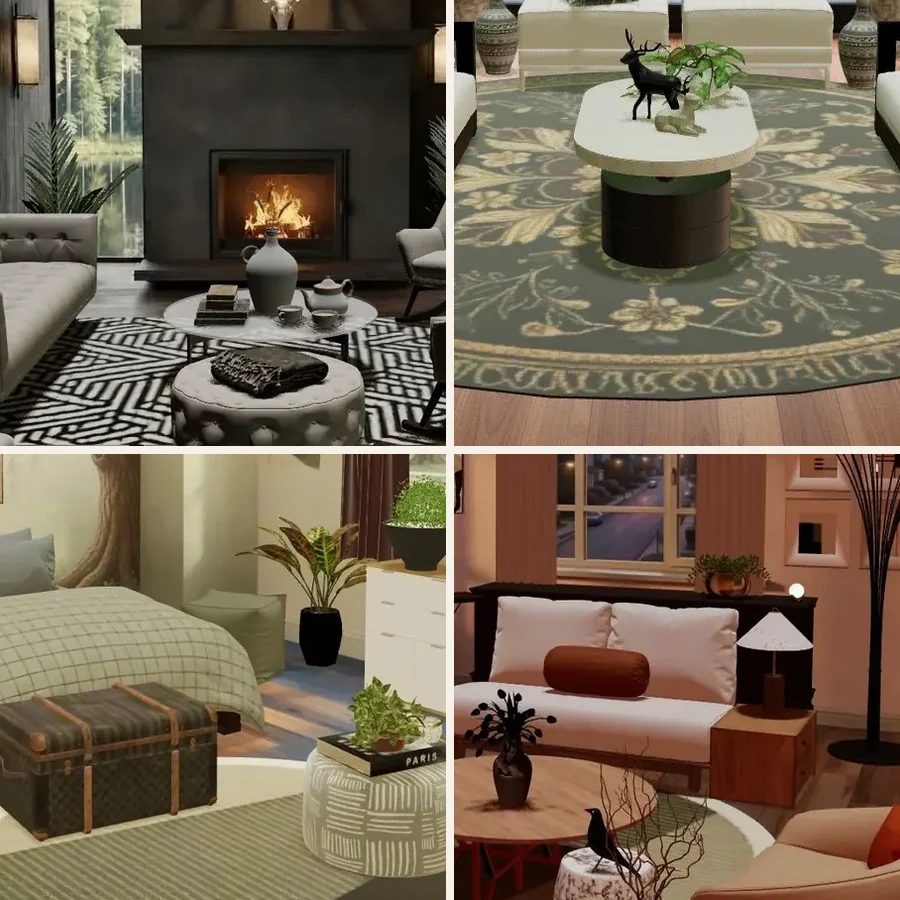
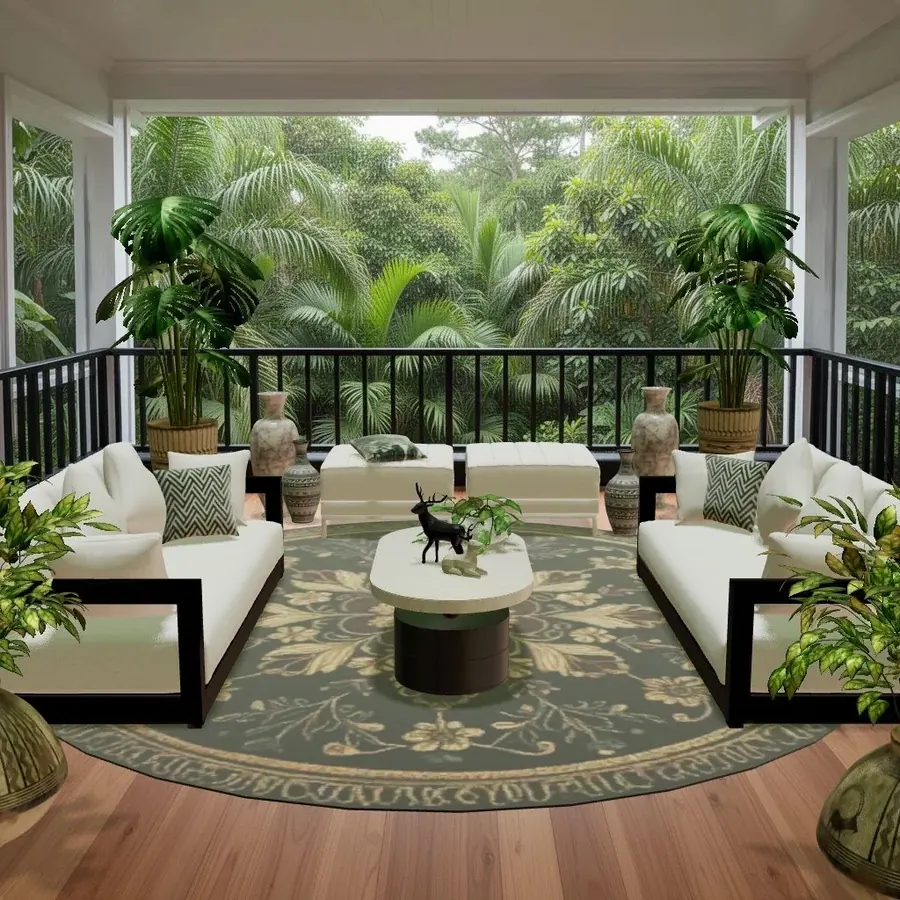
One of each is a safe, balanced mix. In the cover image’s top-right corner, a large floral rug carries the room, while (in the full room below) small zigzag cushions on plain sofas keep it from feeling heavy.
Rule 2: Share at least one color
Patterns that don’t match in style can still belong together if they share color. Pick a palette of three or four colors and make sure every pattern contains at least one of them.
- A sage floral rug, sage-and-cream checked bedding and a green velvet chair all agree, even though they’re different patterns.
- A black-and-white geometric rug, a black lamp and a white cushion with a thin black stripe agree too.
If you’re not sure where to start, pull the palette from your largest pattern. Our color theory guide explains how to build one, and its 60-30-10 rule works for patterns as well as paint.
Rule 3: Start with three
Three patterns in a room is a good beginner’s number, because it’s enough to look intentional and not so many that you lose track. Spread them around the room, not all on the sofa: one on the floor, one on the bed or sofa, one at eye level (curtains, art, a lampshade).
Once three looks good, you can add a fourth or fifth in a small dose, like a single cushion or a ceramic stool. That’s how eclectic and maximalist rooms build up layers. See boho vs eclectic vs maximalist for where each style sits.
Rule 4: Let solids do the resting
Every patterned room needs plain areas: walls, a solid sofa, a plain throw, bare floor. They give the eye a break and make the patterns look deliberate rather than accidental. A good rough balance is more solid than pattern, especially on the large pieces.
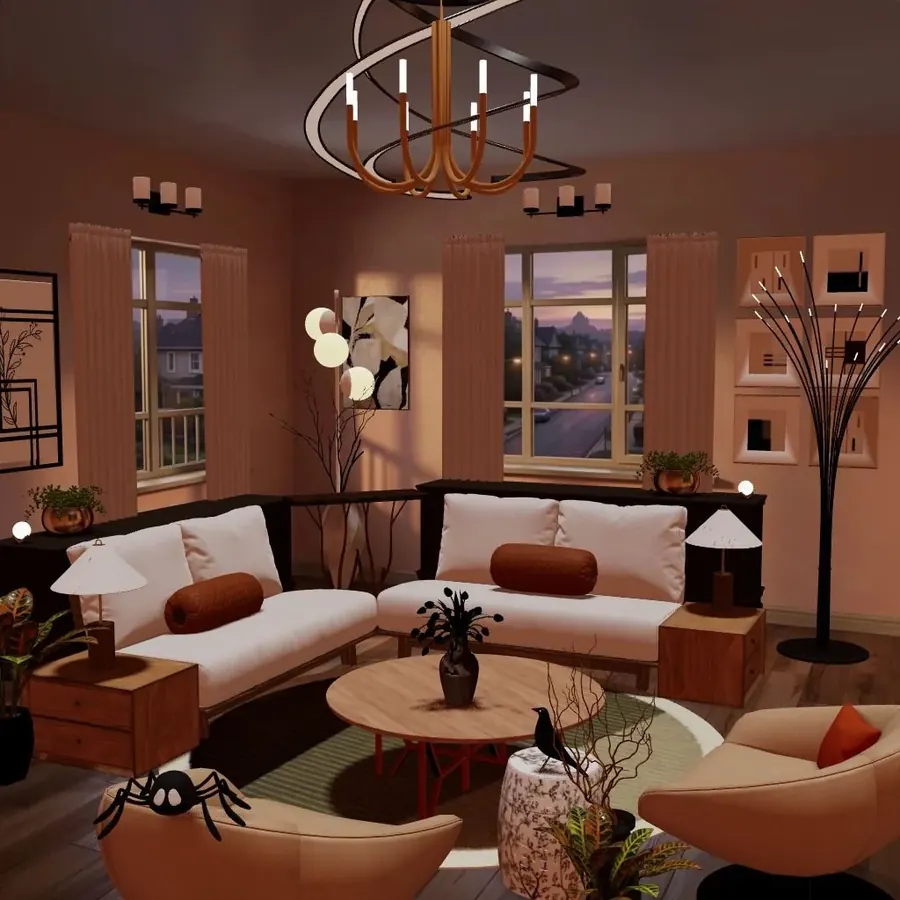
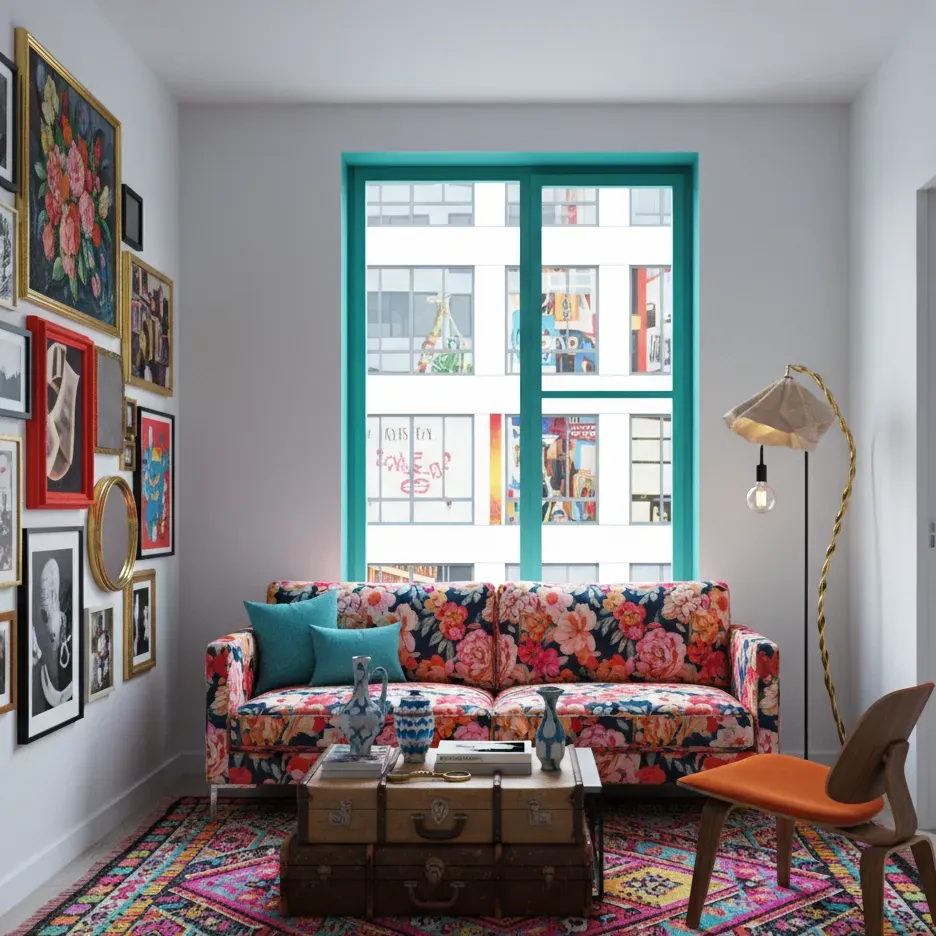
The cover image shows this in every corner. The terracotta room has a plain cream sofa, so a single patterned ceramic stool stands out. The bedroom mixes a check, the trunk’s small print and a striped pouf, with plain grey-green pillows and a plain green pouf between them.
Rule 5: Mix pattern types
Patterns fall into a few families, and combining families is easier than doubling up on one:
| Type | Examples | Character | Pairs well with |
|---|---|---|---|
| Organic | Florals, botanicals, paisley, toile | Soft, traditional, romantic | Stripes, checks, small geometrics |
| Geometric | Chevron, diamonds, trellis, Moroccan tile | Graphic, modern | Florals, plain textures |
| Linear | Stripes, ticking, pinstripes | Calm, orderly | Almost anything |
| Grid | Checks, plaid, gingham, windowpane | Cozy, country, classic | Florals, stripes |
| Global | Ikat, kilim, suzani, mudcloth | Warm, handmade, collected | Solids, simple stripes |
| Abstract | Brushstrokes, terrazzo, spots | Relaxed, artistic | Linear and grid patterns |
Stripes are the easiest helper: a stripe in one of your colors sits happily next to almost any other pattern.
Rule 6: Vary the intensity
Scale isn’t the only contrast. A high-contrast black-and-white rug is loud even if the pattern is medium-sized; a tone-on-tone damask is quiet even if it’s large. Let one pattern be the loud one, and keep the others lower in contrast. In the cover’s top-left corner, the bold black-and-white rug is the only strong pattern near the fireplace; the ottoman and sofa stay plain grey.
Rule 7: Use texture as a pattern
Texture is pattern’s quieter cousin. A chunky knit, a woven pouf, a rattan chair, a jute rug or a bouclé cushion adds interest without adding another print. If a room feels flat but you’re worried about more pattern, add texture first. Our guide to materials and textures has more.
Where to put patterns in a room
- Rugs: the largest pattern in many rooms. Size it right first; see what size rug do I need.
- Cushions and throws: the easiest place to experiment, and the cheapest to change.
- Curtains: a big, visible surface. Patterned curtains next to a patterned sofa can be a lot; choose one.
- Bedding: checks and stripes are classic; a quilt can be your large pattern.
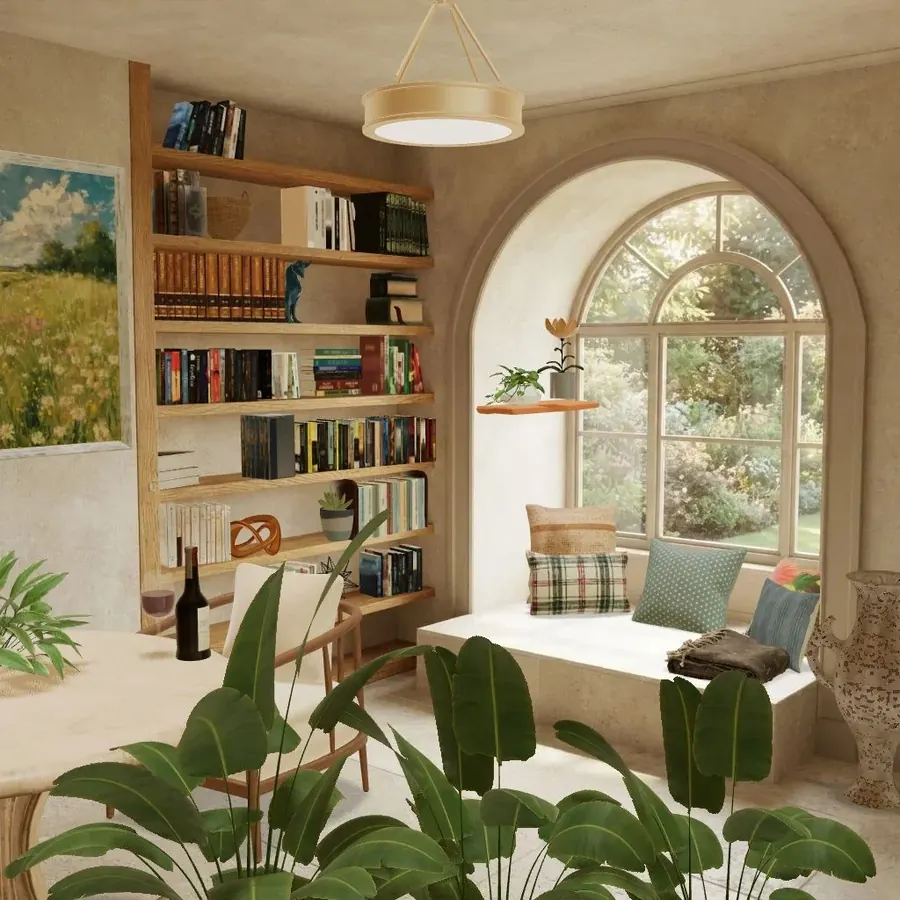
- Walls: wallpaper or a mural, as in the bedroom on the cover. If the walls are patterned, keep the bed and sofa plain.
- Small objects: vases, ceramics, lampshades, a patterned stool. Good for the small-dose fourth or fifth pattern.
Common pattern mistakes
- Two big patterns side by side, same size, same loudness, different colors.
- No shared color between them.
- Everything patterned, with no solid sofa, wall or rug to rest on.
- Matching sets: a cushion, curtain and bedspread in the identical print looks like a catalog bundle. Mix related prints instead.
- Only small patterns: a room of tiny prints reads as busy from across the room. Add one big one.
Pattern mixing by style
- Bohemian: global prints, kilims and layered rugs, tied together by warm, earthy colors.
- Eclectic: different eras and styles, held together by a repeated color or motif.
- Maximalist: many patterns at once, with confident color and deliberate scale contrast.
- Scandinavian and Japandi: mostly texture, with one quiet stripe or check at most.
Try it in Cozee
Pattern mixing is easiest to learn by trying combinations side by side. In Cozee, a free design game for iPhone and Android, you furnish empty 3D rooms with real furniture, including patterned rugs, cushions, bedding and ceramics. Try the three-scale rule in one room: a large patterned rug, a medium stripe and a small check, with a plain sofa between them. Then submit it, and other players rate the room from 1 to 5 stars, which tells you whether the mix reads as calm or chaotic.
Questions people ask
How many patterns can you have in one room?
Three is an easy starting point: one large, one medium and one small. Confident maximalist rooms use many more, but they still repeat colors and vary the scale. If you’re unsure, stop at three and add texture instead.
Can you mix florals and stripes?
Yes, it’s one of the most reliable combinations. Let the floral be the big pattern, choose a stripe in one of the floral’s colors, and keep the stripe smaller or quieter so the two don’t compete.
What is the rule for mixing patterns?
Vary the scale, share at least one color, and leave solid surfaces between patterns. Most failed pattern mixes have two patterns of the same size and intensity side by side with nothing to separate them.
Do rugs count as a pattern?
Yes, and often as the biggest one. A patterned rug covers a large area of the room, so treat it as your large-scale pattern and keep the cushions and curtains smaller or calmer.
Try it in an empty room first
Cozee is a free interior design game for iPhone and Android. Pick an empty 3D room, fill it with real furniture, and see what the community thinks.
4.7 on the App Store · Free, with optional in‑app purchases