

On this page 10 sections
Eclectic interior design is the art of mixing: furniture, art and objects from different eras, styles and places, combined so the room feels personal and deliberate instead of random. It’s less a fixed look than a way of choosing. That freedom is why it’s so appealing and why it can go wrong so easily. This guide explains how eclectic differs from maximalism, and gives you the practical tricks that make a mix look intentional.
Eclectic vs maximalist: not the same thing
People use these words interchangeably, but they measure different things.
- Eclectic is about variety of sources. A mid-century chair, a Moroccan rug, a Victorian mirror and a modern painting in one room is eclectic, even if the room is fairly calm.
- Maximalist is about quantity and intensity. Lots of color, pattern, objects and layering. A room packed with matching chintz and antiques of one period is maximalist, but not very eclectic.
| Eclectic | Maximalist | |
|---|---|---|
| Key question | “Where is this from?” | “How much is here?” |
| Can be calm? | Yes | Rarely |
| Pattern | Varied, often curated | Abundant, layered |
| Holds together through | A common thread (color, shape, material) | Confidence and repetition |
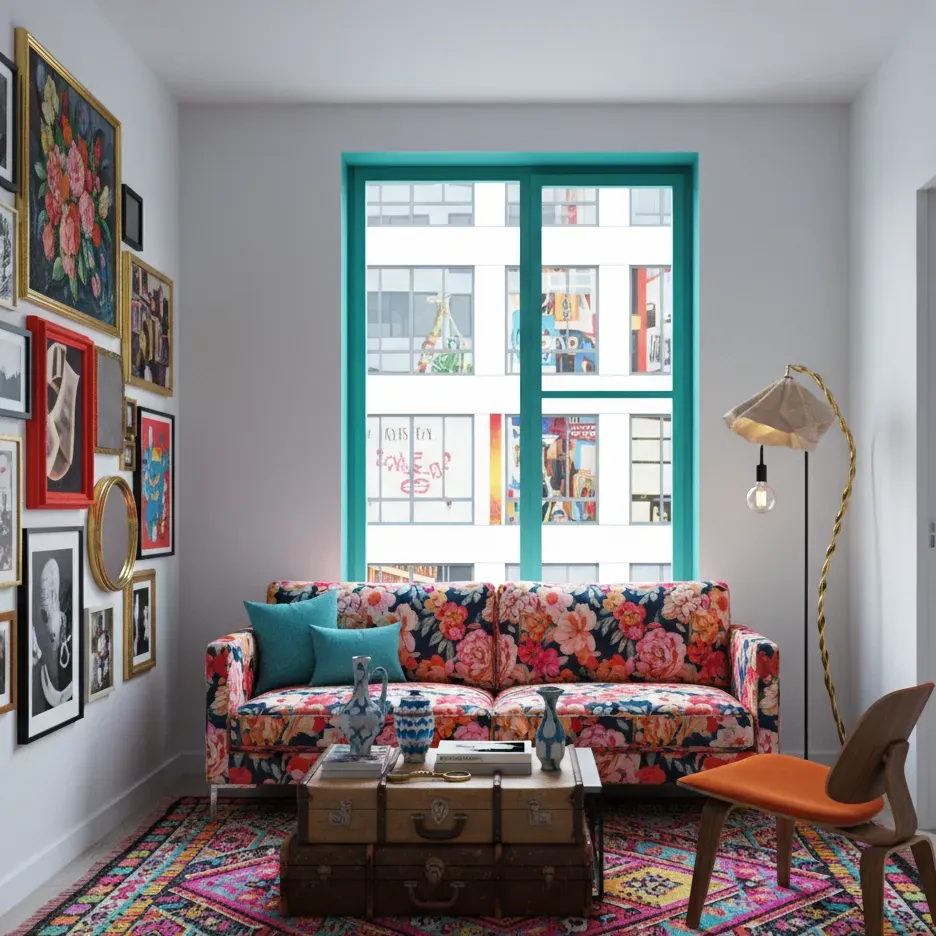
The cover image is both: a bold floral sofa, a painted teal window frame, a dense gallery wall with mixed frames, a stack of old suitcases as a coffee table, a kilim-style rug and a molded wooden chair with an orange seat. It works because teal, pink and orange repeat across the sofa, the rug, the cushions and the art.
Where the idea comes from
The word comes from the Greek for “selecting” or “picking out”. In the 19th century, “eclecticism” described architecture and furniture that freely mixed earlier historical styles, such as Gothic, classical and Renaissance, which was common in the Victorian era. Collectors’ homes of the period were full of objects from many periods and countries.
In the 20th century, eclectic decorating became an approach of its own: designers and artists mixed antiques, modern furniture, travel finds and art as a reflection of the person who lived there. Maximalism, as a label, gained momentum more recently, partly as a reaction against years of white minimal interiors.
How to make a mix look intentional
This is the core skill of eclectic design. Use as many of these as you need.
1. Choose a common thread
Every successful eclectic room has something that ties it together. Pick at least one:
- A short color list, with two or three colors that repeat in at least three places each.
- A consistent wood or metal, like all dark wood or all brass, even if the pieces come from different decades.
- A repeated shape, like curves, arches or circles.
- A theme of meaning, like travel souvenirs, family pieces or one artist’s work.
2. Repeat everything at least twice
A single orange object looks like a mistake; three orange objects around the room look like a plan. The same goes for patterns, materials and finishes.
3. Vary the scale of pattern
If you mix patterns, mix sizes: one large pattern (a big floral or a bold rug), one medium pattern (a stripe or geometric) and one small pattern (a tiny print or check). Three patterns of the same scale will fight.
4. Anchor with a few big pieces
Choose two or three large, confident anchors, such as a sofa, a rug or a big artwork, and let smaller things orbit them. A room of only small, equally loud objects feels chaotic.
5. Leave places to rest
Plain walls, a solid-colored sofa or an empty corner give the eye a break. Even maximalist rooms need some quiet.
6. Group, don’t scatter
Collections look curated when grouped together on one shelf, one wall or one tray. Spread across every surface, the same objects look like clutter.
An eclectic color palette
- Plaster
#F2ECE2 - Teal
#1E7C78 - Peony pink
#E0457B - Marigold
#E87A2E - Ink blue
#2C3A55 - Old brass
#B9945A
Eclectic palettes can be anything, but they need structure. A good approach is one neutral background, one dominant color, two supporting colors and one metal. In the palette above, plaster is the background, teal leads, pink and marigold support, ink blue adds depth and brass ties the metals together.
Materials, furniture and signature pieces
Eclectic rooms are defined by mixes, so think in contrasts:
- Old with new: an antique chest beside a modern sofa, a vintage chandelier over a contemporary table.
- Rough with polished: a worn kilim under a marble or lacquer table.
- Handmade with manufactured: ceramics, woven baskets and embroidered textiles alongside steel and glass.
Signature pieces include:
- A gallery wall with mixed frames, art, prints, mirrors and objects.
- Vintage storage used creatively: trunks, suitcases, apothecary chests.
- One unexpected statement chair, perhaps mid-century, rattan or a reupholstered antique.
- Layered rugs, like a flatweave under a smaller vintage rug.
- Books, lots of them, displayed as part of the decor.
- Plants and flowers, which link almost any combination of styles.
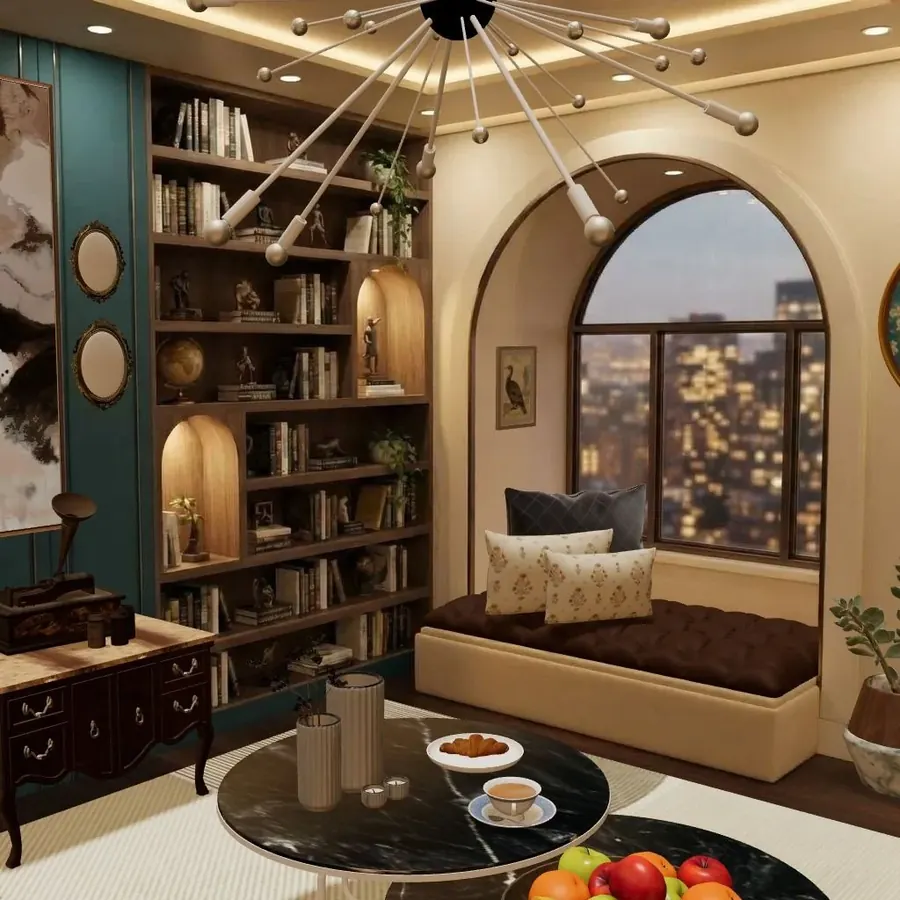
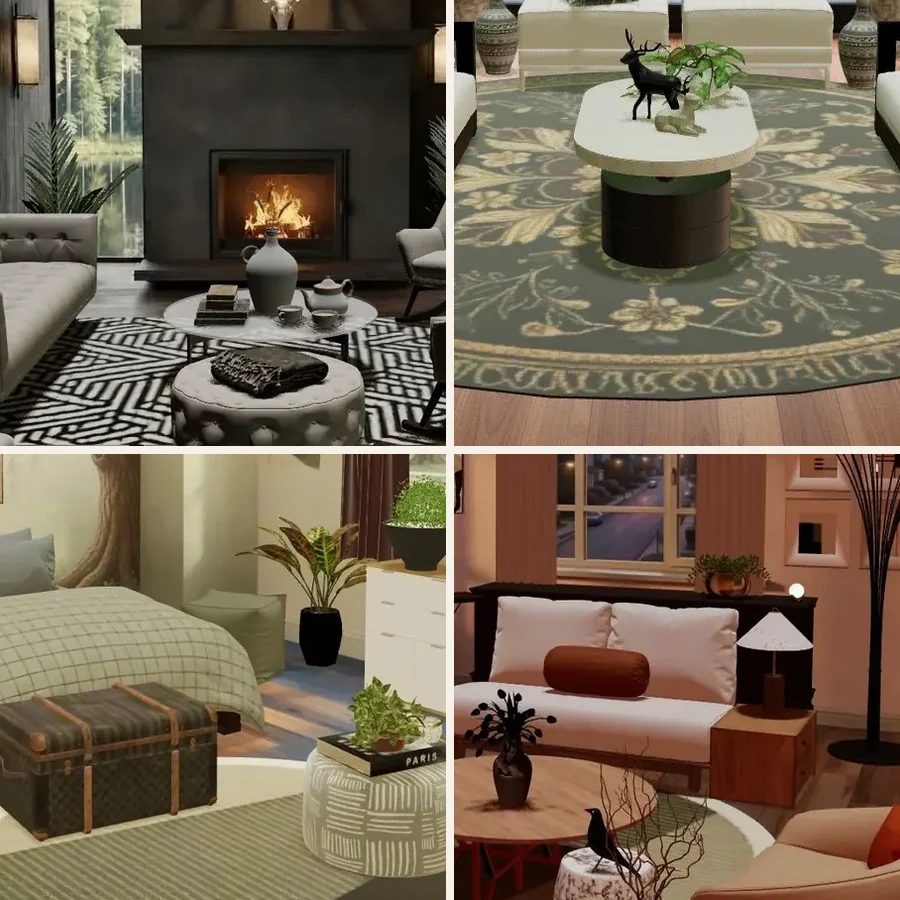
This player’s library nook is a good example of calm eclecticism. There’s a mid-century sputnik chandelier, an antique-style dark dresser with a gramophone, modern black marble tables, a tufted window seat and shelves full of books, figurines and a globe. The common threads are the teal-and-cream palette and the warm dark wood.
Lighting
Eclectic rooms are a great place for one characterful light fitting: a sculptural pendant, a vintage chandelier, a paper lantern or an odd floor lamp, like the brass-twist lamp in the cover image. Around it, keep the supporting lamps simpler so they don’t compete. Use several sources at different heights and warm bulbs, so the textures and colors look rich rather than harsh.
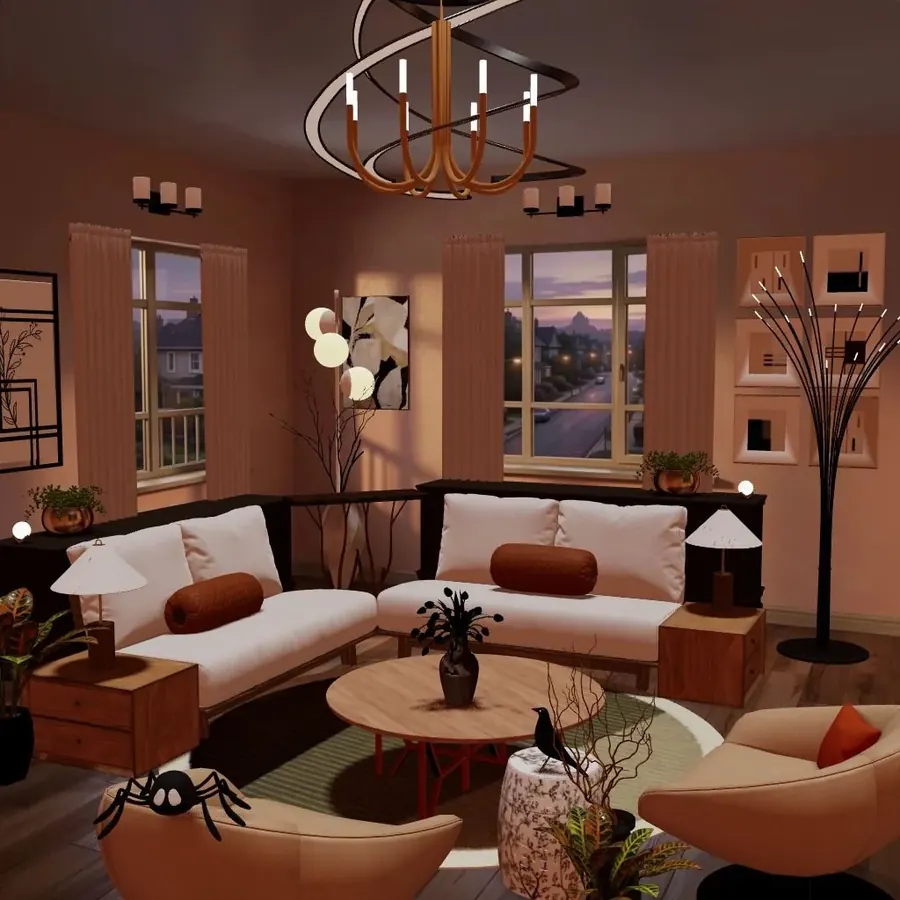
This room mixes a sculptural spiral chandelier and a branching floor lamp with mid-century-style wooden side cabinets, a patterned ceramic stool and abstract art. The seasonal spider and crow decorations are a playful extra. What holds it together is the warm terracotta, rust and cream palette.
Eclectic on a budget, in a small space or a rental
Eclectic is one of the cheapest styles to do well, because second-hand pieces are the point.
- Shop slowly. Flea markets, charity shops and online resale are where eclectic rooms come from. Buy what you love, not what fills a gap.
- Start with what you own. Family pieces, travel finds and books often already give you a theme.
- Change textiles and art first. Cushions, throws, a bold rug and a gallery wall make the biggest difference and move with you. In a rental, use removable hooks or a picture ledge.
- In small rooms, edit harder. Keep the palette tight and use pattern on one or two big surfaces, like a rug or a sofa, rather than many small ones.
- Paint something you can. A painted chair, a door (if permitted), or a window frame like the teal one on the cover adds personality for very little money.
Common mistakes
- No common thread. If nothing repeats, it reads as random.
- Everything is a statement. When every piece shouts, none can be heard.
- Same-scale patterns. Mix large, medium and small.
- Too many tiny objects. Group them or put some away.
- Buying “eclectic” sets. Mass-produced “eclectic-look” decor defeats the purpose. The style depends on pieces with a story.
- Ignoring function. A gorgeous but uncomfortable sofa still has to be sat on.
Eclectic vs bohemian
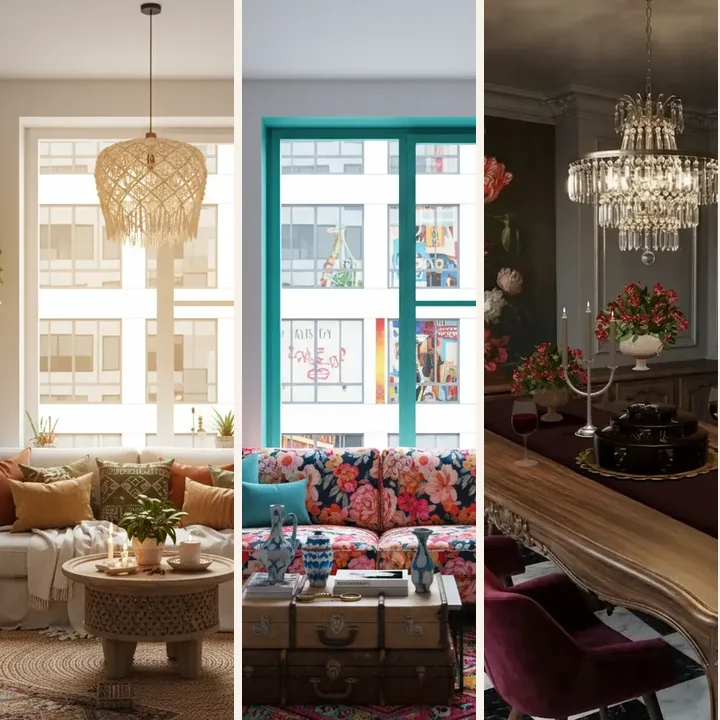
Eclectic’s nearest neighbor is bohemian. Boho is a specific relaxed mood with rattan, macramé, plants, earthy colors and global textiles. Eclectic can include all of that, but it can just as easily mix Victorian antiques, modern art and industrial lights. Glam also overlaps when eclectic rooms use jewel tones and antiques; see the luxury glam guide for the more polished version.
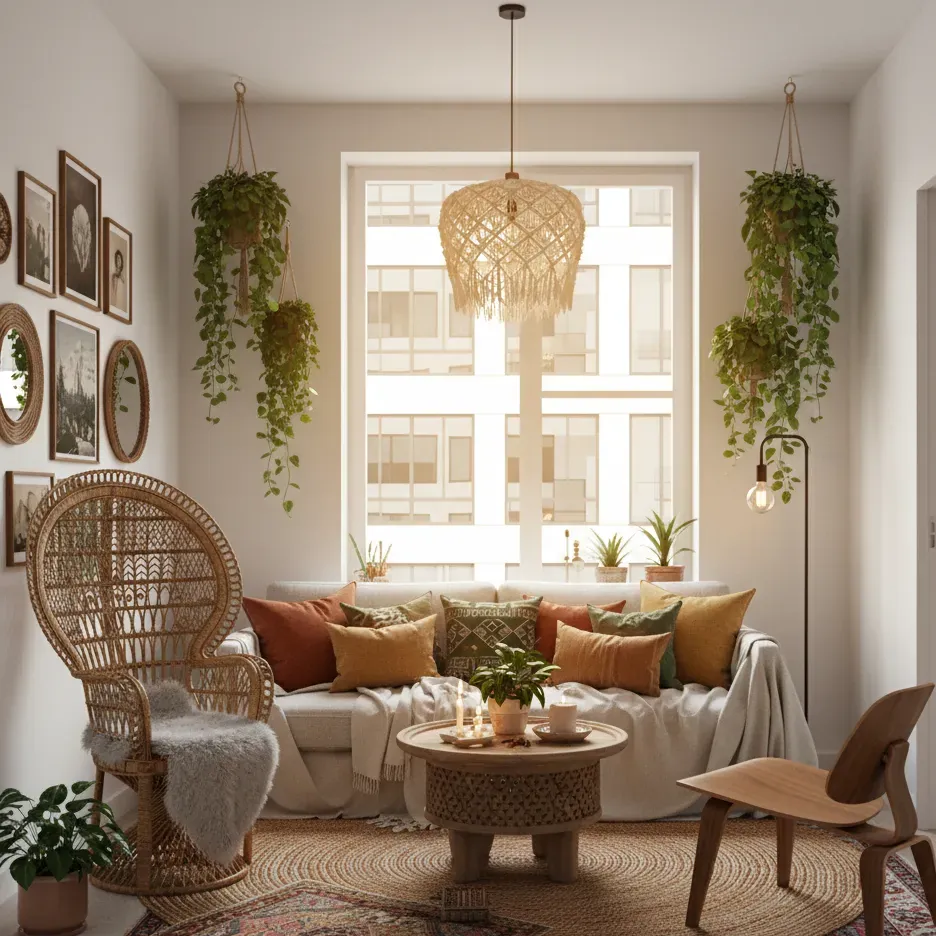
Compare this with the cover. Both are full and colorful, but the boho room sticks to one earthy, natural mood, while the eclectic room mixes floral upholstery, mid-century furniture, vintage luggage and contemporary art.
Try it in Cozee
Mixing styles is the hardest thing to judge in your head, which is why it helps to try it before you haul a trunk home from the flea market. In Cozee, a free design game for iPhone and Android, every Space starts empty and you furnish it with real 3D furniture and decor: sofas, rugs, lamps, plants, art and even a pug. Designer Tasks include creative challenges with names like Gallery Wall and Rainbow Minded. Submit your mix, see how other players rate it, and browse the community to see how other designers interpreted the same room. For a cozier take on bookish eclectic rooms, read our cozy reading nook ideas, or explore the full interior design styles overview.
Questions people ask
What is the difference between eclectic and maximalist design?
Eclectic describes how a room is put together: pieces from different eras, styles and places, chosen personally and linked by a common thread. Maximalism describes how much is in it: lots of color, pattern and objects. An eclectic room can be quite restrained, and a maximalist room can be all one style.
How do I make eclectic decor look intentional and not messy?
Give the room something that repeats: two or three colors that appear in several places, a consistent wood or metal finish, or a shared shape. Then vary scale, so there are a few large anchor pieces and fewer small ones, and leave some calm surfaces for the eye to rest on.
Can you mix different furniture styles in one room?
Yes, and it often looks better than a matching set. Mix with contrast you can explain: a modern sofa with an antique chest, a mid-century chair with a traditional rug. Keep each piece in proportion with the room and link them through color or material.
Is eclectic style the same as bohemian?
No. Bohemian is one specific mood: relaxed, global, full of plants, rattan, macramé and earthy textiles. Eclectic is broader and can mix anything, from Victorian antiques to modern art to industrial lights, so a boho room is often eclectic, but an eclectic room doesn’t have to be boho.
Try it in an empty room first
Cozee is a free interior design game for iPhone and Android. Pick an empty 3D room, fill it with real furniture, and see what the community thinks.
4.7 on the App Store · Free, with optional in‑app purchases