

On this page 10 sections
Industrial interior design takes its cue from old factories and warehouses turned into homes: exposed brick, steel, concrete, reclaimed wood and visible beams and pipes, softened with worn leather and warm, bare-bulb light. Done well, it feels relaxed, urban and full of character. Done badly, it feels like a cold car park. Here’s how to land on the right side.
A style born from empty factories
The look started with real buildings. As manufacturing moved out of city centers in the mid-20th century, large industrial spaces stood empty. In New York, artists began moving into old manufacturing lofts in neighborhoods like SoHo during the 1960s and 70s, drawn by big windows, high ceilings and low rents. They lived with what the buildings already had: brick walls, cast-iron columns, timber floors, exposed pipes.
Over time “loft living” became desirable in its own right, and the materials that were once simply there became a deliberate style. Today you’ll see industrial details in new-build flats, cafés and restaurants as much as in genuine converted warehouses.
What to look for
Five things make a room read as industrial:
- Visible structure. Brick, concrete, beams, ducts, pipes. Nothing is hidden behind plaster.
- Metal. Black steel, iron, aged brass and copper, often in frames, legs, shelving and lighting.
- Old wood. Reclaimed boards, butcher-block tops, scaffold planks, chunky timber.
- Leather. A worn cognac or dark brown sofa or armchair is almost a requirement.
- Utilitarian objects. Factory pendants, filing cabinets, trolley tables, metal stools, vintage signs.
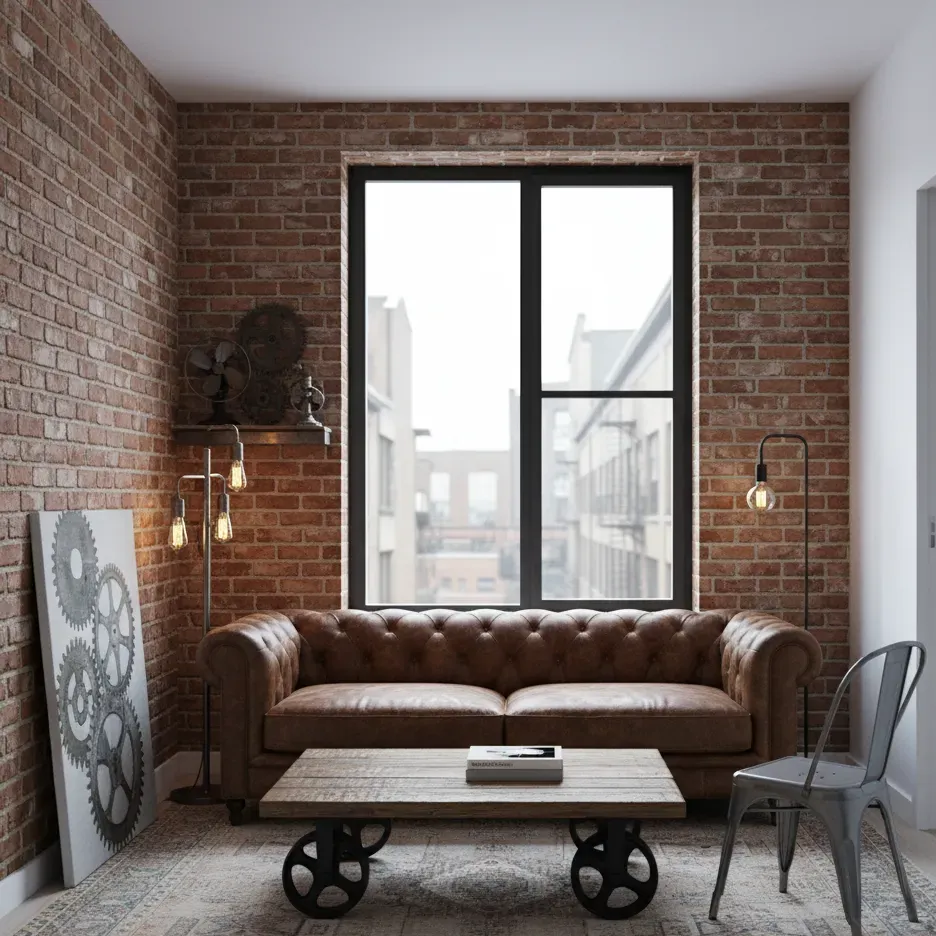
The cover image shows the same living room in Cozee styled industrial: an exposed red brick wall, a brown leather chesterfield, a coffee table on cast-iron wheels, a metal chair, Edison bulb wall lights and an oversized gear as wall art.
Color palette
The palette comes straight from the materials: brick, rust, iron, timber and leather. It’s darker and warmer than most people expect.
- Brick
#B5523B - Rust
#8A4B2D - Cognac
#A8774B - Concrete
#6E6A64 - Iron
#3A3734 - Soot
#1E1D1C
Walls are often left as brick or painted a deep charcoal, warm grey or off-white. If you want a lighter industrial room, keep the walls pale and let the metal, wood and leather supply the contrast.
Materials and textures: rough meets warm
The secret of good industrial rooms is balance between hard and soft. A useful mental split is roughly half “hard” materials and half “warm” ones.
Hard: brick, concrete, steel, iron, glass in metal frames, tile.
Warm: leather, reclaimed wood, wool, canvas, vintage rugs, plants.
If the room feels harsh, add more from the second list. If it feels like any other living room, add more from the first.
Furniture and signature pieces
- A leather sofa. A chesterfield with deep buttoning, or a simpler club sofa in worn brown leather. Leather that already looks used is better than shiny new.
- A reclaimed-wood coffee table, ideally on metal legs or casters. Trolley-style tables on wheels are a classic.
- Metal seating. Steel bistro chairs, school chairs, stools.
- Open metal shelving in black steel with wood shelves.
- Vintage storage. Old lockers, filing cabinets, crates, a workbench as a desk or kitchen island.
- Big, graphic wall art. Old maps, blueprints, vintage signs, mechanical objects.
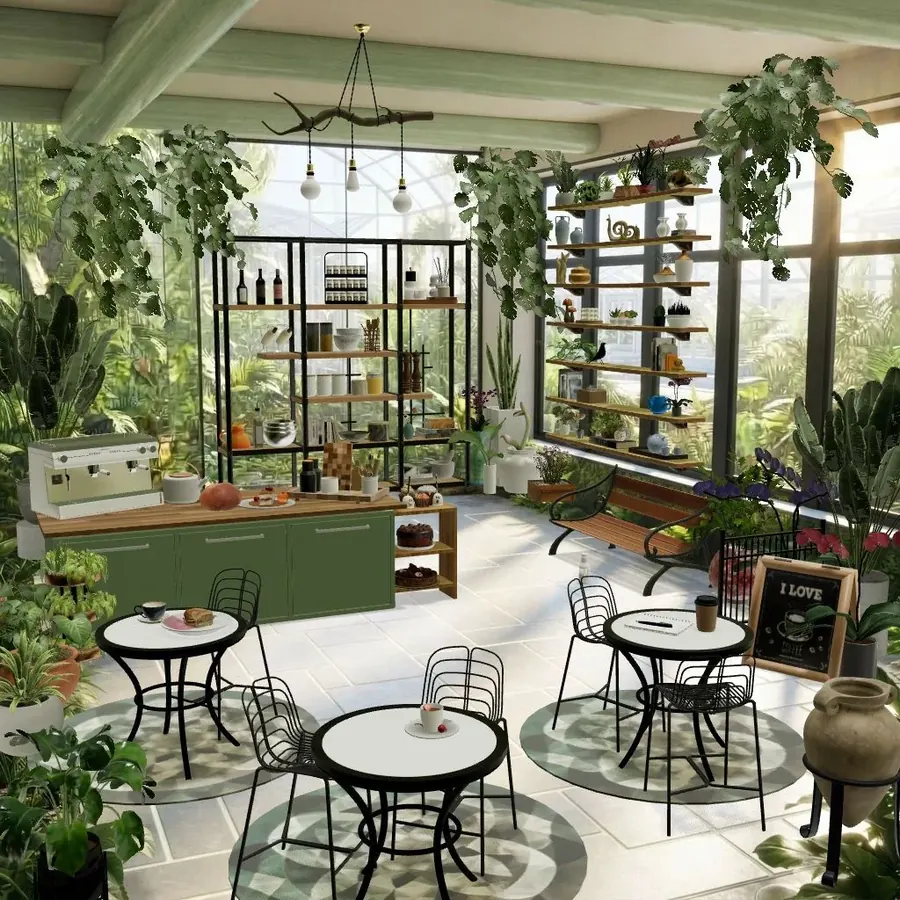
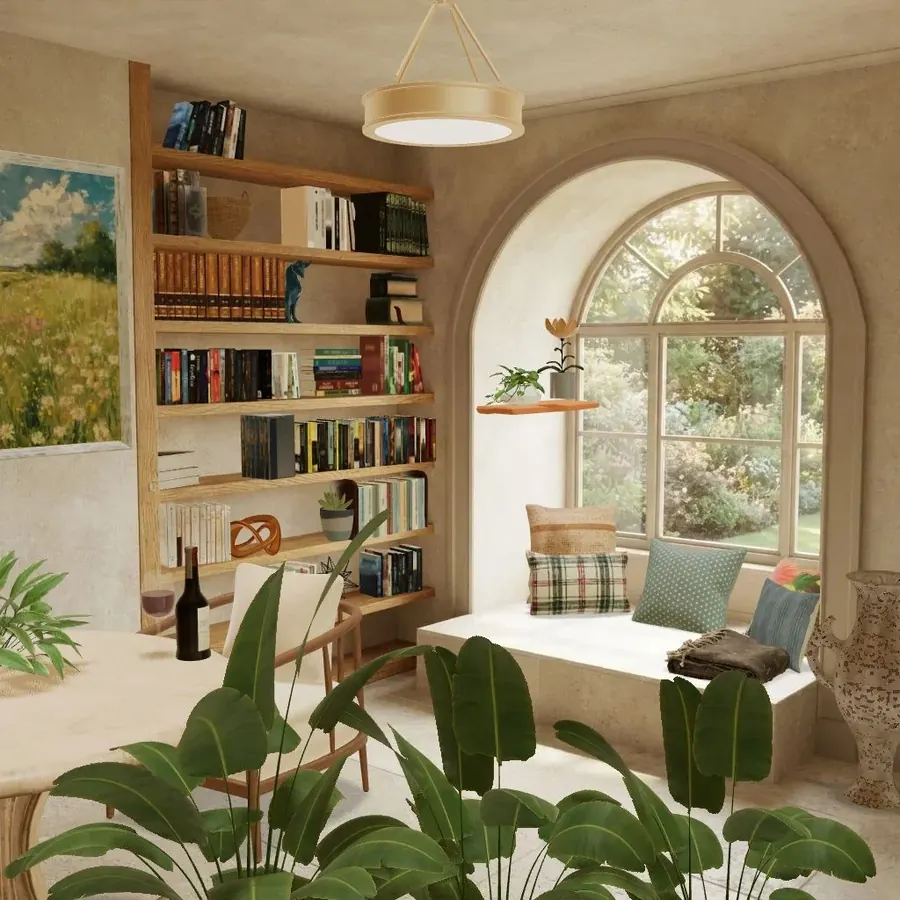
The café above isn’t an industrial room, but it borrows the style’s best pieces (black steel shelving, bare-bulb pendants, wire chairs, pale stone tiles) and softens them with plants and a green counter. It’s a useful example of “industrial-lite”, which is how many people actually live with the look.
Lighting: the easiest win
Lighting is the quickest way to signal industrial, and the easiest thing to change in a rental.
- Exposed filament bulbs, often called Edison bulbs, on simple cord pendants or wall sconces.
- Factory pendants in enamel or metal, hung in a row over a table or kitchen counter.
- Metal task lamps with adjustable arms.
- Cage lights and wall-mounted swing-arm lamps.
Filament bulbs look great but don’t give much useful light. Combine them with a couple of shaded lamps for reading, and always choose warm bulbs.
Industrial in a rental or small space
Most of us don’t live in a converted warehouse, and that’s fine.
- Fake the structure lightly. A wall painted deep charcoal or warm grey does more than poor-quality brick wallpaper.
- Add exposed-look lighting. Plug-in wall sconces and cord pendants with filament bulbs need no electrician.
- Choose freestanding metal shelving rather than built-ins.
- Use a leather or faux-leather armchair as the hero if a full sofa isn’t in the budget.
- Shop secondhand and salvage. Old metal stools, crates, lockers and wooden boards are often cheap.
- Keep it airy in small rooms. Heavy, dark pieces close in a small flat. Use open-frame metal furniture you can see through, keep the walls lighter, and use the dark materials as accents.
Common mistakes
- All hard, no soft. Brick, metal and concrete with nothing warm makes a room feel unfinished. Add rugs, wood, leather and plants.
- Too many “factory” props. One big gear or vintage sign is character. Ten is a theme restaurant.
- Only filament bulbs. They’re atmospheric but dim; you’ll squint at night.
- Shiny new everything. The style is about age and wear. Mix in things with patina.
- Ignoring the windows. Big windows are part of the original appeal. Don’t block them with heavy curtains; use simple blinds or plain linen.
Industrial vs modern
The two are often combined (and many city flats sit between them), but they start from opposite places.
| Industrial | Modern | |
|---|---|---|
| Materials | Rough, aged: brick, iron, reclaimed wood | Smooth, polished: chrome, glass, lacquer |
| Leather | Worn, brown, buttoned | Sleek, black, often on a metal frame |
| Lighting | Bare bulbs, factory pendants | Sculptural lamps like a chrome arc |
| Color | Brick, rust, cognac, black | Black, white and bold accents |
| Feel | Found, lived-in | Designed, crisp |
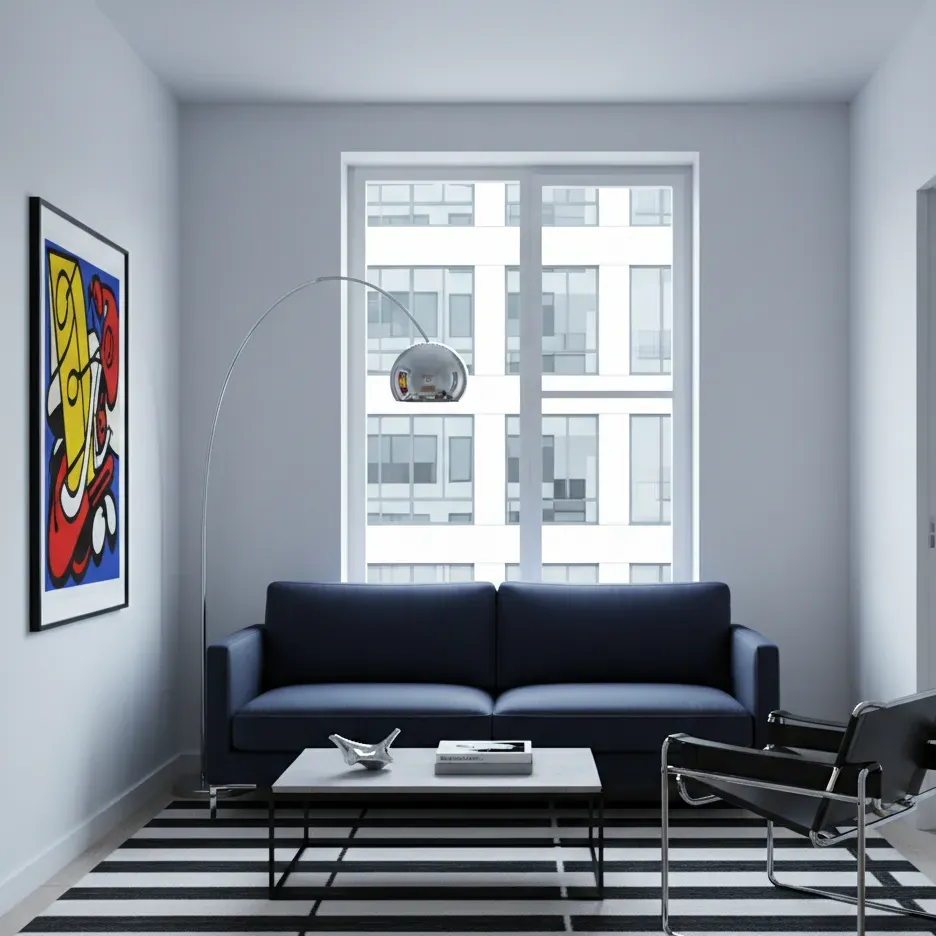
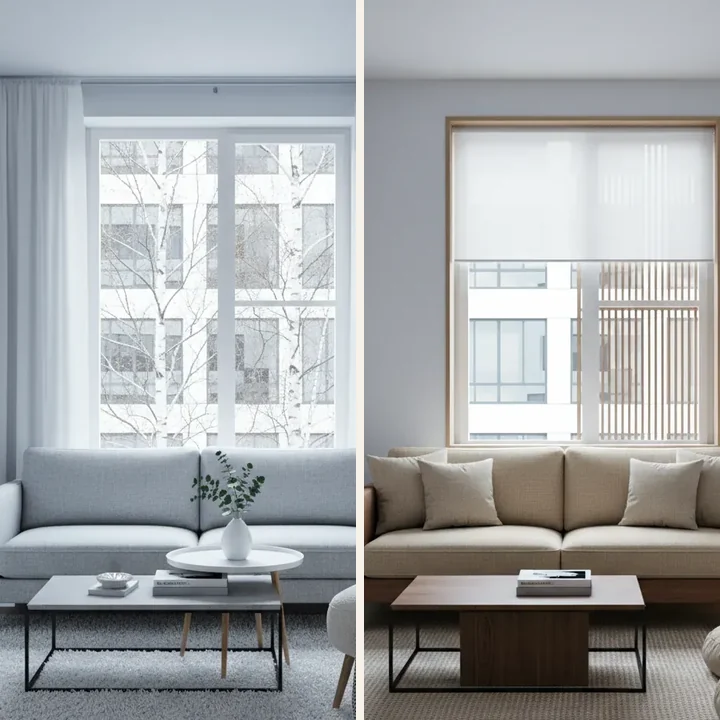
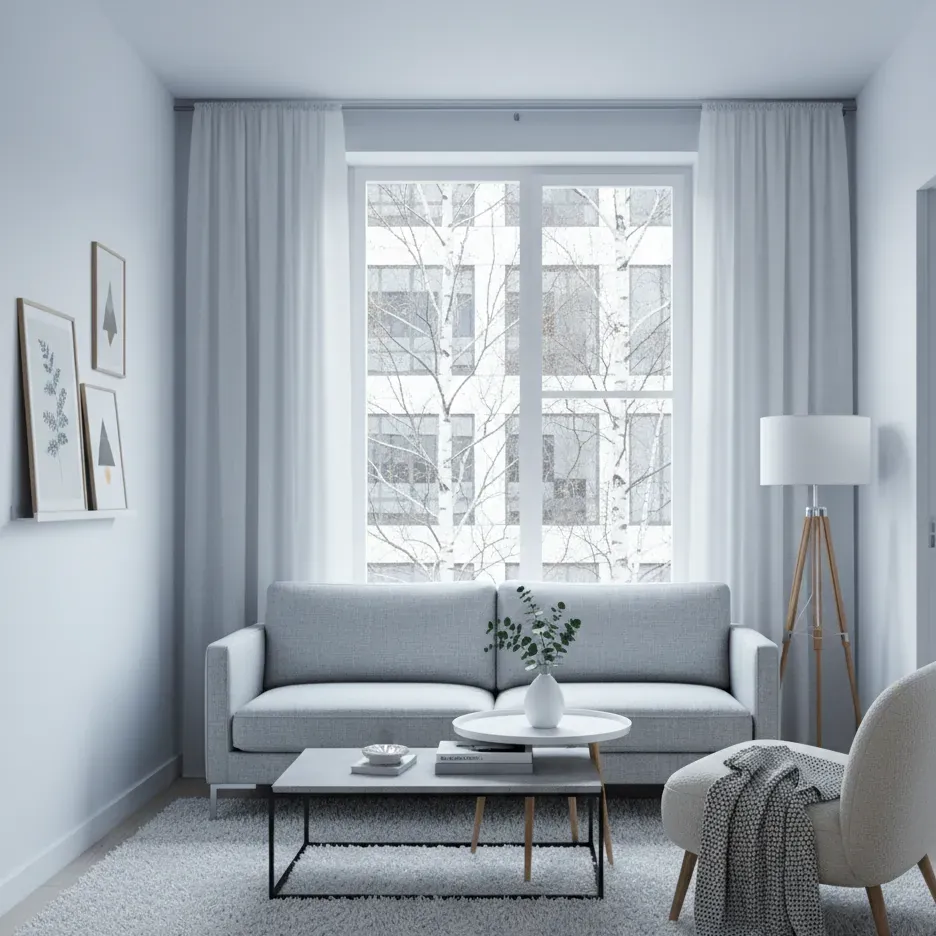
Put this next to the cover and the difference is clear: same room, same idea of contrast, but polished instead of worn. Industrial also has a softer neighbor in rustic farmhouse, which shares the love of old wood but swaps metal for painted, cottage-style pieces.
Try it in Cozee
The hard-versus-soft balance is easier to judge when you can see the whole room. In Cozee, a free design game for iPhone and Android, every Space starts as an empty 3D room, and you furnish it by dragging in real 3D furniture and decor: sofas, rugs, lamps, plants, art. Build an industrial version, then swap a few pieces for warmer ones and compare. From level 5 you also get material options, which makes it easy to test how a piece looks in a different finish, when it has one.
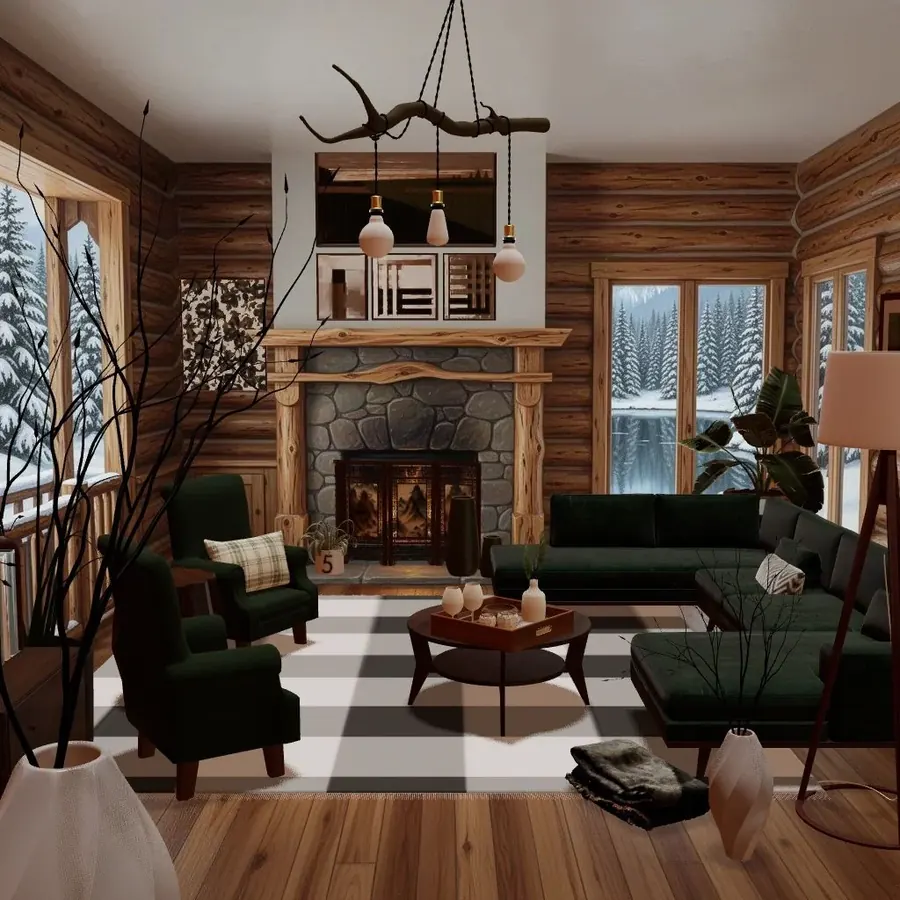
When you submit a design, other players rate it, and you can see how others approached the same Space. For a cabin-style room with similar dark, moody materials, see our winter cabin living room ideas, or compare all the looks in interior design styles explained.
Questions people ask
What is industrial interior design?
Industrial design is a style inspired by old factories and warehouses converted into homes. It shows off raw materials like brick, concrete, steel and reclaimed wood, keeps structure such as beams and pipes visible, and softens it all with leather, wool and warm light.
How do I make industrial style feel cozy instead of cold?
Add warmth through materials and light. Use worn leather, wooden surfaces, wool or vintage rugs, plants and plenty of warm, low lamps. Keep the cold materials (metal, concrete) for frames and details rather than every surface.
Can I do industrial style without exposed brick?
Yes. Brick is the classic backdrop, but you can get the feel with a dark painted wall, a concrete-effect finish, black steel-framed shelving, metal lighting and reclaimed wood. Good-quality brick-effect panels exist too, but a plain dark wall often looks more convincing than a poor imitation.
What is the difference between industrial and modern style?
Industrial uses rough, aged materials and keeps a room’s structure visible: brick, rusted metal, reclaimed wood. Modern style uses clean, smooth, polished materials such as chrome, glass and lacquer, with graphic shapes. Both can be dark and dramatic, but industrial feels found and worn while modern feels crisp and designed.
Try it in an empty room first
Cozee is a free interior design game for iPhone and Android. Pick an empty 3D room, fill it with real furniture, and see what the community thinks.
4.7 on the App Store · Free, with optional in‑app purchases