

On this page 10 sections
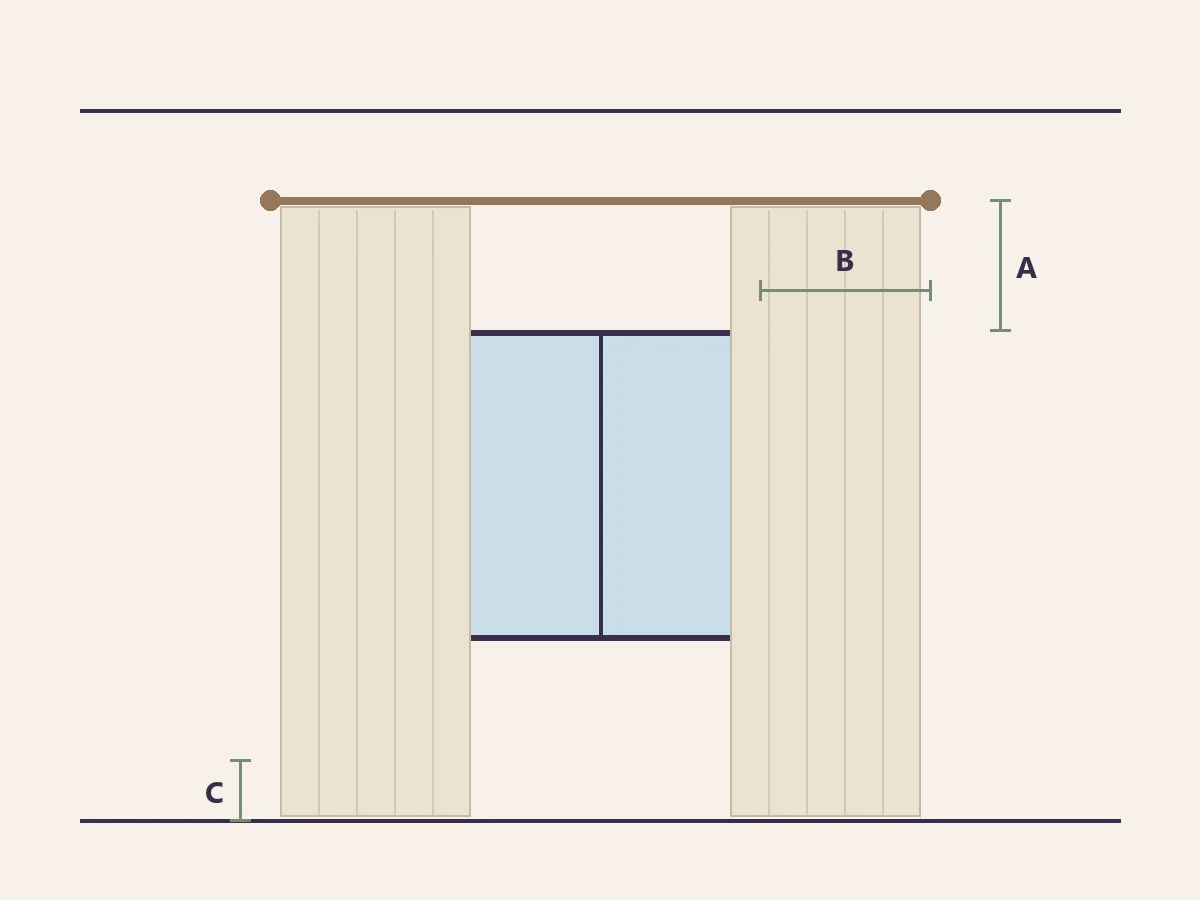
Hang curtains high and wide. Mount the rod at least 10–15 cm (4–6 in) above the window frame (A in the diagram), or higher: halfway to the ceiling or just below it. Let the rod extend 15–25 cm (6–10 in) past the frame on each side (B), so the open curtains stack on the wall instead of covering the glass. Choose panels that together measure 1.5–2.5 times the window’s width, and a length that ends about 1 cm (1/2 in) above the floor (C) or just touches it. Here’s how to work out each measurement, which hardware to use, and what changes in small rooms or with layered sheers.
Why high and wide works
Curtains frame a window the way a mat frames a picture. Hung right above the frame and only as wide as the glass, they cover part of the window even when open and make it look smaller. Hung high and wide, they make the window, and the ceiling, look bigger, and let in all the light the window can give.
It’s one of the cheapest changes in decorating, which is why it also appears in our small space ideas and budget room makeover guides. This guide goes into the detail.
A: How high to hang the rod
Measure from the top of the window frame (or the top of the opening, if there’s no frame).
| Option | Rod height | Effect |
|---|---|---|
| Standard | 10–15 cm (4–6 in) above the frame | Neat and safe for most rooms |
| Taller | Halfway between the frame and the ceiling | Makes the window look taller |
| Dramatic | 2–5 cm (1–2 in) below the ceiling or crown molding | The most height; makes a low ceiling feel higher |
There are a few limits:
- Leave room for the bracket and rings. The rod usually sits a little below the mounting point.
- Mind the ceiling. If the gap above the window is small, go close to the ceiling rather than stopping awkwardly in between.
- Keep heights consistent. In a room with several windows of different heights, hang all the rods at the same height so the room looks orderly.
- Ceiling tracks are another option: mounted on the ceiling, they give the full height and suit long runs of windows.
B: How wide the rod should be
The rod should extend 15–25 cm (6–10 in) past the frame on each side. Heavier, fuller curtains take up more space when open, so give them more: 25–40 cm (10–16 in) for thick, lined curtains on a wide window.
To check, think about the stack-back: the width of the curtains when they’re pushed fully open. You want that stack to sit on the wall, just touching the edge of the glass, not covering it. In the diagram, B is that extra stretch of rod beyond the frame, and the panels stack there.
In a room with a view, this matters even more. See living room with a view for wide windows and glass walls.
Panel width: how full should curtains be?
Fullness is how much fabric you have compared with the width it covers. Too little and the curtains look flat and stretched when closed; too much and they bunch.
- 1.5 times the rod width: a light, modern look, good for heavy fabrics.
- 2 times: the usual default, with soft, generous folds.
- 2.5 times: for sheers and light linen, which look thin at lower fullness.
Example: a rod 200 cm (79 in) long at 2× fullness needs about 400 cm (157 in) of curtain width in total, so two panels of about 200 cm (79 in) each, or four narrower ones.
The heading changes this slightly. Pinch pleats and wave headings have their own recommended fullness, so check the maker’s guide.
C: How long should curtains be?
Measure from the bottom of the rings or hooks (not the rod) to the floor. Then choose a length:
| Length | Gap at the floor | Best for |
|---|---|---|
| Float | About 1 cm (1/2 in) above the floor | Most rooms; easy to clean, looks tailored |
| Kiss | Just touching the floor | Living rooms and bedrooms; looks generous |
| Break | 2–5 cm (1–2 in) of extra fabric that bends slightly | Relaxed linen, softer looks |
| Puddle | 10–15 cm (4–6 in) of fabric on the floor | Formal or romantic rooms; collects dust and pet hair |
Short curtains that stop at the windowsill or just below it suit some places: over a radiator, a kitchen sink or a window seat. Anywhere else, curtains that end in mid-air between sill and floor usually look like a mistake.
Floors are rarely perfectly level, so measure in two or three places and use the shortest, or buy longer panels and hem them in place.
Hardware: rods, rings and tracks
- Rods and poles are visible, so choose a finish that matches the room: black metal, brass, wood or white.
- Brackets: wide rods need a center bracket so they don’t sag, usually anything over about 150–180 cm (60–70 in).
- Rings with clips are the easiest way to hang any panel and make curtains glide.
- Tracks hide away and suit wave curtains, bay windows and ceiling mounting.
- Return or wraparound rods bend back to the wall at the ends, which blocks light at the sides; useful in bedrooms.
- Fixings: use anchors suited to your wall (masonry, plasterboard/drywall, timber). A heavy lined curtain pulls on a rod every day.
Layering sheers and curtains
Layering gives you control: sheers soften daylight and give privacy by day, and heavier curtains close for warmth or darkness at night.
- Use a double rod or track, with sheers on the inside (nearest the glass) and curtains on the outside.
- Choose sheers in a color close to the wall or the window frame, so they disappear by day.
- Give sheers more fullness (2–2.5×), or they look thin.
- Blackout lining or a separate blind behind the curtains is the easy fix for bedrooms.

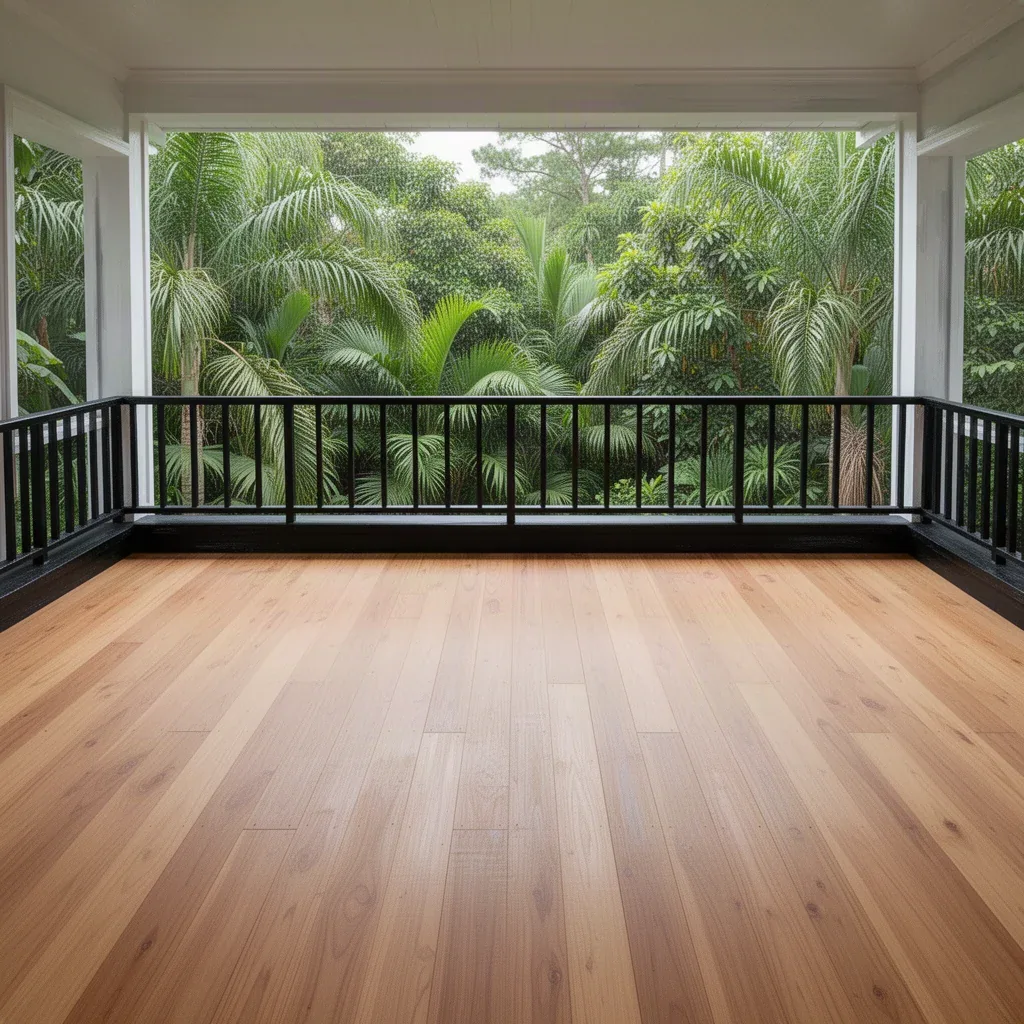
That coastal room shows the principle well: the rod sits close to the ceiling, the sheers fall in soft folds on either side of the glass, and the window looks taller than it is. Find more of the look in coastal Mediterranean style.
Curtains in small rooms
High and wide works especially well in small rooms, where every visual centimeter helps.
- Go to the ceiling if you can. It lifts the whole room.
- Match the curtains to the walls in color, so they add height without chopping the room into blocks.
- Choose light fabrics: linen, cotton or sheers. Heavy velvet can close in a small space.
- Skip the valance and pelmet, which lower the visual top of the window.
- Use a rod that extends wide even if the wall is narrow; stacking curtains off the glass gives a small room more daylight.
For more, see small living room ideas and, if you’re renting, decorating a rental.
Quick measuring checklist
- Measure the window frame’s width and height.
- Decide the rod height (A) and mark it on the wall in pencil.
- Add 15–25 cm (6–10 in) on each side for the rod width (B).
- Multiply the rod width by 1.5–2.5 for the total panel width.
- Measure from the rings to the floor in several places, and choose the gap (C).
Try it in Cozee
Curtains change the proportions of a room more than almost anything else on the wall. In Cozee, a free design game for iPhone and Android, you furnish empty 3D rooms with real furniture and decor, so you can compare how a room looks with and without curtains, or with long panels framing a window. From level 5, the pro tools let you resize pieces, which makes it easier to get curtains to the full height. Notice how high, wide curtains change the feel of a room before you buy a rod for your own.
Questions people ask
How high should curtains be hung above a window?
At least 10–15 cm (4–6 in) above the top of the window frame. Many designers go higher, halfway between the frame and the ceiling or just below the ceiling, which makes the window and the room look taller.
How far past the window should a curtain rod extend?
About 15–25 cm (6–10 in) past the frame on each side, and more for heavy curtains. The goal is for the open curtains to stack on the wall, not over the glass, so you keep all the light and view.
Should curtains touch the floor?
In most rooms, curtains should float about 1 cm (1/2 in) above the floor or just kiss it. Puddling, where extra fabric lies on the floor, looks romantic in formal rooms but collects dust. Curtains that stop well short of the floor usually look too small.
How wide should curtains be?
Together, the panels should measure about 1.5 to 2.5 times the width of the rod (or the window), depending on the fabric and heading. About 2 times is a good default for full, soft folds; sheers often look better at 2.5 times.
Can you hang curtains in a rental without drilling?
Sometimes. Tension rods work inside a window recess, and some adhesive or clamp-on brackets are sold for light curtains. Heavy or lined curtains need a properly fixed rod, so check your lease or ask your landlord before drilling.
Try it in an empty room first
Cozee is a free interior design game for iPhone and Android. Pick an empty 3D room, fill it with real furniture, and see what the community thinks.
4.7 on the App Store · Free, with optional in‑app purchases