

On this page 11 sections
A moody dining room works when you choose one deep color and commit to it (walls, trim and often the ceiling), light the table with warm, dimmable light at eye level rather than from the ceiling corners, add one strong contrast so the room doesn’t turn into a cave, and soften it with velvet, wood and fabric so voices don’t echo. Done well, a dark dining room is the most flattering room in the house at night: faces glow, the walls disappear and dinner lasts longer. Here’s how to plan one.
Pick the dark color by its undertone
Dark colors aren’t all the same, and the undertone decides how the room feels.
| Family | Examples | Feels | Pairs with |
|---|---|---|---|
| Warm reds and browns | Oxblood, burgundy, chocolate, aubergine | Rich, intimate, a little theatrical | Brass, walnut, cream linen |
| Greens | Olive, forest, bottle green | Calm, traditional, very forgiving | Oak, brass, terracotta |
| Blues | Navy, inky teal | Crisp and formal | Silver, white china, pale wood |
| Greys and near-blacks | Charcoal, soft black | Dramatic, modern or classic | Gold, marble, bright art |
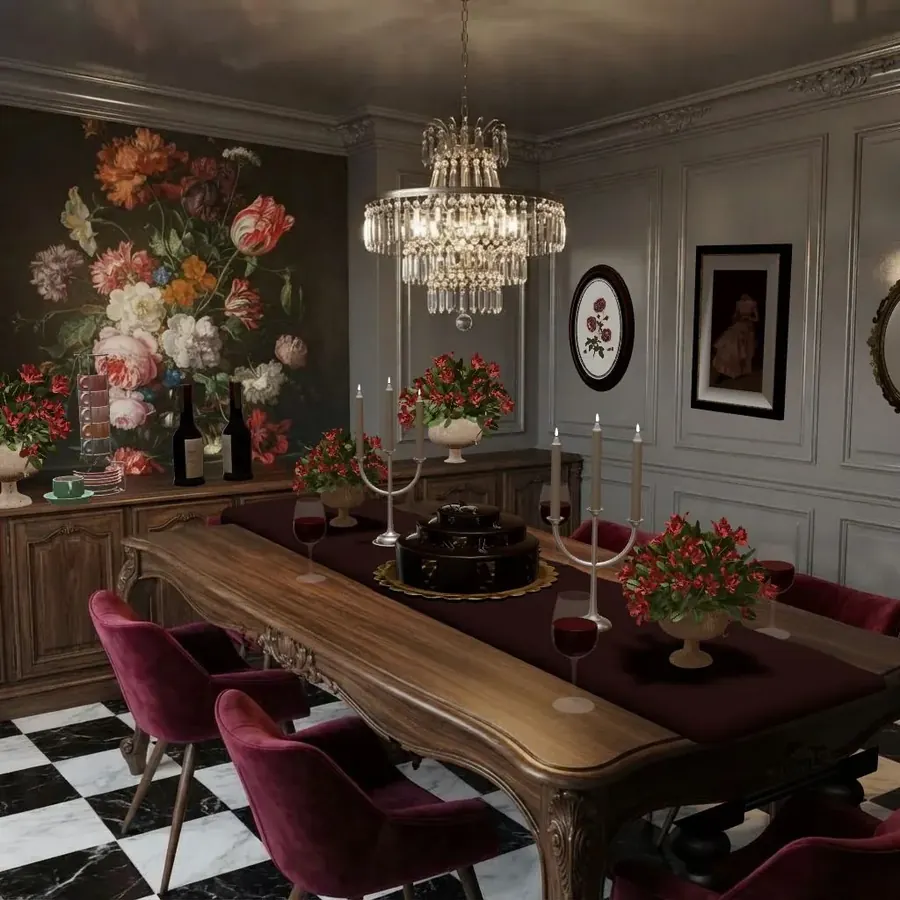
The cover room mixes a soft charcoal paneling with burgundy velvet and a dark floral painting, so the deep tones work together instead of fighting. For how colors play off each other, see color theory for rooms.
Always test dark paint at night under your own bulbs. A shade that looks elegant at noon can turn muddy under cool light. Our guide on how to choose paint colors explains how to test samples properly.
Commit, don’t dabble
One dark wall with bright white trim around it usually looks like a mistake rather than a mood. Darker rooms work better when the color wraps around:
- Walls and trim in the same color, or the trim a shade deeper.
- Ceiling dark too, or a muted shade lighter, so there’s no bright lid on the box.
- Paneling or molding painted the same color, as in the cover: the shadows in the panels add texture without adding another color.
Choose the finish
- Matte or eggshell on walls looks soft and velvety and hides imperfect plaster.
- Satin or gloss on trim and doors catches candlelight. Very glossy lacquered walls are glamorous but show every bump, so the walls need to be smooth.
Light the table, not the room
Lighting is what separates moody from gloomy. Aim for pools of warm light at and around the table, with the corners left soft.
- A pendant or chandelier over the table, its bottom about 75–90 cm (30–36 in) above the tabletop. A common guide is a fitting about half to two-thirds the width of the table.
- A dimmer, without exception. Dark rooms need a wide range, from bright enough to clear up to candlelight.
- Warm bulbs of 2200–2700K. Cooler light makes deep colors look flat and grey.
- Candles on the table, in a row or a cluster, kept low.
- Wall lights or a lamp on the sideboard, so light also comes from the edges of the room.
- Picture lights over a big painting, which make art glow against dark walls.
The crystal chandelier in the cover scatters light across the ceiling, while the tall candles bring it down to face height. Our layered lighting guide goes into ambient, task and accent light in more detail.
Add one strong contrast
A dark room needs something that stops your eye: a pale floor, a light tablecloth, a bright painting, metal or glass. In the cover, the black-and-white checked floor and the large floral painting do this job. Without them, the burgundy chairs and grey walls would merge into one dim mass.
Other contrasts that work:
- A pale rug under the table (sized so chairs stay on it when pulled out; see what size rug you need).
- White or cream china and linen.
- Brass, gold or crystal that catches the light.
- A big piece of art with light in it: florals, landscapes, a still life.
Furniture and fabrics: soft, rich and comfortable
People sit for a long time in a dining room they love, so comfort matters as much as looks.
- Upholstered chairs, especially velvet, look rich in low light and absorb sound. Burgundy, olive, rust and deep blue all suit dark walls.
- Dark or warm wood tables feel at home; a round table makes a small dark room feel more intimate.
- Seat height of about 45 cm (18 in) to a table of about 75 cm (30 in) is the usual combination.
- Room to move: about 60 cm (24 in) of table width per person, and about 90 cm (36 in) behind each chair so people can stand up and walk past.
Don’t forget the sound
Dark rooms are often full of hard surfaces: paneling, wood, stone, glass. Add something soft so conversation doesn’t bounce around: lined curtains, a rug, upholstered chairs, a fabric runner or tablecloth, even a bookcase full of books.
Moody doesn’t have to mean black
If a near-black room feels like too much, go warm and mid-dark instead.
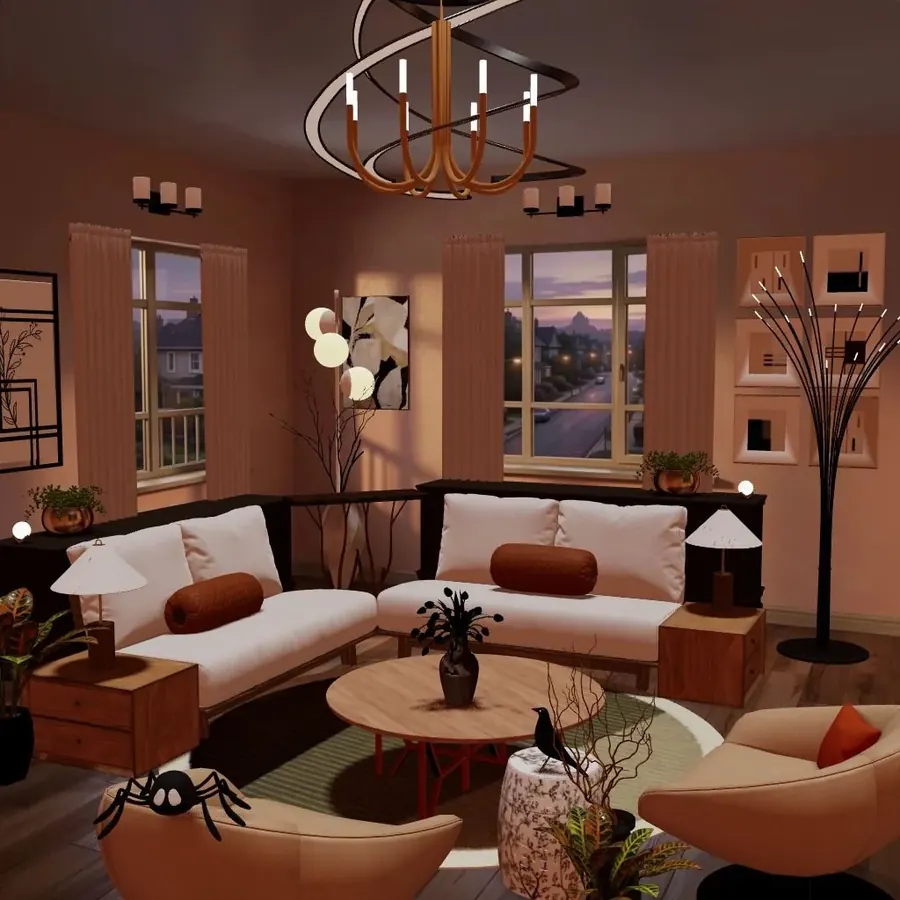
The room above is a living room, not a dining room, but the recipe transfers directly: terracotta walls, every light warm and low, a candle-style chandelier and wall lights instead of bright downlights. Swap the sofas for a round table and chairs and you’d have a warm, moody dining room.
Borrow from a style
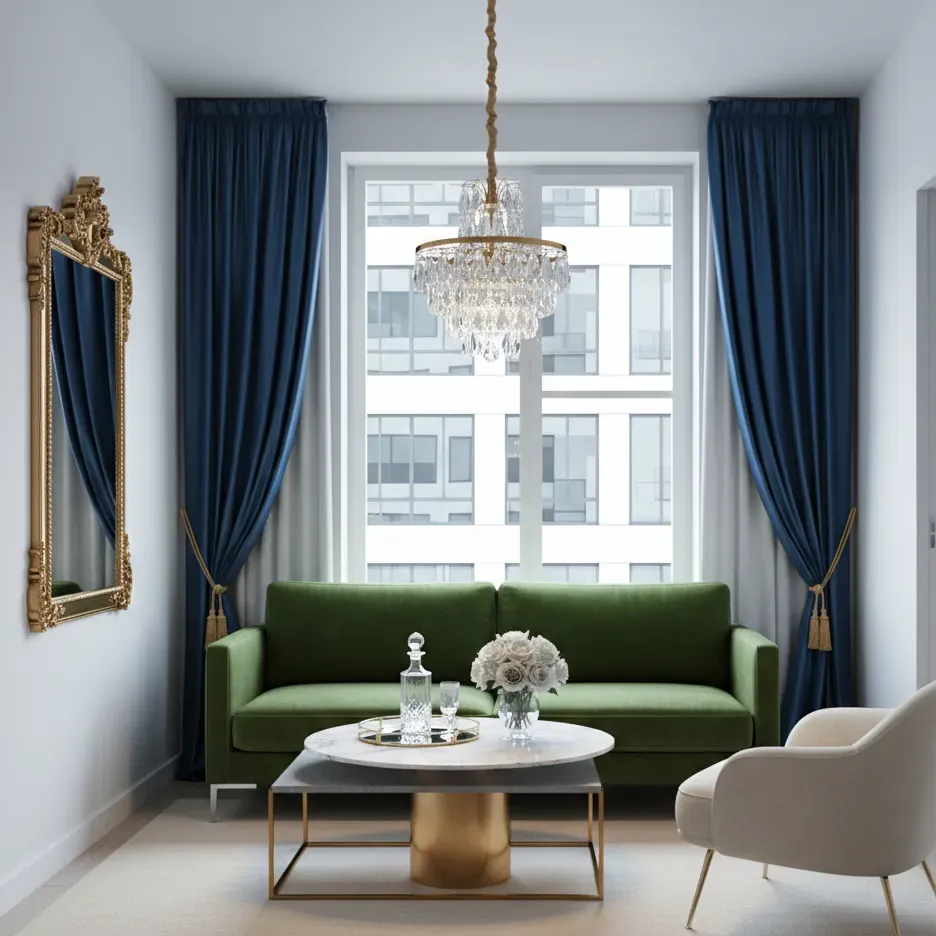
- Luxury glam: velvet, crystal, mirrors and brass, like the cover.
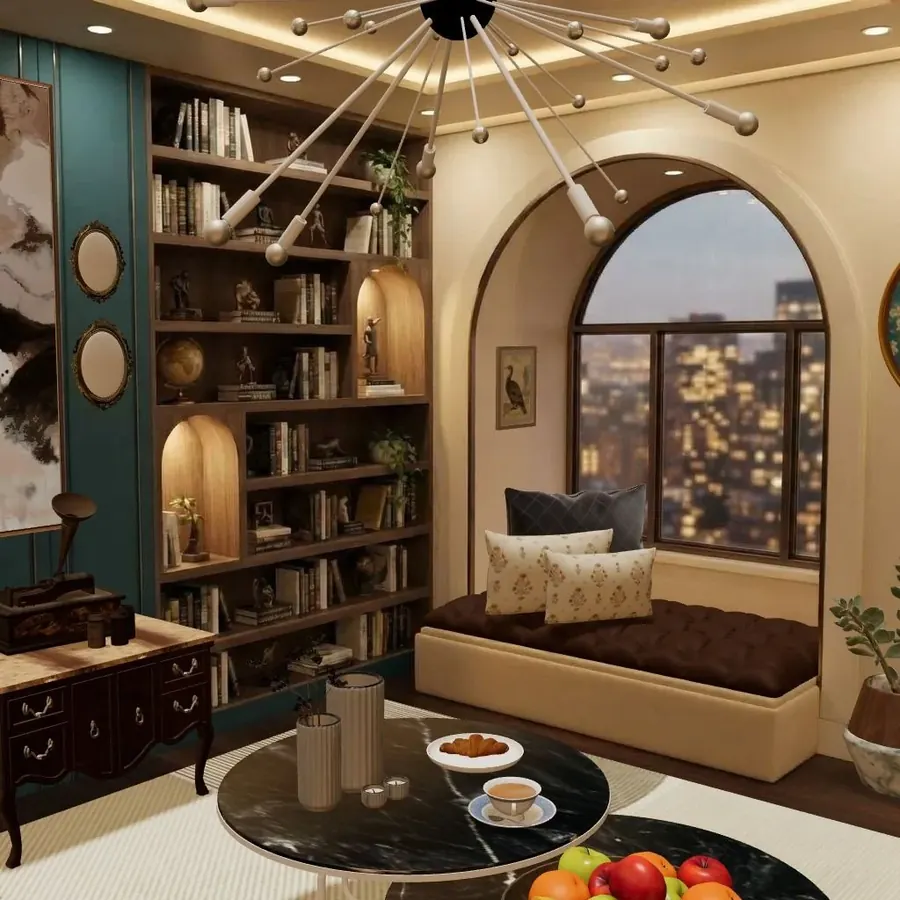
- Dark academia: books, old wood, oil paintings and green or brown walls.
- Rustic farmhouse: a dark green or charcoal room with a scrubbed wood table and mismatched chairs.
Small dark dining rooms
Small dining rooms and dining nooks are good candidates for dark paint, because you can’t make them feel big anyway, and you can make them feel special. Paint everything, including the ceiling, hang one pendant low over a round table, and add a mirror or a big painting on the main wall.
Common mistakes
- One dark accent wall surrounded by bright white.
- Recessed downlights only, which make dark walls patchy and faces shadowy.
- Cool white bulbs that turn rich colors grey.
- No contrast at all, so the room reads as a dark blur.
- Tall centerpieces that block faces across the table. Keep flowers and candles below about 30 cm (12 in), or well above eye level.
- Ignoring daylight. If you also eat breakfast there, check the color in the morning too.
Try it in Cozee
Dark rooms are hard to imagine from a paint chip. In Cozee, a free design game for iPhone and Android, you furnish empty 3D rooms with real furniture, lighting and decor, then submit them for other players to rate. Try one dining room with velvet chairs and a crystal chandelier, and another with a round wooden table and a single low pendant, and compare how each feels. A piece’s uses are only spent when you submit a design that includes it, so you can test combinations freely first.
Questions people ask
Do dark colors make a dining room look smaller?
They make the walls recede rather than advance, so a dark dining room often feels more enclosed but not smaller in a cramped way. The effect is cozy, especially at night. What makes a dark room feel poky is too little light and no contrast, not the color itself.
What is the best dark paint color for a dining room?
There’s no single best one, but warm deep shades are the easiest to live with at the table: oxblood, aubergine, chocolate, olive and deep green. Navy, charcoal and inky teal suit cooler, more formal rooms. Test large samples at night under your own lamps before deciding.
How high should a chandelier hang over a dining table?
The bottom of the chandelier or pendant is usually 75–90 cm (30–36 in) above the tabletop, so it lights the table without blocking the view across it. In rooms with very high ceilings it can go a little higher.
Should the ceiling be dark in a moody dining room?
It can be. Painting the ceiling the same deep color, or a shade lighter, removes the bright lid that makes dark walls look like a box. If the room is low or has little daylight, a soft warm off-white ceiling is a safer choice.
Try it in an empty room first
Cozee is a free interior design game for iPhone and Android. Pick an empty 3D room, fill it with real furniture, and see what the community thinks.
4.7 on the App Store · Free, with optional in‑app purchases