

On this page 7 sections
The Sofa Workshop is where you build a custom sofa of your own in Cozee, then use it in your designs like any other piece. That’s a big deal in a room-design game, because the sofa is usually the largest piece in the room and the one voters notice first. A sofa that’s the right size, shape and color for the Space pulls the whole design together; the wrong one throws it off, however good everything else is. Below is what the Workshop is for, then the design rules that real upholsterers and interior designers use, which apply just as well to a sofa you build in a game as to one you buy for your home.
What the Sofa Workshop is for
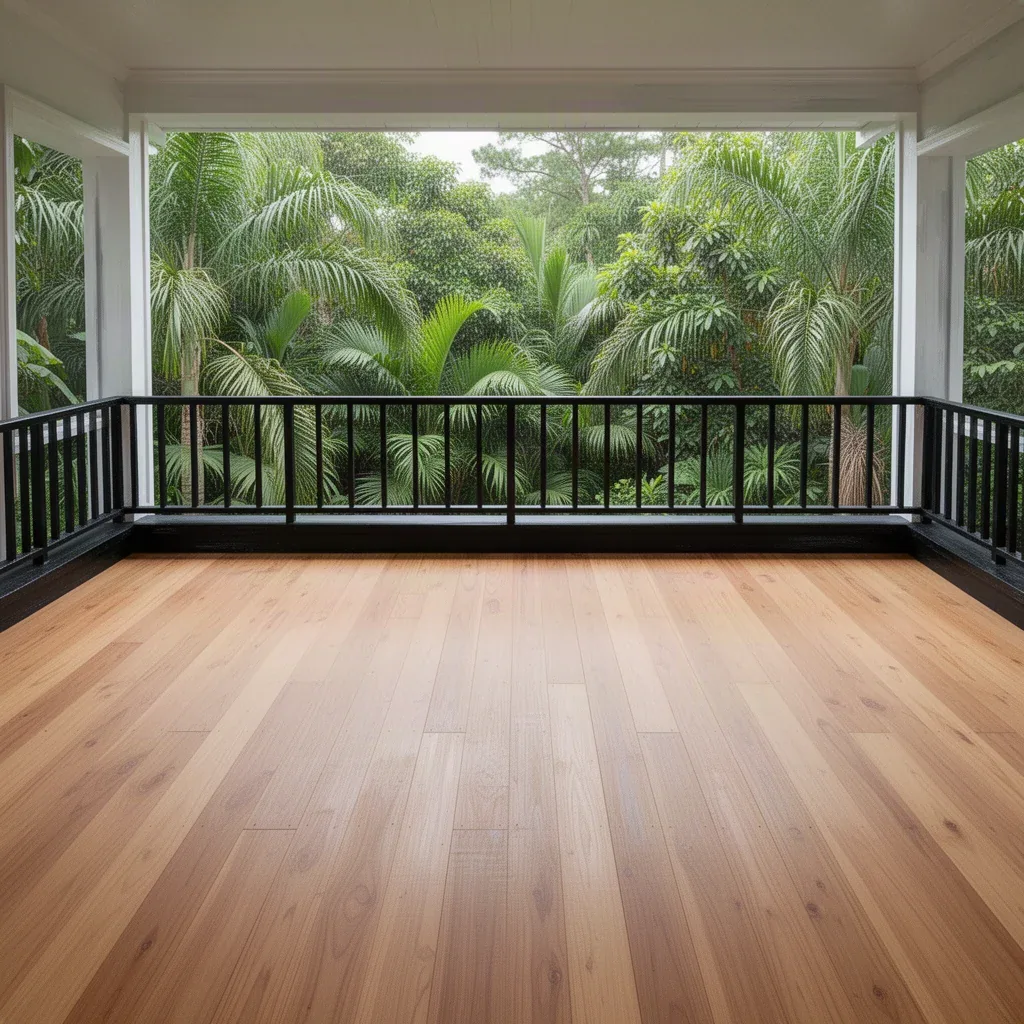
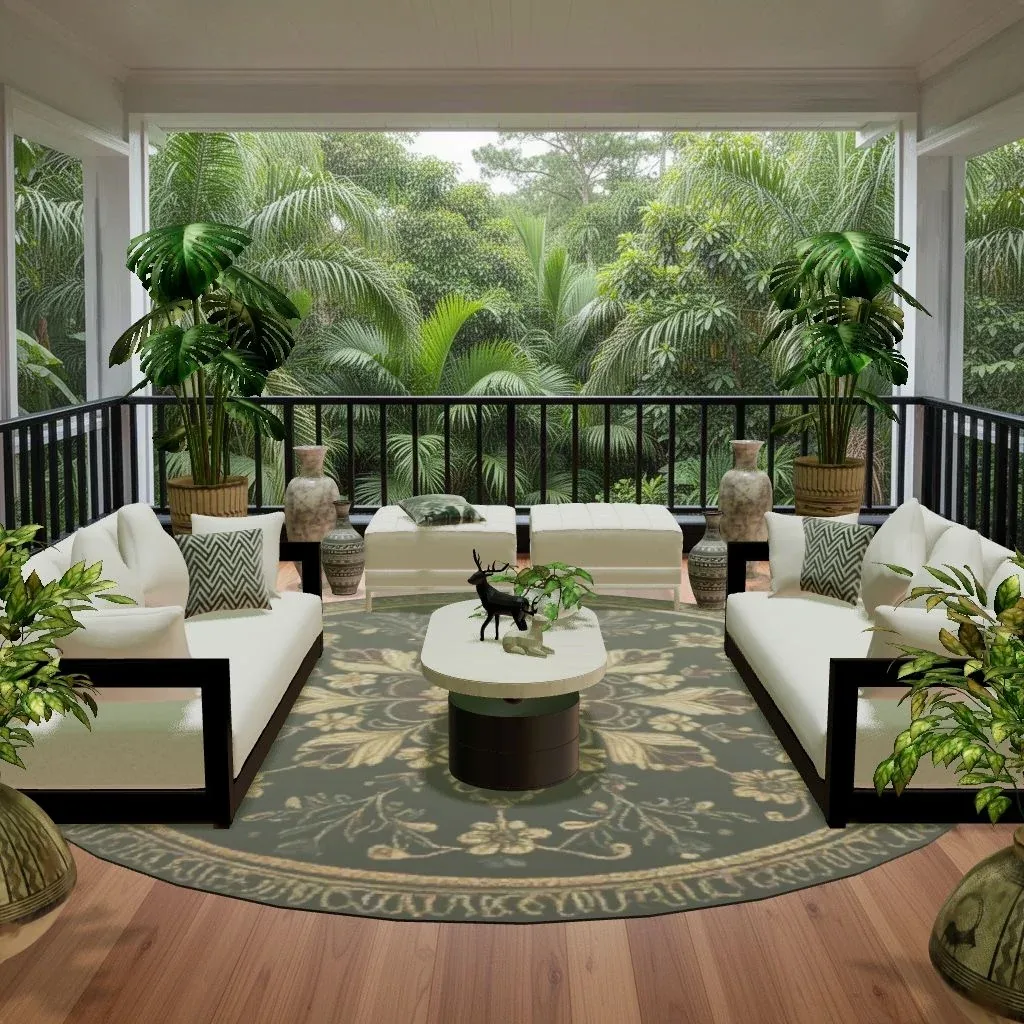
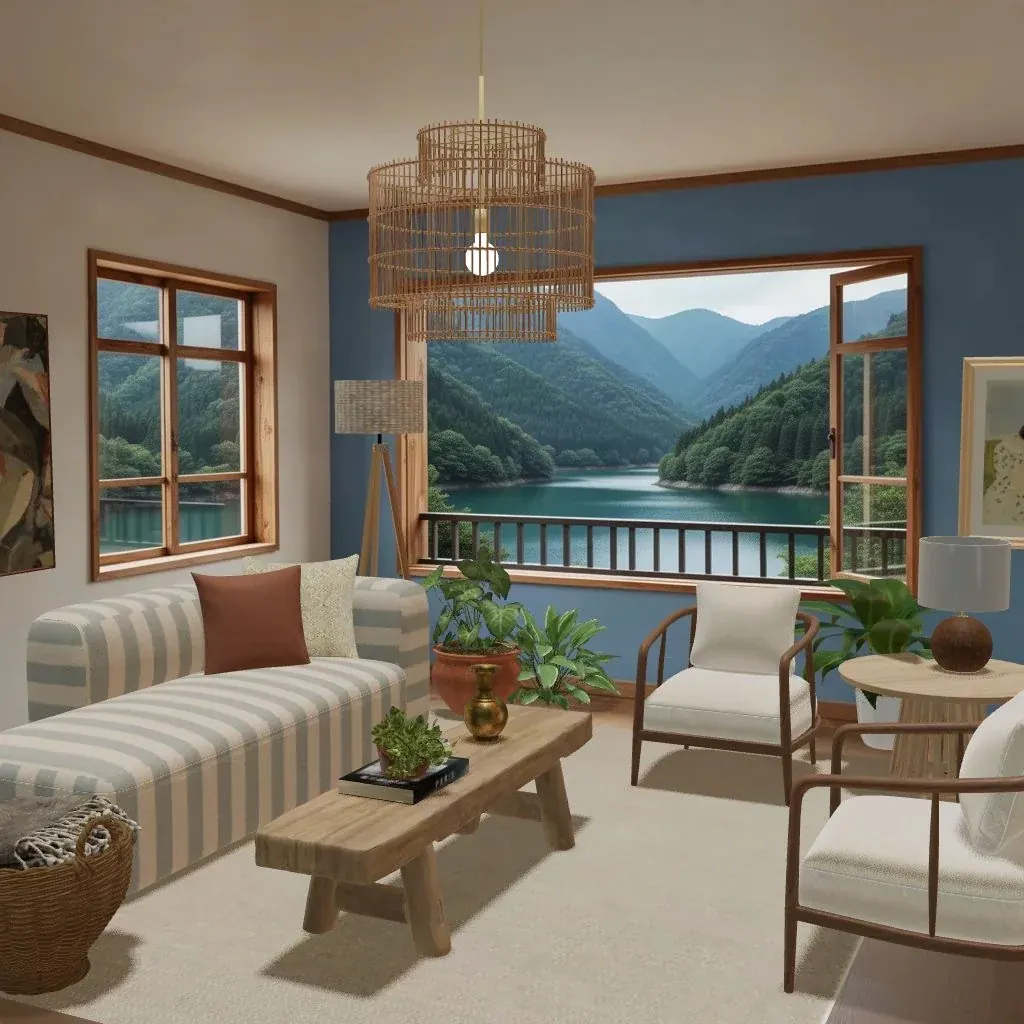
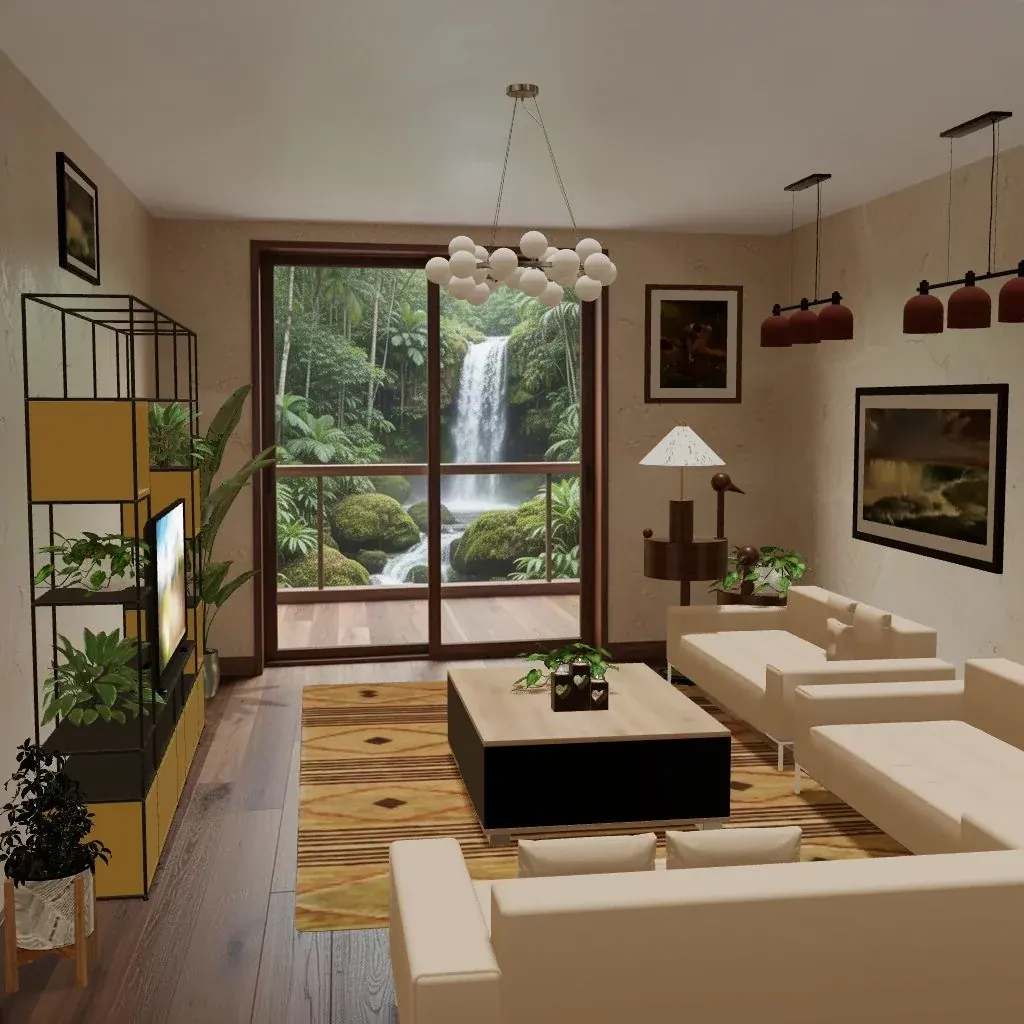
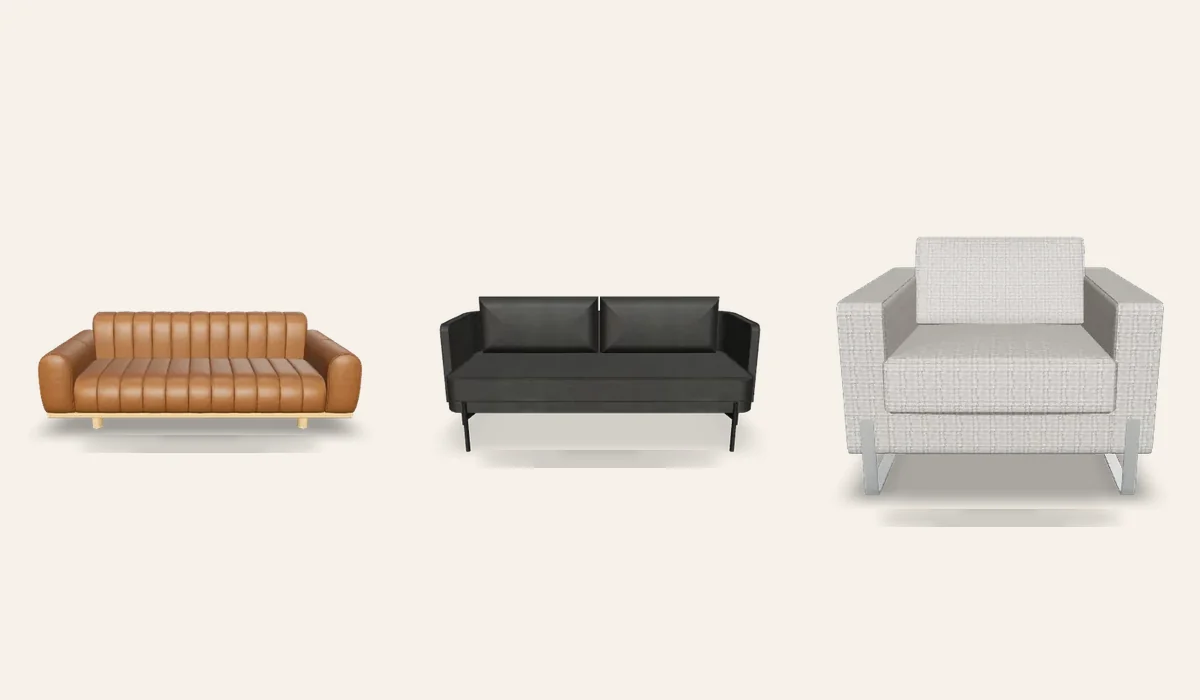
Cozee’s furniture catalog already has plenty of seating, like the two sofas and the armchair at the top of this page. The Workshop is for the moments when none of them is quite right: when you want a particular fabric with a particular shape, or a sofa that matches a palette you’ve built around a room.
Whatever options you’re choosing between, the same questions decide whether a sofa works: how big, what shape, what arms, what legs, what fabric and what color. Here’s how to answer each one.
Get the proportions right
Length: about two-thirds of the wall
A sofa looks best when it fills roughly two-thirds of the wall behind it, with space at each end for a side table, a lamp or a plant. On a 4.5 m (15 ft) wall, that’s a sofa of around 3 m (10 ft). Much shorter and it looks lost; wall to wall and it looks crammed in.
Common lengths, as a rough guide:
| Type | Typical length | Good for |
|---|---|---|
| Loveseat / two-seater | 130–170 cm (51–67 in) | Small living rooms, bedrooms, reading corners |
| Three-seater | 190–230 cm (75–90 in) | Most living rooms |
| Large sofa | 230–260 cm (90–102 in) | Big rooms, open-plan spaces |
| Corner / sectional | Each side 220–300 cm (87–118 in) | Large rooms, zoning an open plan |
Seat depth: upright or lounging
- Standard depth, 53–61 cm (21–24 in): you sit with your feet on the floor and your back supported. It looks tailored and suits formal and smaller rooms.
- Deep seats, 64 cm (25 in) and more: made for curling up with cushions behind you. They look relaxed and generous and suit family rooms, cabins and lounges.
Visually, deep seats make a sofa look heavier and lower. In a small room, a standard depth keeps the floor feeling open.
Height: low backs open a room
A low back, around 75–80 cm (30–32 in) overall, keeps sightlines open, which matters when the sofa sits in front of a window or in the middle of an open-plan room. A high back, 85–95 cm (34–37 in), feels more enclosed and cozy, and suits a sofa against a solid wall. Seat height is usually 43–48 cm (17–19 in).
For more on making pieces suit the size of a room, see scale and proportion.
Choose the arm style
Arms do more than anything else to set a sofa’s style.
- Track arms: straight and square. Clean and modern, and the most versatile choice for Scandinavian, Japandi and minimalist rooms.
- Rolled arms: curved outward at the top. Traditional and comfortable, at home in farmhouse, English country and classic rooms.
- Flared or sloped arms: angled outward or down. Softer and more relaxed, often mid-century.
- Thin or no arms: the lightest look. Good in small rooms, because slim arms give you more seat in the same length.
- Wide, chunky arms: cozy and substantial, but they eat seat width. Save them for large rooms.
Decide on the back and the legs
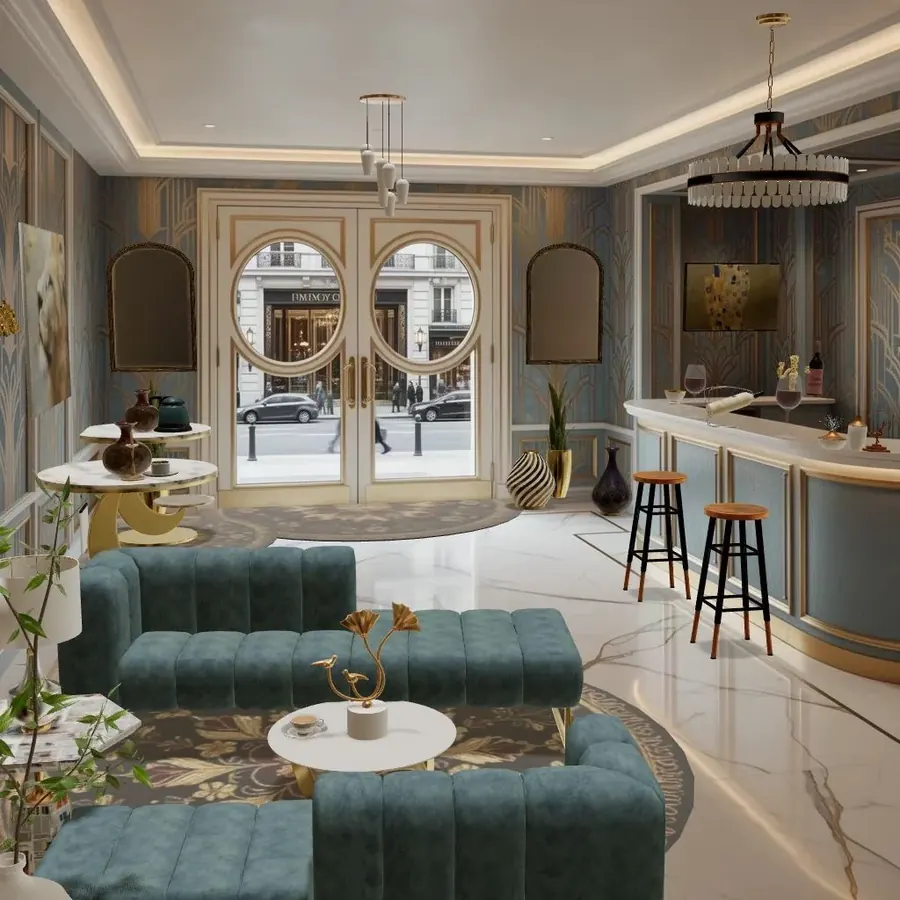
Backs. Loose back cushions look casual and inviting. A tight back, upholstered in one piece, looks crisp and tailored. Channel tufting (the vertical ribs on the tan leather sofa at the top) feels retro and luxurious; button tufting feels classic and formal.
Legs. Visible legs lift a sofa off the floor so you can see the floor underneath, which makes a room feel lighter and larger. Thin metal or tapered wood legs suit modern rooms. A sofa that sits right on the floor, on a plinth or a skirt, looks grounded and cozy, but heavier.
Fabric and color for the room
Start from the room, not the sofa
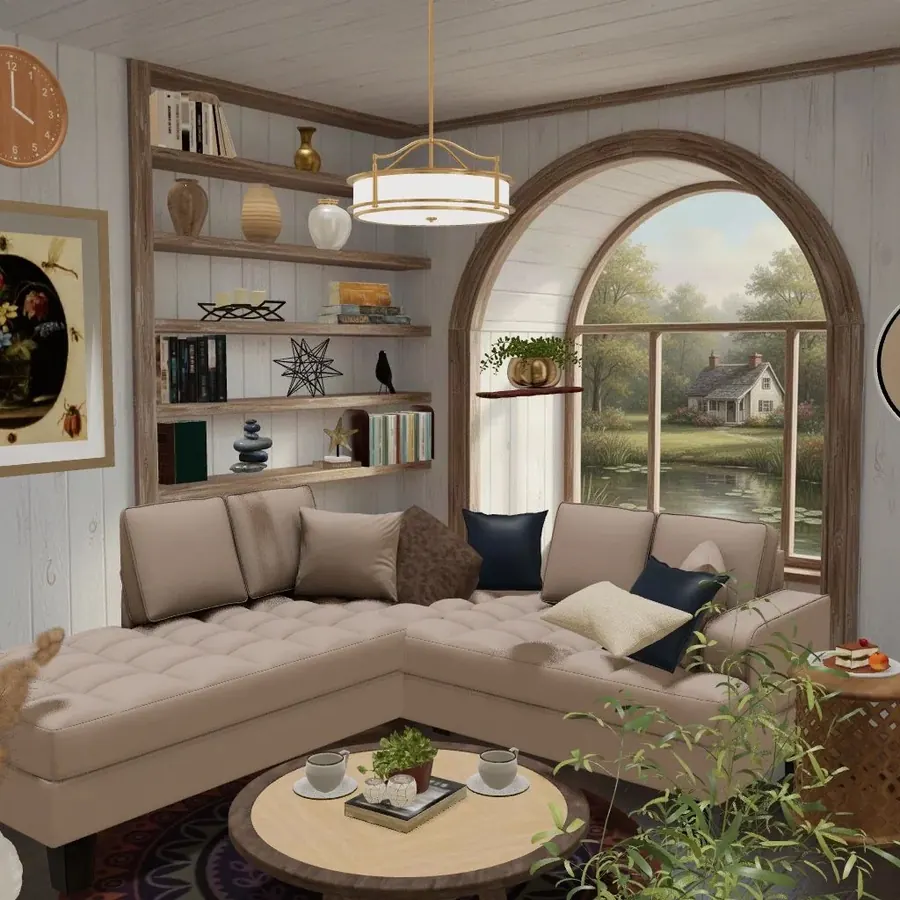
Look at the Space first: the floor, the walls, the view, the light. A sofa should belong to that palette. If the room is warm wood and cream, a sofa in oatmeal or tan fits; if it’s cool grey and blue, a soft grey or navy sits more naturally.
Neutral sofa, colorful room
The safe and very effective route is a neutral sofa (cream, oatmeal, sand, mid grey or tan leather) with color added through cushions, a throw and the rug. It suits almost any style, and you can change the mood of the room without touching the sofa.
Statement sofa, quiet room
The bold route is a colored sofa as the room’s centerpiece: emerald velvet, rust, ochre, teal. It works when everything else steps back to support it, with walls, rug and accessories picking up the same color or its neighbors. One statement per room is plenty. Our guide to interior design color palettes has combinations to start from.
Match the fabric to the style
| Fabric | Feels | Suits |
|---|---|---|
| Linen and cotton | Relaxed, natural | Scandinavian, coastal, farmhouse |
| Bouclé and wool | Soft, textured | Japandi, modern, minimalist |
| Velvet | Rich, glamorous | Luxury glam, eclectic, moody rooms |
| Leather | Warm, durable, ages well | Industrial, mid-century, cabins |
Common sofa mistakes
- Too small for the room, so it floats in the middle of a big floor.
- Too big for the room, so there’s no space for side tables or walkways.
- Pushed against the wall in a large room. Pull it forward and anchor it on a rug instead; see how to arrange living room furniture.
- Matching it exactly to the armchairs. A coordinated, not identical, set looks more lived-in.
- Blocking the view. In front of a window, choose a low back.
Try it in Cozee
Before you open the Sofa Workshop, look at the Space you want the sofa for. Judge it by eye: which wall will it sit against, and is there a window behind it? Decide three things first: the size (about two-thirds of that wall), the arm style that suits the room’s look, and whether it should blend in as a neutral or stand out as the statement. Build it, place it, then add the rug, a side table and a lamp at one end and see whether it holds the room.
New to the game? Start with the beginner’s guide.
Questions people ask
What is the Sofa Workshop in Cozee?
The Sofa Workshop is where you build a custom sofa of your own in Cozee. Once you’ve made it, you can use it in your designs like any other piece of furniture.
How deep should a sofa seat be?
A standard seat depth is about 53–61 cm (21–24 in), which suits upright sitting and most people. Deep seats of 64 cm (25 in) or more are made for lounging with cushions behind you, and suit family rooms more than formal ones.
What sofa arm style is the most versatile?
Track arms, which are straight, square and fairly slim, suit modern, Scandinavian, Japandi and minimalist rooms alike. Rolled arms lean traditional, and flared or sloped arms feel softer and more relaxed.
What color sofa goes with everything?
Warm neutrals such as oatmeal, cream, sand, mid grey and tan leather work with almost any palette, because they let cushions, throws and the rug carry the color. A colored sofa can be stunning, but it works best when the rest of the room is built around it.
Try it in an empty room first
Cozee is a free interior design game for iPhone and Android. Pick an empty 3D room, fill it with real furniture, and see what the community thinks.
4.7 on the App Store · Free, with optional in‑app purchases