

On this page 9 sections
Wabi-sabi is a Japanese way of seeing beauty in things that are simple, imperfect and changing with age. In interior design that means natural materials left honest (plaster, stone, raw wood, linen, clay), muted earthy colors, handmade objects with small flaws, lots of calm, empty space, and a willingness to let things wear. It isn’t a set of furniture to buy. It’s a way of choosing fewer, older, more natural things and letting them be.
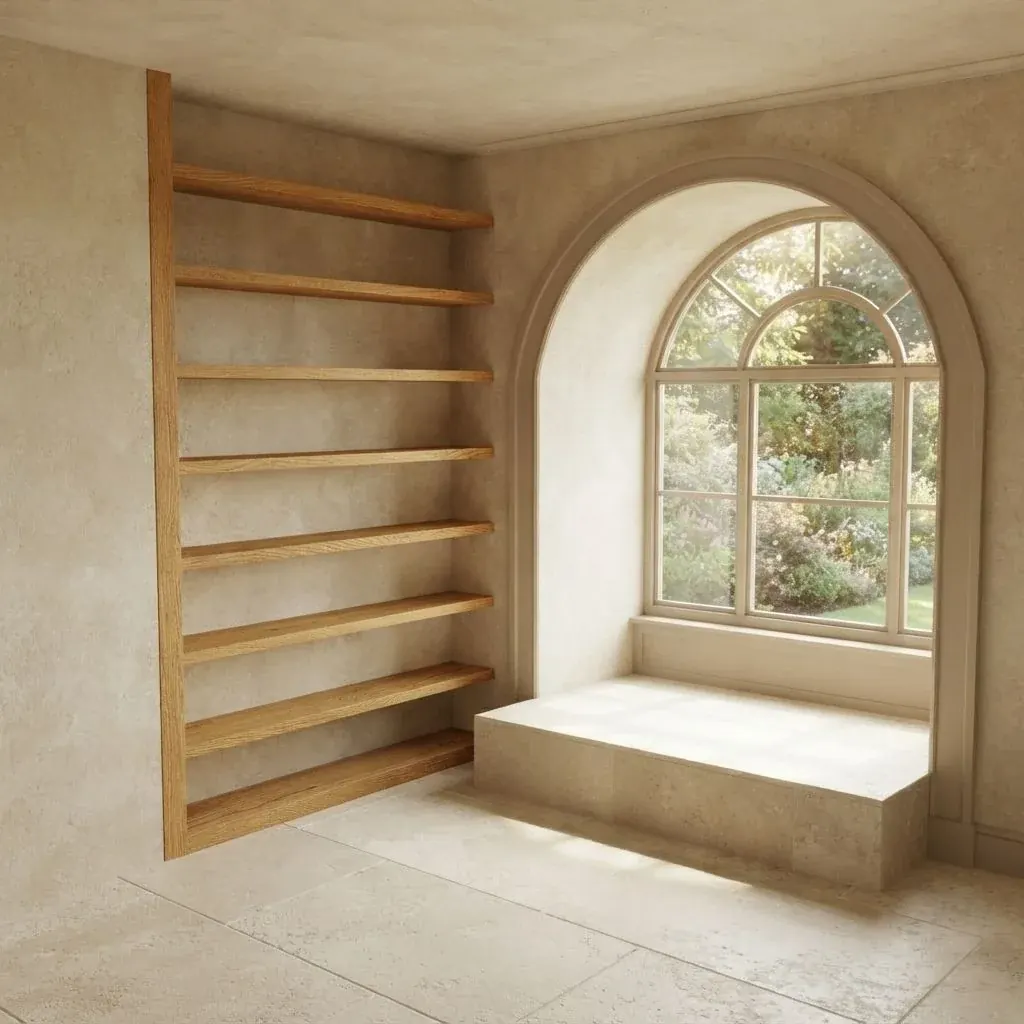
The cover is a good picture of the idea before any furniture arrives: textured limestone-plaster walls with soft movement in them, a tall built-in oak shelf unit, an arched window onto a garden, a deep stone window seat and pale stone floor tiles. There’s almost nothing in it, yet it doesn’t feel cold, because every surface has texture and the light changes across it.
What the words mean
The two words are usually explained together, though each has its own history.
- Wabi originally suggested the loneliness of living simply, far from society. Over time it came to mean a quiet, rustic simplicity, and the richness of having little.
- Sabi suggests the beauty that comes with age: patina, weathering, the softening of a thing that has been used for years.
Together, they describe the pleasure of an old wooden bowl, a cracked glaze, a moss-covered stone or a linen cloth worn thin. The idea is closely tied to the Japanese tea ceremony, where tea masters such as Sen no Rikyū in the 16th century favored plain, rough, locally made bowls over polished imported ones.
Wabi-sabi vs Japandi vs minimalist
These three get mentioned together a lot. The differences are about surface and feeling.
| Wabi-sabi | Japandi | Minimalist | |
|---|---|---|---|
| What it is | A philosophy | A decorating style | A decorating style |
| Surfaces | Rough, natural, aged | Matte, natural, clean | Smooth, often flawless |
| Walls | Lime or clay plaster, uneven | Warm off-white paint | White or pale, flat |
| Objects | Old, handmade, a little broken | A few handmade pieces | Almost none |
| Furniture | Old, solid, worn | Low, simple, new or vintage | Sleek, often hard-edged |
| Mood | Earthy, quiet, melancholy | Grounded, calm | Ordered, spare |
A quick test: if you’d be upset by a chip in a bowl, you’re probably minimalist. If you’d shrug, you’re Japandi. If you’d like the bowl more for it, you’re wabi-sabi.
The palette: colors from materials
Wabi-sabi colors are rarely chosen from a paint chart; they come from the materials themselves.
- Limestone
#E8E1D5 - Bone
#C8B8A2 - Clay
#A9825F - Ash
#8E8A80 - Moss
#6F7155 - Umber
#5A4535 - Charcoal
#2E2B28
- Walls: limestone, bone, warm grey or a soft clay, ideally in a mineral finish with some movement.
- Wood: anything from pale weathered oak to dark, aged timber.
- Accents: moss, umber and charcoal in ceramics, iron and textiles.
Avoid bright white, saturated color and anything glossy. For more on pairing undertones, see color theory for rooms.
Materials: honest, natural, a little rough
Material is the main tool here. Our guide to materials and textures explains the general rules of mixing; wabi-sabi pushes them toward the raw end.
- Walls: limewash, clay plaster or tadelakt-style finishes, with visible brush or trowel marks. In a rental, a limewash-effect paint or simply a warm, matte, slightly uneven color gets close.
- Wood: solid, with visible grain, knots and cracks. Oiled or waxed, never lacquered. Old beams, a reclaimed table, a worn bench.
- Stone: limestone, slate or river stones. A stone window seat like the one on the cover, a rough stone side table, a pebble on a shelf.
- Textiles: unbleached linen, hemp, raw cotton, wool. Wrinkles and faded patches are welcome.
- Ceramics: hand-thrown stoneware with uneven glazes, rough edges and earthy colors.
- Paper and fiber: paper lamps, woven baskets, rope.
Objects: fewer, older, more personal
A wabi-sabi room shows very few things, but each one carries a story.
- Choose handmade over perfect. One lopsided bowl from a local potter beats a set of six identical ones.
- Keep things that are worn. A chipped jug, a faded rug or a scarred table are features, not faults.
- Mend visibly. Kintsugi, the Japanese practice of repairing broken ceramics with lacquer and gold, is the best-known example. Darned textiles and patched wood follow the same idea.
- Arrange asymmetrically. Group objects in odd numbers and off-center. Leave large gaps.
- Follow the seasons. A single branch, dried grasses, a few autumn leaves or a stone from a walk, changed now and then.
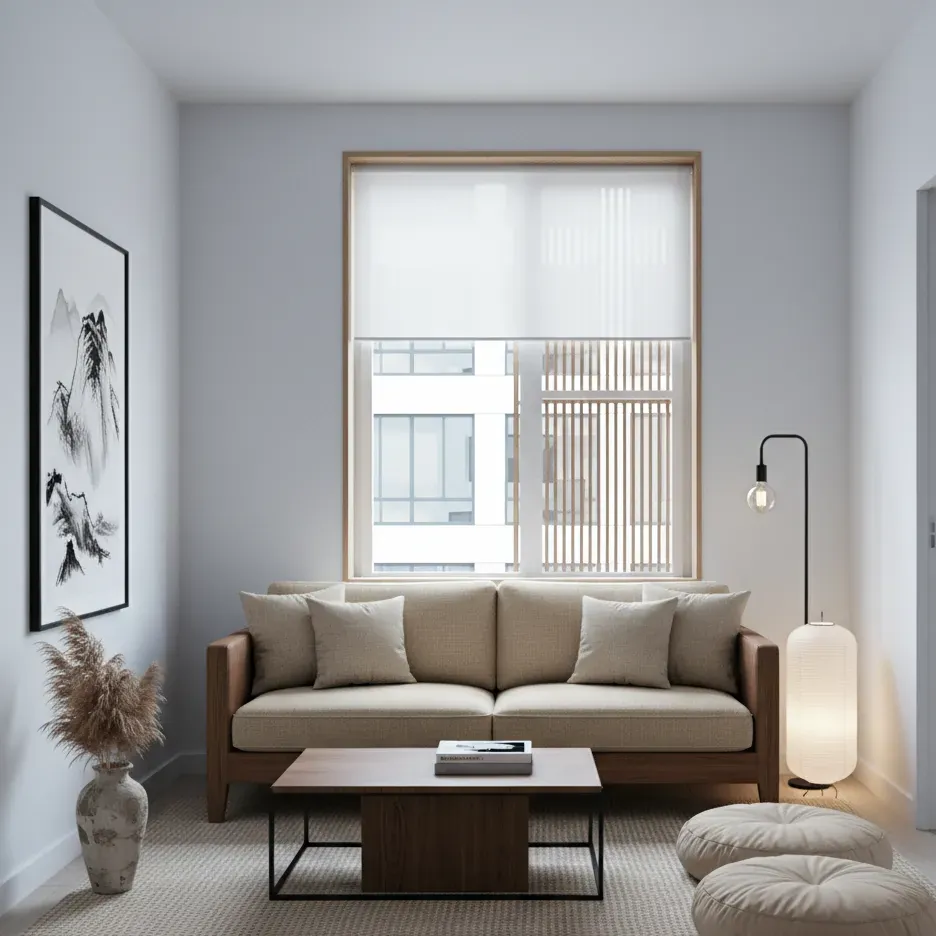
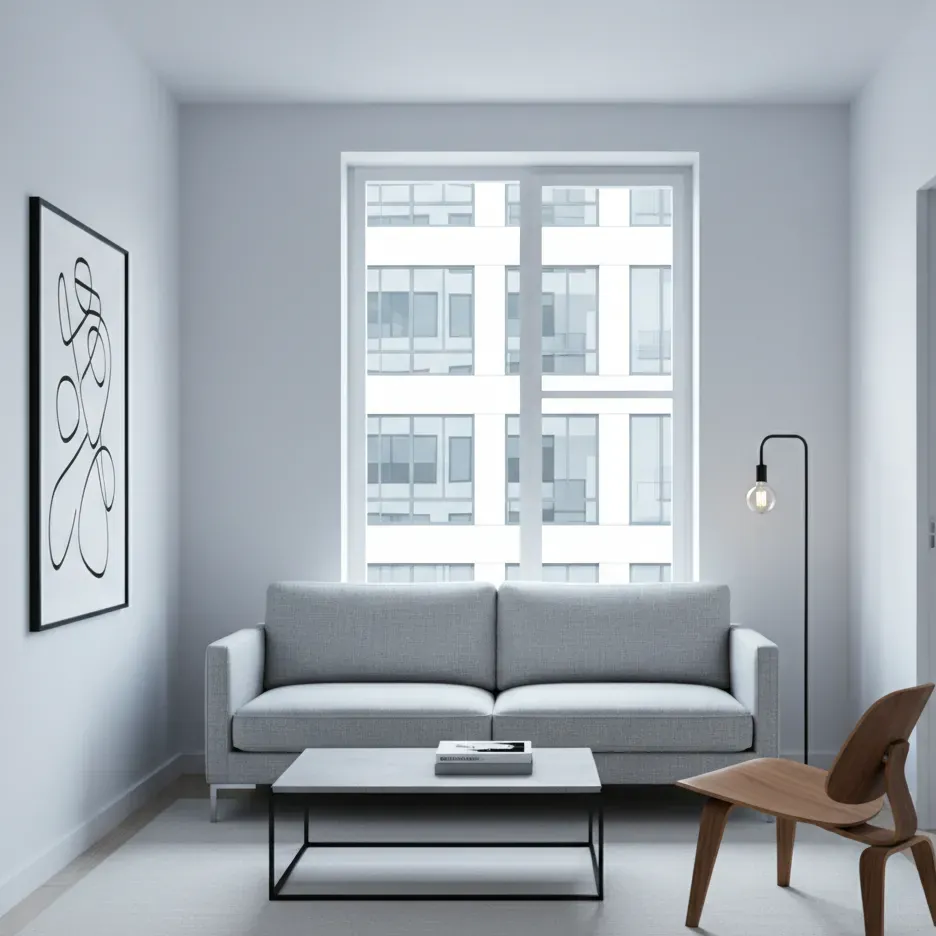
The room above is Japandi rather than wabi-sabi: the sofa and table are new and clean-lined. But look at the vase in the corner, with its rough, mottled surface and a loose bunch of pampas grass. That’s the wabi-sabi detail. To push the whole room in that direction, you’d swap the walls for lime plaster, use an old, scarred wooden table, add a linen throw and let the pampas be the only decoration.
Light: soft and changing
Wabi-sabi rooms celebrate natural light: the way it moves across a plaster wall during the day, or shows the grain in a table at sunset.
- Keep windows simple. Linen curtains or paper blinds diffuse light without blocking it.
- Use low, warm lamps with paper, linen or ceramic shades in the evening.
- Use warm bulbs, 2700K or lower.
- Add candles for the slow, flickering light the style loves.
Our layered lighting guide explains how to plan lamps around a room.
Bringing wabi-sabi into an ordinary home
You don’t need plaster walls and stone floors. Start small:
- Edit first. Put away everything that is plastic, shiny or mass-produced in one corner of a room.
- Bring in one natural, aged piece: an old wooden stool, a stone or a handmade bowl.
- Swap one textile for linen or raw cotton.
- Choose one lamp with a paper or linen shade.
- Leave a surface empty except for one branch in a vase.
- Live with it for a few weeks before adding anything else.
Common mistakes
- Buying “distressed” new things. Fake aging looks fake. Real age, or honest natural materials that will age, is the point.
- Confusing imperfect with dirty. Worn and patinated is good; dusty and neglected is not.
- Too many objects. Wabi-sabi needs empty space to let each thing be seen.
- Gloss and chrome. They belong to other styles.
- Treating it as a theme. Bamboo fountains and zen signs miss the idea entirely.
Try it in Cozee
Wabi-sabi is about editing, so it’s a good style to practice on an empty room. In Cozee, a free design game for iPhone and Android, every Space starts empty and you furnish it with real 3D furniture and decor. Try a calm Space and see how few pieces you need: a low sofa, one wooden table, a ceramic vase with a branch and a soft lamp. Once you reach level 5, the pro editor tools add material options for many pieces, so you can try a piece in a different finish.
Questions people ask
What does wabi-sabi mean in interior design?
Wabi-sabi is a Japanese idea of finding beauty in things that are simple, imperfect and changing with age. In a room it shows up as handmade ceramics, natural wood grain, plaster walls with movement, linen that creases, stone that wears and objects that are allowed to show their history.
What is the difference between wabi-sabi and Japandi?
Wabi-sabi is a philosophy; Japandi is a decorating style. Japandi borrows wabi-sabi’s love of handmade, imperfect things and mixes it with Scandinavian comfort and clean lines. A wabi-sabi room is usually rougher, earthier and more worn than a Japandi one.
What colors are used in wabi-sabi interiors?
Muted earth colors taken straight from natural materials: limestone, clay, bone, ash grey, moss, umber and charcoal. Colors look slightly faded or uneven rather than flat and bright, and the material itself usually provides the color.
Is wabi-sabi the same as minimalism?
No. Both have few things and lots of space, but minimalism often aims for clean, perfect surfaces. Wabi-sabi prefers rough, natural, aged ones. A minimalist room might have a smooth white wall; a wabi-sabi room would have a lime-plaster wall with visible trowel marks.
Try it in an empty room first
Cozee is a free interior design game for iPhone and Android. Pick an empty 3D room, fill it with real furniture, and see what the community thinks.
4.7 on the App Store · Free, with optional in‑app purchases